
Since the unrest over the Judicial Reform, I’ve been consistently receiving calls from locals considering relocating. Maybe 1 or 2 calls a week from people complaining that “it’s not the same Israel that I grew up in,” and seriously considering moving. I usually scratch my head when they divulge where they are thinking of moving to. It’s as if they are unaware of the surging rise in global anti-semitism.
In addition, I have noticed that all over social media, olim are complaining about how hard it is to live in Israel. It’s not just because of the weak US dollar and the havoc it’s wreaking on retirees from the US who made Aliyah; rather, it’s a lot of ‘things not being like they were in the old country,’ etc…
Forgetting that we have actually been in an existential war for the last 2.5 years. It totally drives me crazy and actually pains me to read the criticism. If it were constructive criticism, then it would be acceptable, but it’s not, and it’s frustrating.
Unfortunately, we have a precedent of olim and potential olim complaining; it goes back thousands of years. This week, we read the Torah portion that deals with the spies. The Lord tells Moses to send the leader of each tribe to explore the land the children of Israel are about to enter. Moses then gives them instructions on what to look out for and what information they should bring back.
Upon their return, the spies report, “We came to the land to which you sent us. It flows with milk and honey, and this is its fruit. However, the people who dwell in the land are strong, and the cities are fortified and very large… We are not able to go up against the people, for they are stronger than we are… The land, through which we have gone to spy it out, is a land that devours its inhabitants, and all the people that we saw in it are of great height… We seemed to ourselves like grasshoppers, and so we seemed to them.” Num. 13:27-33.
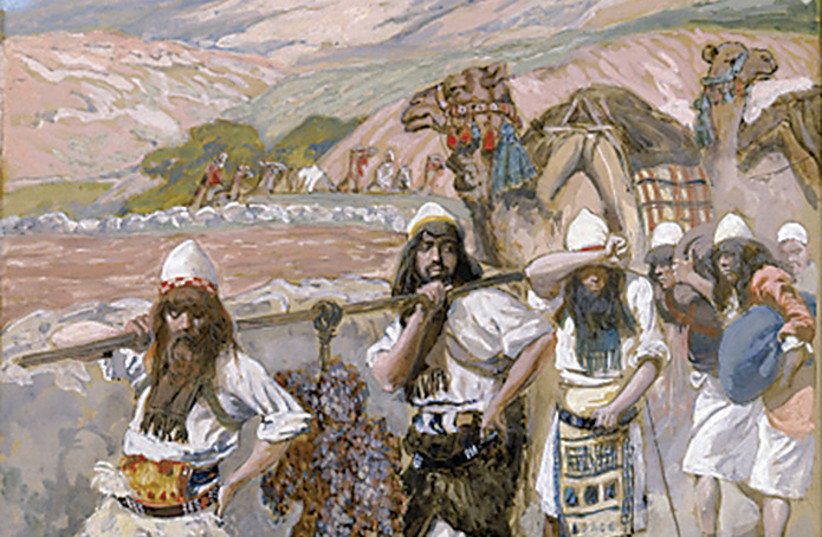
This report seems hard to understand. It wasn’t long before they witnessed miracles that destroyed the global superpower, Egypt, and led to their freedom. We also know from the next story about spies that Joshua sends, that the inhabitants of the Holy Land were petrified by those very same miracles.
They knew they were to be conquered. Rahab told those spies, “I know that the Lord has given you the land, and that the fear of you has fallen upon us, and that all the inhabitants of the land melt away before you. “Joshua 2:9
Lubavitcher Rebbe: Why such a negative report?
As I have written before, Rabbi Jonathan Sacks Z”L cites the Lubavitcher Rebbe, Rabbi Menachem Mendel Schneerson. “He raised the obvious question. The Torah emphasizes that the spies were all leaders, princes, heads of tribes. They knew that God was with them. They knew that God would not have promised them a land they could not conquer. Why then did they come back with a negative report?
He answers, “What was their situation now, in the wilderness? They lived in close and continuous proximity to God. They drank water from a rock. They ate manna from heaven. They were surrounded by the Clouds of Glory. Miracles accompanied them along the way. What would be their situation in the land? They would have to fight wars, plough the land, plant seed, gather harvests, create and sustain an army, an economy and a welfare system.
"They would have to do what every other nation does: live in the real world of empirical space. What would become of their relationship with God? Yes, He would still be present in the rain that made crops grow, in the blessings of field and town, and in the Temple in Jerusalem that they would visit three times a year, but not visibly, intimately, miraculously, as He was in the desert. This is what the spies feared: not failure but success.”
Rabbi Sachs: 'We fear what success may bring'
Rabbi Sacks continues, “No less real, though, is fear of success. We want to succeed, so we tell ourselves and others. But often unconsciously, we fear what success may bring: new responsibilities, expectations on the part of others that we may find hard to fulfill, and so on. So, we fail to become what we might have become had someone given us faith in ourselves.”
When it comes to our own financial situation, it’s easy to complain and blame others for our failures. But if you just start and stick to the basic rules, you can succeed. Investing in long-term goals is more important than funding current wants and needs.
You need to pay yourself first and make saving a priority. If you spend first and save second, you will find out that there is nothing left to save! Buy good, quality investments and hold them for a very long time. I know it’s boring, but it’s the tried and true way of building wealth.
There is no reason you can’t be financially successful. It just takes some discipline and sometimes the willingness to forgo instant gratification.
The information contained in this article reflects the opinion of the author and not necessarily the opinion of Portfolio Resources Group, Inc. or its affiliates.
Aaron Katsman is the author of the book Retirement GPS: How to Navigate Your Way to A Secure Financial Future with Global Investing (McGraw-Hill), and is a licensed financial professional both in the United States and Israel, and helps people who open investment accounts in the United States. Securities are offered through Portfolio Resources Group, Inc. (www.prginc.net). Member FINRA, SIPC, MSRB, FSI. For more information, call (02) 624-0995, visit www.aaronkatsman.com, or email aaron@lighthousecapital.co.il.