The battle for introducing core subjects into the haredi (ultra-Orthodox) education system is not quite as ferocious or as frequent as that for formulating mutually acceptable legislation that would compel young haredi men to enlist in the Israel Defense Forces, but it is arguably more successful.
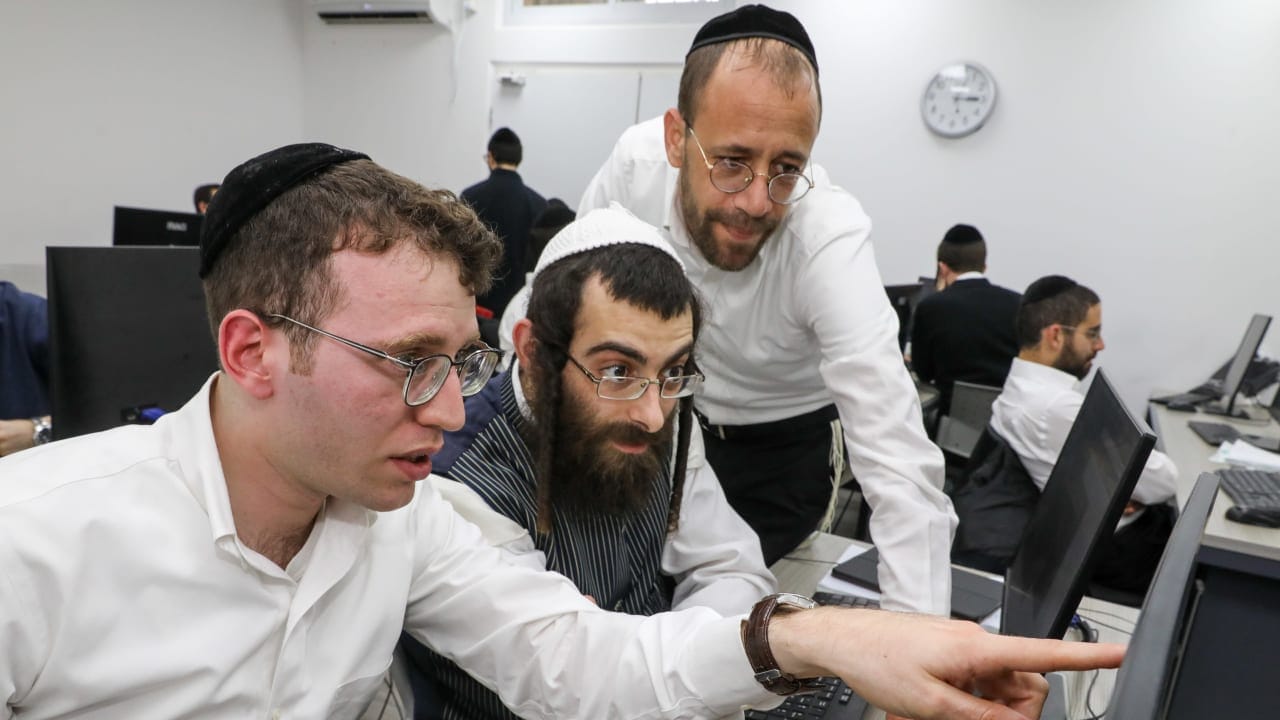
According to Moshe Friedman, co-founder and CEO of Kama Tech, there are some 15,000 haredim currently employed in Israel’s hi-tech industries. To qualify for placements, all have to be graduates of universities or colleges of technology. This means that all 15,000 have learned core subjects.
Friedman, the scion of a highly respected rabbinical family, has helped establish a series of projects designed to bring haredim into the hi-tech workforce and has been recognized both in Israel and the United States as an influential factor for social and economic change.
Kama Tech is one of his most ambitious projects, involving entrepreneurs, venture capitalists, investors, academic institutions, and – of course – young men and women who want to contribute to Israel’s economy while simultaneously improving their economic status.
Friedman, accompanied by representatives of all of the above, came to the President’s Residence on Sunday, both to introduce people involved in the program and to present Michal Herzog, the president’s wife, with a “scroll of appreciation” for her role in helping the project along. The “scroll” (actually a framed document in heavy black type) details her degree of involvement. Friedman referred to it as “Megilat Michal.”
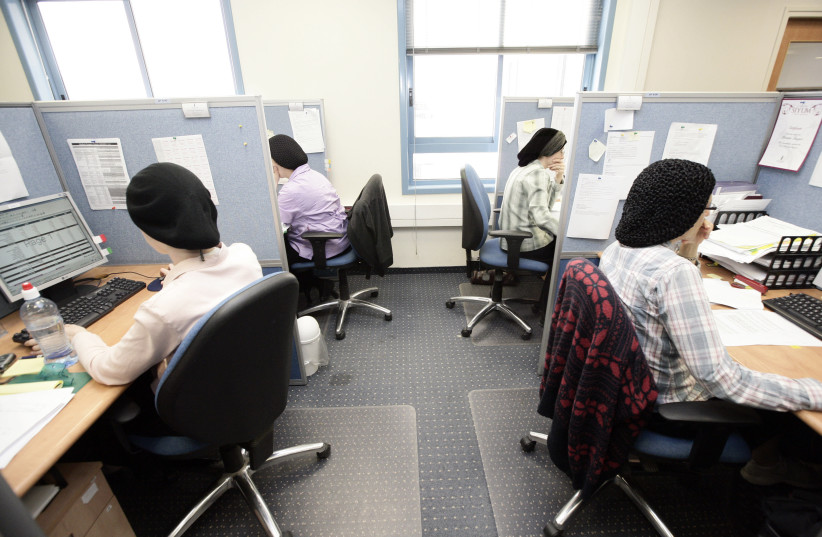
Herzog recalled that her first project with Kama Tech was with a group of haredi women who passed the academic syllabus with flying colors and found employment that enabled them to work remotely or at the offices of the companies that employed them.
For those who had young children, it was indeed a blessing to be able to work from home and provide their children with the security of having their mothers present, while improving the family’s standard of living.
Haredi women can earn good incomes after academic course
Nachumi Yaffe, a female haredi academic at Tel Aviv University (TAU), who supervises the academic program for haredi women, spoke of their positive attitude and of the large number of applicants for future courses.
Dvori Friedman, a former student and a second-generation hi-tech member of her family, who initially worked for Western Digital, has moved on to Nvidia.
“We can now earn good incomes,” she said. “Employers who were not interested in us before now support us.”
KamTech alumnus Naama Bucksboim, who works for Apple Israel, said that, after graduating, several options were open to her, and she was able to choose what suited her best.
Israel Gurt launched his own cyber company, and Yoni Luxemburg founded Elementor, a software development start-up company. “Hi-tech is enriching and forces you to think and to help in development”, he said. “It also leads to social integration.”
Relating to his own company, he said: “We have religious, secular, Jews, Arabs – and we all get along.”
CEOs of Israeli branches of international hi-tech companies, such as Microsoft, Amazon, Apple, and Mobileye, listened with interest and satisfied smiles.
Hi-tech as a bridge for people of different backgrounds
Eliezer Shkedi, a former commander of the Israel Air Force, noted that leaders of the Jewish people, such as Theodor Herzl, Ze’ev Jabotinsky, and Albert Einstein, were on a different plain to that of the current generation, which lives in an era of hi-tech.
“The most rewarding thing is to listen to how much this generation enjoys what they’re doing,” he noted. “Hi-tech is a bridge and a connection between people of different backgrounds with no need to sacrifice their beliefs and lifestyles while working together and contributing to the state.”
When introducing Mobileye co-founder and CEO Amnon Shashua, Moshe Friedman said enthusiastically: “He’s been with us all the way since the very beginning.” Shashua noted that it takes a lot of courage and stubborn determination to do what Friedman has done.
“It’s good to see young men and women moving in the direction of hi-tech – but we need more,” he said.
At the conclusion of the meeting, President Herzog said: “There are people who lament their fate, and there are those who do something to change it and move onward together; people who understand the significance of evolution can advance.”
Herzog cited, as an example, a group of haredi youth from various yeshivot whom he had hosted the previous week. “All of them are enlisting in the army,” he emphasized.