
For much of the past two decades, Israel’s technology sector was defined by startups built to move quickly and scale globally, helping turn a country roughly the size of New Jersey into the “Startup Nation.” Now, more companies are emerging from laboratories, research institutes, and engineering departments, built around scientific breakthroughs that can take years to reach the market.
The shift is already influencing how Israel backs its earliest-stage companies. In June, the Israel Innovation Authority announced its Start-Up Fund, giving early-stage deep-tech companies more resources to pursue ideas that cannot be built, tested, and launched overnight. The initiative backs companies working on breakthroughs across healthcare, energy, computing, agriculture, and manufacturing.
But capital alone does not build a successful company. Deep-tech founders must navigate intellectual property, technical validation, manufacturing, and commercialization long before their first product is ready. Doing so requires an entirely new kind of leader who can make commercial decisions around technology that may look very different six months from now than it does today.
Training leaders for Israel's deep-tech economy
That challenge is beginning to reshape how founders are trained, and academia is starting to take notice. Tel Aviv University’s Coller School of Management is introducing a Deep-Tech Global MBA, one of the first ever programs designed specifically for entrepreneurs working at the intersection of research and business. The program’s first cohort launched in January 2026, bringing together engineers, scientists, and physicians from around the world.
The program’s two-year structure is designed around the realities of building these types of ventures. Research, fundraising, product development, manufacturing, and commercial strategy often advance simultaneously, blurring the lines between developing the technology and building the business around it. The program is structured around that reality, with coursework designed to combine MBA core subjects with the specific challenges of bringing complex technologies into the real-world.
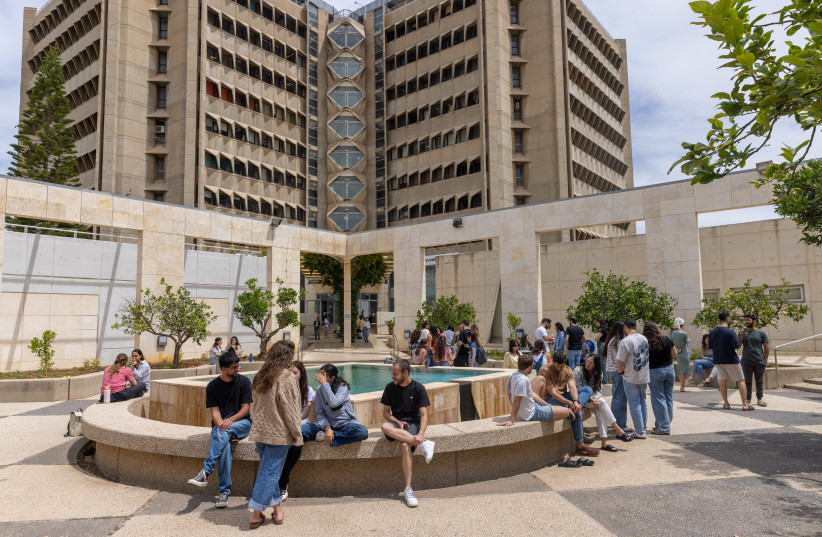
Yael Steinhart, Dean of the Coller School of Management shares: “Israel’s success as the Startup Nation was built by people who saw the commercial potential in emerging technologies before the rest of the world did. This MBA is designed to develop the next generation of leaders who can think beyond the lab, anticipate where industries are headed, and turn scientific breakthroughs into companies and solutions with the potential to make a global impact.”
Turning scientific breakthroughs into companies
That kind of hands-on learning is particularly important in research-driven sectors, where founders may need to make decisions years before their commercial consequences become clear.
Rather than studying those challenges only in the classroom, students gain direct exposure to Israel's deep-tech ecosystem through workshops, mentorship programs, and commercialization projects, where they can interact face-to-face with business leaders, researchers, and investors who are familiar with this unique process. Being based at Tel Aviv University also places participants closer to professionals across engineering, computer science, and life sciences, making cross-disciplinary collaboration a natural part of the experience.
As more startups are born in labs instead of the typical Tel Aviv coffee shop, the challenge is no longer just producing scientific breakthroughs. It is developing founders who understand how to turn those breakthroughs into viable, scalable companies. Developing that combination of scientific and commercial expertise may determine which findings remain academic achievements, and which go on to shape industries and improve lives around the world.