
Texas will be opening its trade office in Jerusalem shortly as it seeks to capitalize on growing commercial and technology ties between Israel and a state that has quietly become one of America's most important centers for defense and innovation.
The planned Jerusalem office would mark a significant expansion after the Texas Legislature which passed a resolution last year backing it. The office is being positioned as a hub commercial engagement between Israel and all the countries that have signed on to the Abraham Accords.
Yet despite ongoing geopolitical uncertainty, organizers believe the economic rationale behind the Texas-Israel relationship continues to strengthen. Texas ranks as the eighth-largest economy in the world, with a GDP of roughly $2.7 trillion, and trade between Israel and Texas stands at about $4 billion. Israeli founders, once more likely to establish operations in New York or California, are now choosing Texas in growing numbers.
Unicorn Rodeo
The opening of the trade office comes after the launch of the first Unicorn Rodeo, a new conference in Dallas designed to connect Israeli start-ups with Texas investors, executives, and policymakers.
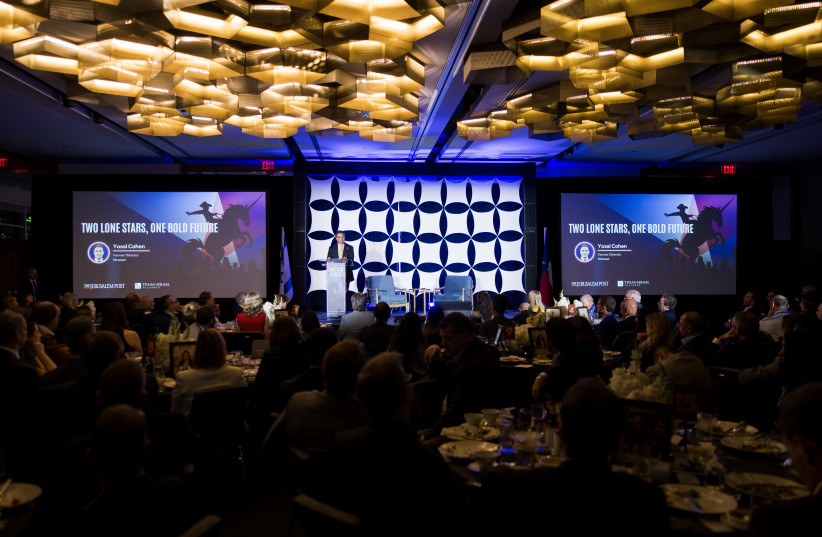
Presented and produced by the Texas-Israel Alliance, the conference connected Israeli entrepreneurs with Texas-based investors, corporate executives, and policymakers to develop commercial relationships between the two markets.
Speaking to The Jerusalem Post following the event, Doug Deason, president of Deason Capital Services, said the event is intended to become a permanent fixture in the relationship between the two innovation ecosystems.
"It far exceeded expectations," he said. "Having over 100 people from Israel come in, some incredible companies that are truly venture capital opportunities, and then businesspeople in Texas who have already made that transition and succeeded."
Featured speakers included Ben Lamm, founder and CEO of Colossal Biosciences; Michael Fey, co-founder and CEO of Island; Micha Breakstone, co-founder and CEO of Cellular Intelligence; Dallas Mayor Eric L. Johnson; Doug Deason, president of Deason Capital Services; Adi Farjon Israel, consul general of Israel to the Southwest; and former Mossad director Yossi Cohen.
At least 50 speakers participated in over 10 sessions covering artificial intelligence, defense technology, cybersecurity, healthcare, and biotechnology.
For Deason, Unicorn Rodeo’s success has already prompted plans to expand the concept.
"We'll have two annual rodeos," he said. "One in Texas and one in Israel."
Before Unicorn Rodeo opened, Deason met with Cohen to discuss regional developments and Israeli security challenges. "I love Israel. I've always been fascinated by the Middle East,” Deason told the Post.
Major destination
The trade office’s opening is significant as Texas has increasingly established itself as a major destination for defense and dual-use technology companies, sectors where Israeli start-ups have long been competitive.
Deason told the Post that the organization changed its name from the Texas-Israel Chamber of Commerce to the Texas-Israel Alliance in 2016 because “We wanted something more innovative."
The state hosts key military assets, including Army Futures Command in Austin and Joint Base San Antonio and Fort Cavazos, creating a dense network for defense research, testing, and procurement. Army Futures Command, headquartered in Austin, works with universities, industry, and military partners on modernization and advanced technologies.
Federal innovation organizations have also embedded themselves in the state's start-up ecosystem. In Austin, the Defense Innovation Unit, AFWERX, and other defense innovation entities operate from Capital Factory, creating direct pathways between emerging technology companies and the Department of Defense.
That concentration has helped transform Texas into a major center for defense innovation, particularly for dual-use technologies with both civilian and military applications. The proximity of start-ups, investors, and military organizations accelerates testing, adoption, and procurement of new technologies.
Austin-based Capital Factory has emerged as a central node in that ecosystem. The organization says its network connects entrepreneurs, investors, and government partners, while portfolio companies have received more than $500 million in government funding for dual-use technologies.
As Texas builds its position as a center of defense innovation and advanced technology, the alliance is betting that more Israeli entrepreneurs will look beyond traditional American hubs and increasingly view Texas as a gateway to the US market.