About two weeks before the opening of the World Cup, yes announced a series of new developments for the yes+ service, alongside the expansion of its artificial intelligence capabilities. The new moves come amid preparations for the world's largest sporting event, which is expected to draw millions of viewers in Israel this year.
At the center of the announcement stands a commitment to the total reduction of the delay in World Cup broadcasts on yes+. The company claims that for the first time, service viewers will be able to watch the matches with no delay at all – an issue that has become in recent years one of the main points of frustration when watching sports broadcasts over the internet.
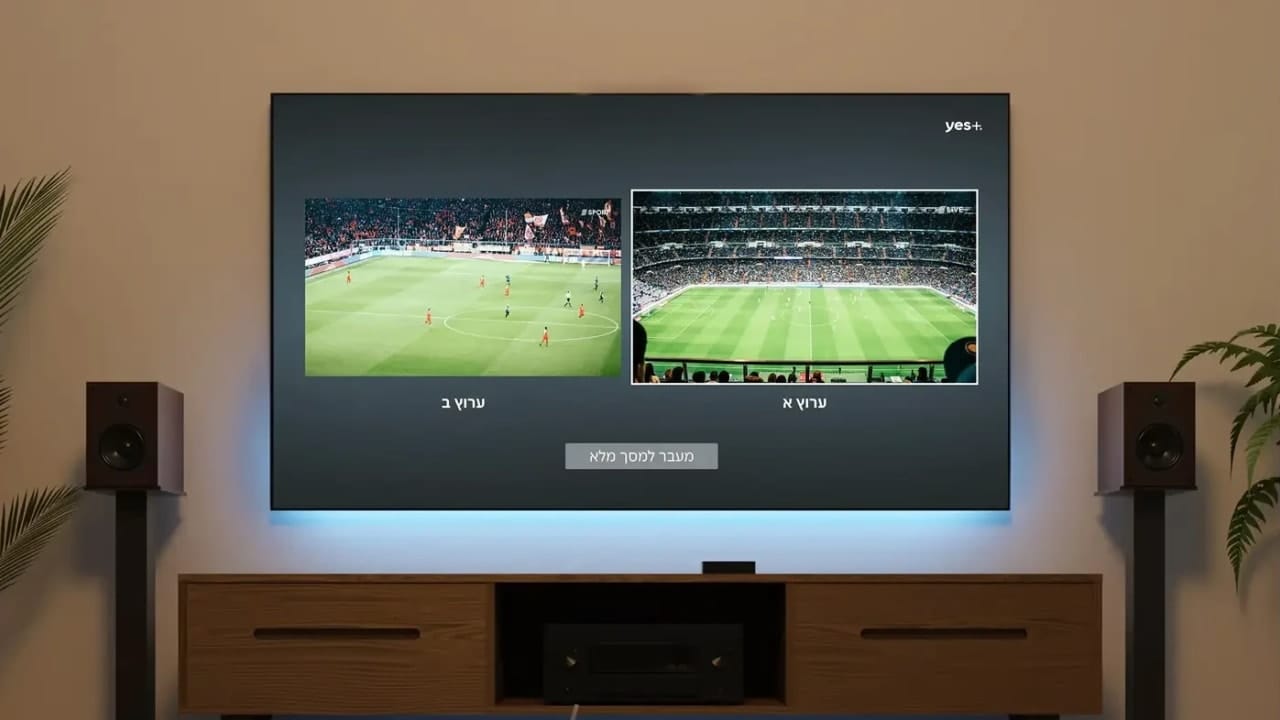
Alongside this, yes introduced yes SPLIT – a new feature that enables viewing two channels simultaneously on the same screen. The development is intended primarily for sports viewers who wish to follow several matches or broadcasts at the same time, without switching between channels. However, yes clarifies that the sound will play from one channel only, and in split-screen mode audio will not be possible from both channels simultaneously. According to a survey conducted by the company, about half of the viewers tend to channel-surf during matches.

The company also announced a collaboration with Samsung under which it will launch a new model for purchasing television screens through the yes account, without the need for a credit line. Under the framework of this model, the monthly payment will be determined by the size of the screen – one shekel for each inch. Thus, for example, a 43-inch screen will cost NIS 43 a month, while a 98-inch screen will cost NIS 98 a month, for a period of up to 48 to 72 months depending on the model.
In yes they noted that buyers will also receive a four-year official importer's warranty, delivery and installation at no cost, as well as an option to upgrade to a new screen at the end of the payment period.
At the same time, the company is expanding its operations in the field of artificial intelligence and plans to launch an AI agent for television by the end of the year. According to yes, the system will include a personal recommendation engine that will be based on the viewing habits of the users, alongside a natural language search engine and a voice assistant.
The meaning is that users will be able to search for content using free phrases such as "A funny series before bed" or "A good horror movie from recent years", without knowing the exact name of the content. In addition, the voice assistant will make it possible to perform various actions through speech – including switching between channels, searching for content, and changing settings.
According to survey data conducted by yes, 59% of viewers find it difficult to choose content from the wide selection, and 90% of them waste time searching before starting to watch. More than a third of the respondents said they invest more than five minutes in this.
The CEO of yes, Ilan Sigal, said that the company continues to invest in technological developments ahead of the World Cup and in the field of the viewing experience. The company's VP of Marketing, Dror Bahat, added that the new developments are designed to adapt to the usage habits of viewers and to simplify the television viewing experience.