
When I was a teenager, a promotion swept across Israel that drove every kid I knew a little crazy. Collect enough bottle caps from a certain brand, mail them in the old-fashioned way through the post office, and you could win a wristwatch that transforms into a robot.
I no longer remember the exact rules or how many caps you needed. What I remember is the anticipation: rinsing caps, counting them, sealing the envelope, and waiting by the mailbox for weeks. I never won the robot. But I never forgot wanting it.
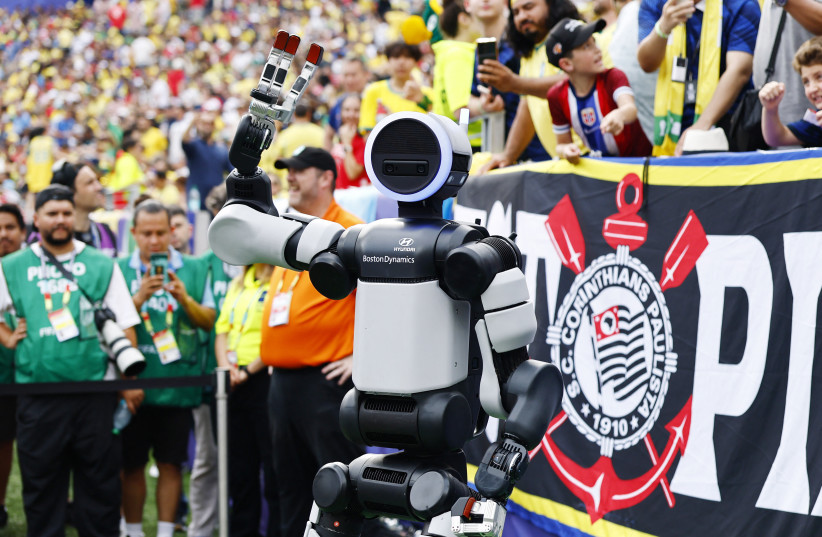
That memory came back to me recently while reading about Boston Dynamics' Atlas. Their entire 2026 production run is already committed to Hyundai, which plans to deploy more than 25,000 of the humanoid robots across its Hyundai and Kia factories by 2028.
The robot I coveted as a teenager was a toy. The one now walking into factories, hospitals, and battlefields is something else entirely, and it raises the same question that made that raffle irresistible in the first place: What is it about robots that excites us so much? Do we actually want to share our world with machines that can act, move, and increasingly communicate like us? And can we really coexist?
From novelty to necessity
The honest answer is that we have wanted this for a long time, for reasons that are only partly rational. A robot that looks and moves like us is both a mirror and a promise. It offers help without complaint, labor without exhaustion, companionship without judgment. That's a powerful pull, and it's why the current wave of physical AI is attracting capital at a pace that even seasoned investors describe as startling.
Robotics is about machines that move and perform tasks. Physical AI adds models that can perceive, reason, and decide what to do next in the real world. In a chatbot, a hallucination is a bad answer. In a robot, it can become unsafe motion, which is exactly why guardrails matter so much more here.
The numbers tell the story, though they vary so widely by definition that the range itself is the real headline. Mordor Intelligence puts the physical AI market at roughly $7 billion in 2026, growing nearly 37% annually through 2031, while Deloitte, citing UBS, projects the humanoid segment alone could reach $30-50 billion by 2035 and $1.7 trillion by 2050.
Manufacturing costs, meanwhile, declined roughly 40% in a single year, from 2023 to 2024, according to Goldman Sachs Research, far outpacing the 15-20% annual decline the firm had forecast, and pulling forward the timeline to consumer applications by two to four years.
This isn't hypothetical anymore. Tesla is converting its Fremont plant's former Model S and Model X lines to begin Optimus Gen 3 production this summer, part of a $20-25 billion 2026 capital expenditure plan focused heavily on AI and robotics. Boston Dynamics paired its electric Atlas with Google DeepMind's Gemini Robotics models for deployment at Hyundai.
BMW is running humanoid pilots at its Leipzig plant. NVIDIA has built an entire platform, Isaac, Omniverse, Cosmos, GR00T, around the bet that “physical AI” is the next computing paradigm after the smartphone and the cloud.
Where the opportunity actually lives
For executives trying to cut through the hype, the near-term opportunity is somewhat less dramatic than the humanoid headlines suggest, and more durable because of it. Warehousing and logistics remain the proving ground, precisely because the work is structured enough for a robot to learn but varied enough that older, single-purpose automation couldn't handle it.
Healthcare is close behind. Hospitals and elder-care facilities are adopting AI-enabled robots for monitoring, rehabilitation support, and companionship, a genuinely urgent need in aging societies. Agriculture, retail, and hospitality are earlier in the curve but moving quickly.
That caveat matters more for humanoids specifically than for robotics generally. The industry's own diligence conversations point to a persistent gap known as the VLA challenge. Vision-language-action models still struggle to generalize beyond the environments they were trained in, and retraining a model from scratch for every new facility is often more expensive than it's worth.
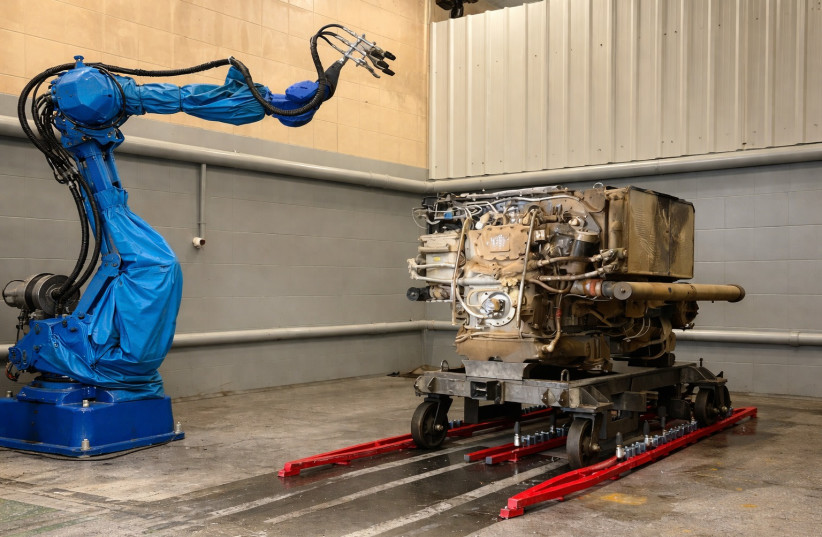
The result is that many deployments quietly fall back on older, fixed-purpose automation rather than the adaptive, human-like intelligence being promised. A handful of programs have moved past pure pilots into genuine commercial deployment. Most humanoid programs remain in pilot stage, with unit counts measured in the dozens or low hundreds rather than the thousands needed to prove the model works at scale.
This gap is precisely why warehousing and logistics, narrower, more structured, and more repeatable, are absorbing the real near-term investment, while the humanoid-in-every-factory vision remains, by the industry's own timelines, a late-decade story rather than a near-term one.
Defense is a different category entirely. Commercial robotics is built to work alongside people in familiar environments. However, national security applications demand systems that can operate in extreme, unpredictable, adversarial conditions with limited communication and little chance for a human to step in. That is a fundamentally different design problem, and it is why the defense market for unmanned and robotic systems is soaring.
For Israeli founders and investors, this is exactly the kind of dual-use opportunity, rooted in real operational need rather than novelty, that tends to produce durable companies.
Where the risk actually lives
The threats are just as concrete, and executives evaluating this space need to hold both truths at once.
The first is physical and cyber. A robot that can move through the world is also a robot that can be hijacked, jammed, or spoofed, and the consequences of a compromised system are no longer confined to a screen. Communications links can be jammed. Software supply chains can be poisoned. A captured unit can be reverse-engineered by an adversary.
Every advantage physical AI offers a military or an enterprise is mirrored by a new attack surface, and the standards for securing embodied systems are still being written even as the systems themselves ship.
The second is accountability. When an AI-assisted system makes a consequential call, who answers for it? The programmer, the commander, the operator, or the algorithm? This isn't an abstract question. It is already showing up in real deployments, and the absence of a clear answer is itself a strategic vulnerability.
The third, and the one I'd urge executives not to overlook, is quieter: the erosion of human skill and judgment that comes from leaning on AI too readily. That is true in a cockpit, in a warehouse, and in a boardroom.
Can we coexist?
Back to the question, the bottle caps first planted in my head decades ago. Can we really share the world with machines built in our own image? I think the honest answer is that we already are sharing the world, in narrower forms, for years. It’s happening on assembly lines, in call centers, and in our phones.
What is changing now is the physical embodiment, and embodiment is what makes the question feel urgent rather than academic. A chatbot that gives bad advice is a nuisance. A 100-pound robot that misjudges its surroundings is a far greater hazard.
We wanted the robot as children because it promised a friend who could also do our chores. What we are getting, 30-odd years later, is closer to a colleague, who is capable, tireless, occasionally unpredictable, and entirely dependent on the judgment, oversight, and guardrails we build around it.
Coexistence was never really in doubt. What remains genuinely open is whether we build that relationship deliberately, or simply let the mailbox fill up with promises we haven't fully read the fine print on.