
In the upcoming summer, at the 2026 World Cup to be held in the United States, Canada, and Mexico, the world will once again hold its breath in front of two of the greatest players in the history of football. Cristiano Ronaldo, who will celebrate his 41st birthday, and Leo Messi, who will reach the tournament at the age of 39, are expected to step onto the pitch once again at the highest level of world sports.
For many, their very presence at this age is perceived as proof that it is possible to maintain "peak fitness" even in the fifth decade of life. But from a scientific standpoint, the story is more complex. The biological clock does not stop for anyone, and not for Messi and Ronaldo either. They are not at their physical peak as they were a decade ago. Their true achievement is the ability to delay the natural decline of the body through a rare combination of discipline, physiological adjustments, advanced sports medicine, and smart load management.
So what exactly do they do differently, and what can be learned from them even without being superstar footballers?
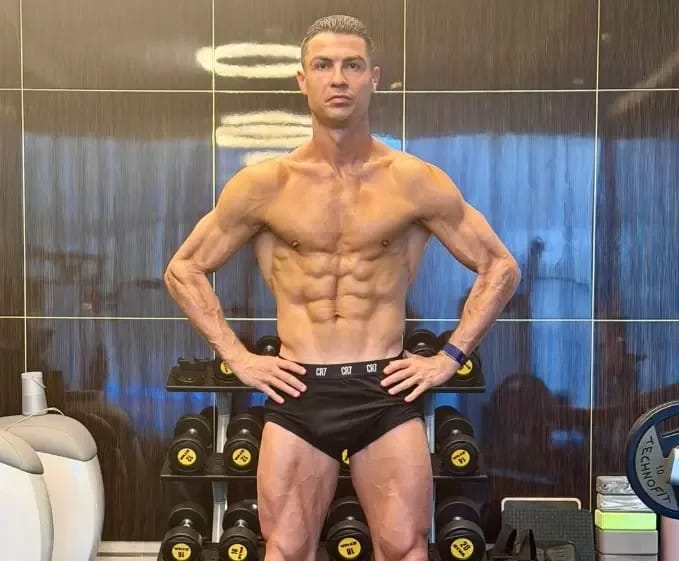
1. Delaying the decline in muscle tissue
Starting from the fourth decade of life, the body begins to gradually lose muscle strength and muscle quality, even before a real decrease in the muscle mass itself is seen. The first to be affected are the fast–twitch muscle fibers, which are responsible for explosive power, stability, and rapid response.
This is precisely the reason why Ronaldo's strength training regimen is considered so rigorous. His goal is not solely aesthetic, but rather maintaining the body's ability to continue generating explosive power even at an advanced age relative to professional sports.
The bottom line is that aerobic activity alone, such as walking or swimming, is very important for health, but it is not enough to maintain muscle strength over time. Therefore, the recommendation today is to combine strength and resistance training at least twice a week, even at an older age.
2. Maintenance of the aerobic system
The heart and lungs also undergo a natural change over the years. Starting from the age of 30, the body's ability to utilize oxygen begins to decline gradually, and the maximum heart rate decreases as well.
Messi and Ronaldo are not immune to this process, and therefore, in order to continue performing at the highest levels, they invest in maintaining aerobic fitness throughout the year. One of the central tools for this is interval training, meaning short bursts of high–intensity effort alongside controlled recovery times.
The goal is to maintain the efficiency of the cardiovascular system without creating overload and injuries.
The conclusion for all of us is simple: To maintain fitness at age 40 and above, it is important to combine endurance activity such as walking, cycling, or moderate running with short, controlled bursts of effort at a high heart rate, naturally in accordance with one's health status.
3. Load management and recovery
One of the most significant differences between the age of 20 and the age of 40 is the duration of the body's recovery. Muscles, tendons, and cartilages need a longer time to rehabilitate after exertion.
Additionally, the aging body requires a stronger stimulus and a larger amount of high–quality protein in order to rebuild muscle and maintain it.
This is the reason that athletes like Messi and Ronaldo do not necessarily train harder, but rather smarter. They work under precise loads, strictly adhering to sleep, recovery treatments, nutrition, and meticulous management of rest times.
For people who are not professional athletes as well, the message is clear: At age 40 and above, recovery is no less important than the training itself. Quality sleep, proper nutrition, and listening to the body are an integral part of maintaining fitness and health.
4. Smart adaptation to save energy
After understanding the natural changes in the body, one can also understand how Messi and Ronaldo manage to continue to excel on the pitch.
FIFA data from the 2022 World Cup showed that Messi was among the players who walked the most and ran the least during games. This is not laziness, but rather a precise strategy of energy management. He saves his strength for the moments that truly matter, and chooses when to perform a sprint and when to conserve effort.
Ronaldo has also changed his style of play over the years. Instead of running nonstop from side to side, he currently focuses more on the penalty area and on short, precise actions, which allow him to optimally utilize the explosive power that he still has left.
The important message is that you do not have to exert yourself harder to remain active over time. Sometimes, it is precisely smart adjustments in the intensity and nature of the activity that allow one to persevere without getting injured.
It is important to remember that Messi and Ronaldo benefit from exceptional genetics and a professional medical envelope that is available to them around the clock. But despite these advantages, the principles upon which they rely are relevant to all of us.
As we age, the body demands that we work smarter. Regular strength training, maintenance of aerobic fitness, proper load management, high–quality nutrition, and good sleep are the key to maintaining functioning, independence, and quality of life even after the age of 40.
The goal is not to "beat time", but rather to learn to work together with it, in order to stay in motion and in the game for many years to come.
The author is the Deputy Chief Physiotherapist, Meuhedet