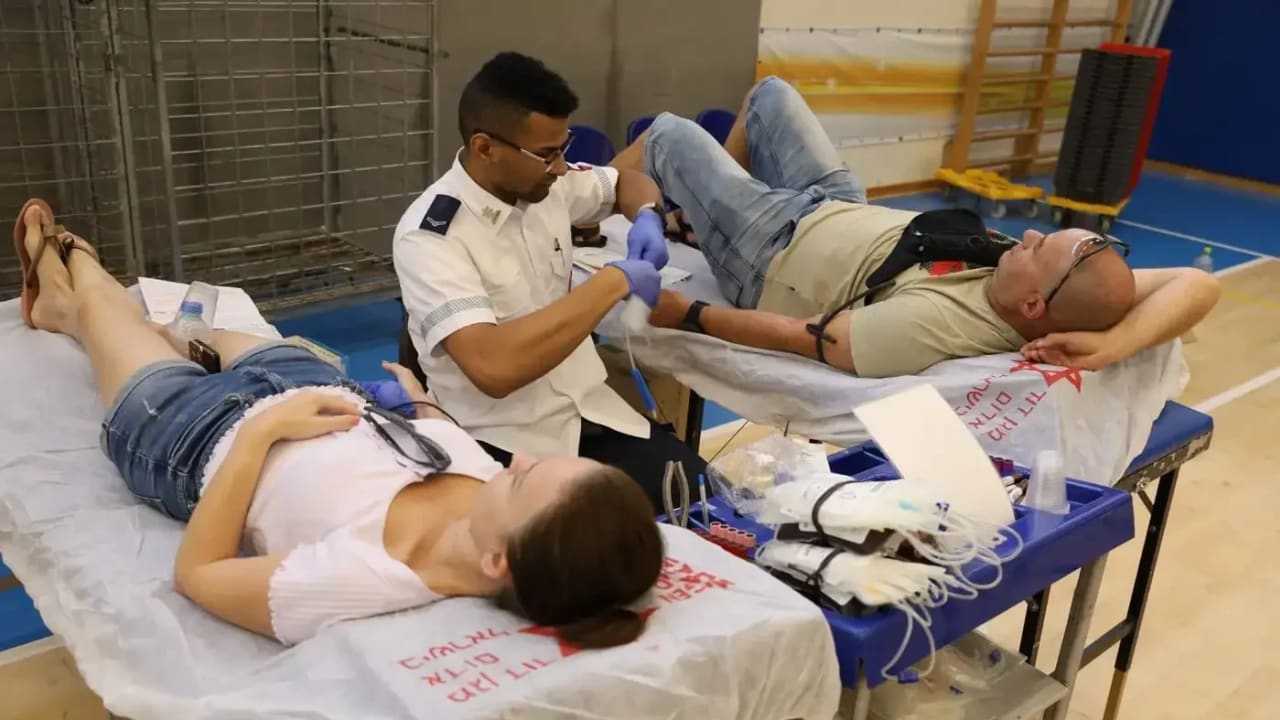
Blood donation is one of the simplest actions that can save lives, but in practice, only a small percentage of the healthy population donates blood regularly. According to medical data from healthcare systems in Western countries, the donor rate usually stands at only about 2% of the eligible population.
The need for blood donations remains high worldwide, while the number of regular donors is relatively low. A systematic review published in 2024 in the journal Blood Transfusion found that health concerns and misinformation are among the primary reasons why people avoid donating blood, even though donation is considered safe for most of the healthy population.
Despite this, the need for blood units is high and constant, partly because the various blood components last for only a limited time: Blood platelets are usually kept for up to only about five to seven days, red blood cells for about 35 to 42 days, and plasma can be frozen and preserved for a longer period. This means that the blood supply requires constant replenishment, and old donations cannot be relied upon.
Additionally, every single blood donation can assist up to three different patients, thanks to the separation of blood components for different medical uses.
<br>How much blood is donated and what happens to the body?
A blood donation is usually carried out in an amount of about 450 ml of blood, which is less than a tenth of the average amount of blood in the human body (about 5 liters for a man weighing 70 kg). This is an amount that the body knows how to replenish naturally, and in most healthy people, even without harming daily functioning.
One of the common mistakes is the fear that donating blood weakens the body over time. In practice, in a healthy person, the body quickly compensates for the lost volume of fluids within a few hours to a few days, and the red blood cells regenerate gradually within a few weeks to months.
However, it is important to note that blood donation increases the body's use of its iron stores, and therefore it is recommended for regular donors to consume foods rich in iron or to consider iron supplements, since the full return of iron stores can take longer, especially among women and among those who do not take iron supplements.

How does the body react during the donation?
During the donation itself, the body reacts in a controlled manner. The slight decrease in blood volume is identified by internal regulatory systems, and they activate mechanisms that stabilize blood pressure and blood flow to vital organs. Therefore, when the donation is done under controlled conditions and according to procedures, it is considered very safe.
<br>Common myths about blood donation
Quite a few myths exist around blood donation. The following are the most common ones:
You can contract diseases during the donation
All equipment used for blood donation is disposable, sterile, and does not allow the transmission of diseases.
Only people in high physical fitness can donate blood
Most healthy people at the appropriate age can donate, subject to basic medical examinations.
After a donation, it is forbidden to return to normal activity
It is possible to return to routine, but it is recommended to avoid intense physical exertion on the day of the donation itself.
Who is not supposed to donate blood?
Not every person is suitable to donate blood, and there are clear medical criteria designed to protect both the donor and the recipient. Before every donation, a basic physical examination is performed, which includes measuring blood pressure, pulse, hemoglobin, and a detailed medical questionnaire. People with heart, lung, or kidney diseases, those suffering from certain chronic diseases or taking certain medications, or those who have recently undergone infections or traveled to areas where infectious diseases (such as HIV) are very common – may be deferred from donation temporarily or permanently. In addition, a minimum hemoglobin level is required (usually 11.5–12.5 g/dL for women and 12.5–13.5 g/dL for men) and a minimum weight of about 50 kg.
In Israel, donors over the age of 65 need a doctor's approval before a donation, and the same applies to first-time donors over the age of 60. After the donation, every blood unit undergoes comprehensive laboratory tests to detect antibodies and the presence of HIV, hepatitis B and C viruses, syphilis, and other infectious diseases. This testing system ensures the safety of the blood supply and reduces the risk of transmitting infectious diseases to less than 1 in a million among donation recipients.
Ultimately, blood donation is a relatively short action, but one with an enormous medical impact. Every donation can save the lives of several different patients and provide a critical response in situations where there is no other alternative. Understanding the physiological process and dispelling the fears around it can encourage more healthy people to take part in the ongoing effort to maintain an available and safe blood supply.
Dr. Lee Erez, specialist in family medicine, Maccabi Healthcare Services Northern District