
I have a simple professional rule: Every time something becomes a global trend, as a dermatologist, I get a little suspicious.
Not because every trend is bad. On the contrary, sometimes trends actually expose us to real innovation. But science almost never works like a trend. Science asks whom it is suitable for, under what circumstances, in which populations, and what the limitations are. A trend, on the other hand, tends to convince us that one solution fits everyone.
That is precisely the reason I am looking carefully at the massive wave of enthusiasm around Korean cosmetics.
It is important to say right at the start: K-beauty is an impressive success story. South Korea has become an innovation powerhouse in cosmetics thanks to a combination of government investment, academic research, and an industry that continuously develops raw materials, delivery systems, and new formulations. Many of the technologies developed there were later adopted by European and American companies as well.
But to understand K-beauty, one must also understand the culture in which it grew.
In Korea, a long skincare routine is not just a cosmetic matter. For many mothers and daughters, it is also shared quality time. Cleansing, toner, essence, serums, and creams become a moment of closeness and conversation.
When this custom reaches the West via social media, it often loses context. Instead of a shared ritual, you get a shopping list. Instead of human connection, you get the feeling that the more steps there are, the better the skincare is.
And that is where the problem begins.
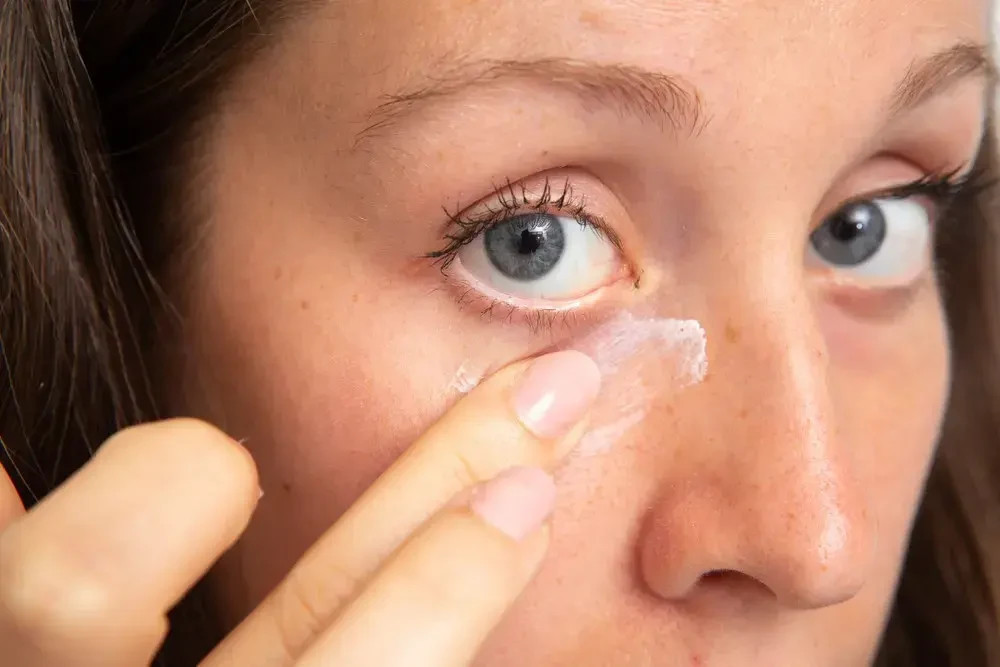
In recent years, I see more and more young girls aged 9, 10, and 11 asking to use acids, retinol, peptides, and anti-aging products. Young, healthy skin generally has no need for this, and early, uncontrolled use can cause irritation, damage to the skin barrier, and sensitivities.
The problem here is not just medical, but also cultural. Do we really want young girls growing up with the feeling that their skin is a project requiring 10 products every evening?
Not all skin ages at the same rate
One of the key differences between populations lies in the way skin ages.
In East Asian populations, there is on average a tendency toward better preservation of the dermis structure and collagen density over the years, which is why deep wrinkles tend to appear at a later age.
By contrast, for many women of European or Mediterranean descent, the decline in collagen quality may begin earlier. In the fifth decade of life, the need may already arise for ingredients that stimulate collagen production, such as retinoids, active acids, and advanced peptides.
The treatment philosophy is also different.
Korean skin often tends to be more sensitive to irritation from active ingredients, which is why an approach developed there of multiple layers of products in relatively moderate concentrations. Instead of a single high-concentration treatment, a cumulative effect is built using several gentle products.
This is a very logical approach for the skin for which it was developed. But it is not necessarily ideal for every woman in Israel.
An Israeli woman ordering a Korean product might sometimes be disappointed, not because the product is not good, but because it was developed first and foremost for different skin, different climate conditions, and different usage habits.
Where the Koreans truly changed the market
If there is one area where the Korean industry deserves huge credit, it is sunscreens.
The Koreans managed to produce sunscreens that are lightweight, pleasant, and almost unnoticeable on the skin. This is a significant achievement, because the best sunscreen is the one people will actually use every day.
But here, too, there is an important caveat.
For those suffering from melasma or post-inflammatory hyperpigmentation, UV radiation is not the only thing playing a role. Visible light, and especially blue light, can also contribute to melanin production and the worsening of spots.
Therefore, today there is importance to sunscreens with iron oxides, which are mostly found in tinted products. Such sunscreens provide additional protection against visible radiation.
And this is precisely where a gap can form.
Many Korean sunscreens strive to be completely sheer on the skin, and therefore do not always include iron oxides. For many consumers, this is an excellent choice. For Israeli women dealing with melasma or sunspots, it might be a less ideal choice.
The question, then, is not whether Korean cosmetics are good or bad. They are very good. But they are not necessarily equally good for all skin.
Proper medicine and skincare do not start with a trend, but with an understanding of skin biology, the climate we live in, the type of pigmentation, the level of sensitivity, the age of the patient, and the true goal of the treatment.
Good medicine does not ask what is fashionable in the world. It asks what is right for the person sitting in front of it.
Dr. Marina Landau is a specialist dermatologist and founder of the MAHUT cosmeceutical product line.