
When Major General (Res.) Nadav Padan returned to active duty on October 8, 2023, as a senior commander in the IDF Southern Command, he witnessed scenes that decades of military service could not fully prepare him for.
"I served 37 years in the IDF," Padan reflects. "I’ve seen combat in Lebanon and lost close comrades. But the sights I witnessed on October 8th in the Gaza border communities were horrific beyond words—bodies, butchered families, horrific smells."

Padan immediately engaged with Israel’s Ministry of Defense to identify the nation’s most urgent crisis. The answer soon became clear: the IDF was facing an unprecedented mental health crisis.
“When I met with the Ministry of Defense [following October 7] and asked about their greatest challenge, they emphasized that the expected scale of PTSD cases presented an unprecedented challenge for Israel’s existing mental health system.
Before October 7, Padan says, Israel had recognized around 8,000 veterans suffering from PTSD across all the wars in the nation’s history. Since the beginning of the war, there have been over 29,000 officially recognized cases. While some of the increase can be attributed to greater awareness and diagnosis, the scale of the increase demands a significant response.
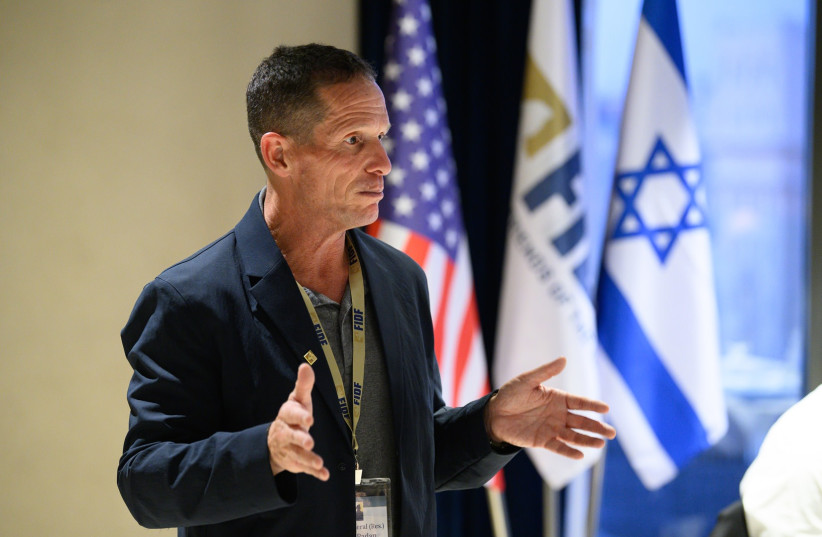
“When soldiers witness such atrocities” as they did on October 7, they require immediate intervention,” says Padan. “It is an overwhelming challenge.”
To provide immediate relief, FIDF funded “recharge weeks” for soldiers exiting combat zones. Battalions were brought to recovery centers for psychological screening, debriefings, and R&R. More than 80% of soldiers who received the intervention were able to return to duty, while soldiers in need of further mental health treatment were provided with therapy and support
In the months following the beginning of the war, FIDF mobilized over $100 million for post-trauma interventions.
The Frontline of Mental Health: New Nationwide PTSD Centers
Recognizing that existing non-profit networks could treat only limited numbers of patients, FIDF partnered with the IDF Medical Corps, the Ministry of Defense, and Sheba Medical Center to build a nationwide mental health infrastructure.
At the center of this initiative is the National IDF Center for Mental Health and Resilience at the former Beit Feldman campus in Netanya. Supported by a 150 million ILS investment from FIDF, the facility brings clinical psychologists, trauma researchers, and IDF Medical Corps officers under one roof. It trains military commanders to identify early signs of mental fatigue while providing clinical interventions for active-duty personnel and veterans.
FIDF also collaborated with the US-based Cohen Veterans Network (CVN), founded by American philanthropist Steve Cohen, and Sheba Medical Center to establish a specialized outpatient mental health clinic in Modi’in, Israel. A second clinic is set to open in the Mevo’ot HaHermon Regional Council in northern Israel. Additional centers in Nahariya, Jerusalem, Beersheba, Haifa, and Tel Aviv are operated by Sheba Medical Center and the Zahal Disabled Veterans Organization. These centers integrate hydrotherapy, outdoor sports therapy, physical conditioning, and group psychotherapy.
"We realized that bureaucratic delays had to be completely set aside," Padan states. "Israel faced a gap of years in mental healthcare capacity. By establishing these nationwide clinics, we created a rapid response framework capable of treating thousands of soldiers simultaneously."
Supporting the Backbone: Comprehensive Care for Miluim Families
The length of the war has placed heavy strain on Israel’s reserve forces. With hundreds of thousands of citizen-soldiers serving extended deployments, the physical, financial, and emotional toll on reservists and their families has reached unprecedented levels.
FIDF expanded its mandate to address these needs, investing nearly $28 million to $34 million in reserve-focused programs and launching financial assistance funds, mentorship networks, and family stabilization initiatives.
"Israel has never faced a war of this duration with a reserve force deployed for 300 to 500 days," Padan notes. "We saw reservists losing businesses, facing severe financial pressure, and managing households under immense strain. You cannot support the soldier without fully supporting the family standing behind them."
In partnership with local municipalities, FIDF introduced workshops for spouses of deployed reservists, providing tools to help children cope with extended parental absence. It also expanded its academic scholarship program, awarding over 1,000 full university scholarships annually to discharged combat veterans. Recipients complete 300 hours of community volunteering.
A Lifetime Bond: Connecting Global Jewry to Israel's Defenders
Beyond clinical facilities and financial aid, FIDF maintains a core mission: fostering a direct personal connection between North American Jewry and IDF soldiers.
Through the organization’s Legacy program, children who have lost a parent in military service are brought to the United States for summer retreats and community visits. The programs allow grieving youth to step away from daily trauma, build bonds with peers who share similar losses, and connect with supportive Jewish communities abroad.
Padan recalls visiting a bereaved family in the Gaza envelope alongside a delegation of FIDF supporters from New York: "The family had lost their eldest son, a combat soldier, and the home was filled with deep sorrow. The mother came outside, embraced our supporters, and said, 'You saved my family. Since we lost our son, my younger children completely shut down. After attending the Legacy program in America, they returned smiling and living again. You gave me back my remaining children.'"

Dana Young lost her husband, Master Sgt. (Res.) Ofer Young, in a shooting attack in February 2025. After the family’s dog also died several months later, Dana turned to FIDF’s Emotional Support Dogs program for bereaved families and received Monte, a hypoallergenic poodle. Monte has since brought companionship, activity, and routine back into the household.
For Padan, this connection underscores the strategic importance of FIDF's work, as “over 82% of senior leaders in Israel—Knesset members, hospital directors, law firm partners, corporate CEOs—passed through IDF command courses.” So supporting service members represents a direct investment in Israel's long-term societal strength.
"While military logistics provide the equipment needed for battle, it is community, shared responsibility, and unconditional support that heal the spirit after the fighting ends," Padan emphasizes. "No Israeli soldier or family should ever have to stand alone."
This article was written in cooperation with FIDF.