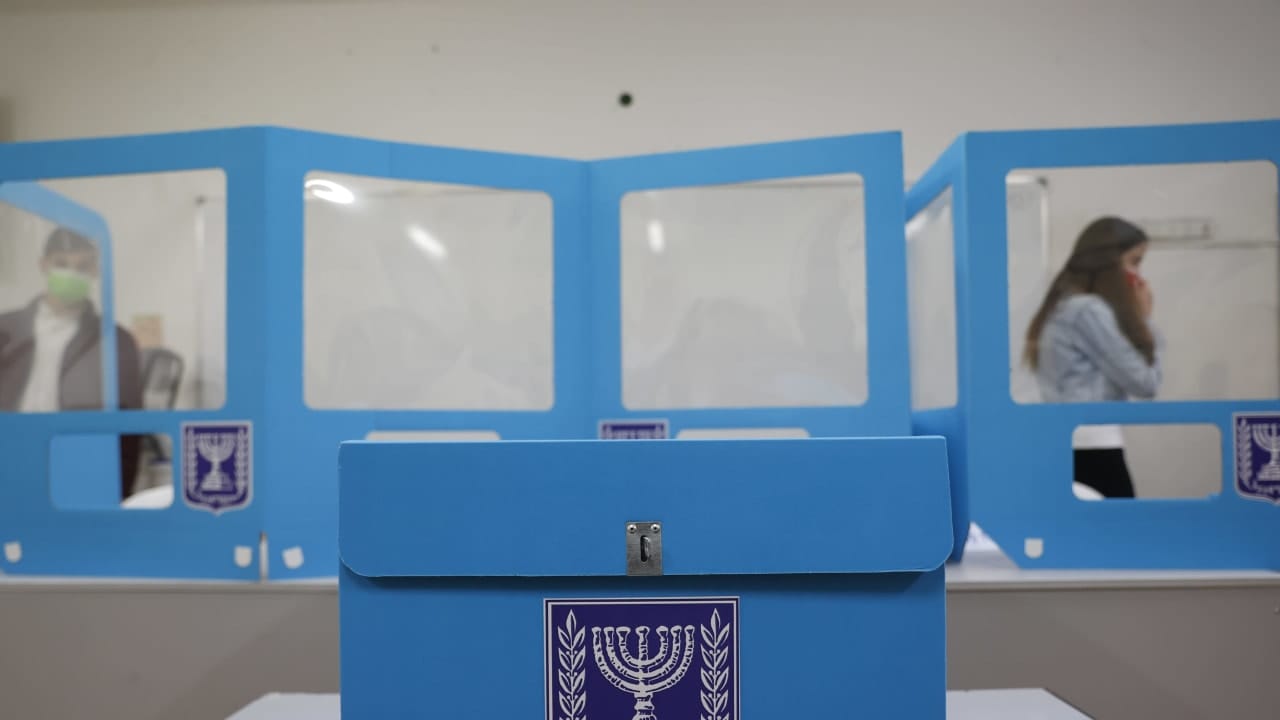
The Central Elections Committee will publish turnout figures for individual polling stations several times on Election Day while keeping the identities of voters confidential, committee chairman Justice Noam Sohlberg ruled on Sunday.
The decision, ahead of the October 27 election, gives political parties a new way to identify areas where turnout is lagging, but it leaves in place Sohlberg’s earlier ban on party representatives inside polling stations reporting the names of individual voters to their campaign headquarters.
For voters, this means that parties will be able to know that, for example, turnout at a particular polling station is low, but representatives stationed there will not be allowed to tell their parties that a particular voter has or has not cast a ballot.
For the parties, that removes a tool that has allowed campaigns to compare information coming directly from polling stations with their own databases and identify individual supporters who have not yet voted. The new system will still allow campaigns to focus get-out-the-vote efforts geographically but not on the basis of information about a particular person’s participation, supplied from inside the polling station.
Sohlberg said the committee will publish aggregate turnout rates for every regular polling station at least four times during Election Day. The same information will be available to all candidate lists and will not show whether any named individual has voted.

The arrangement follows Sohlberg’s rejection on Sunday of Likud’s request that he reconsider an August 4 decision barring members of polling committees and party observers from sending campaigns real-time information identifying voters who arrive to vote.
Likud argued that the earlier ruling overturned a long-standing practice in the middle of an election campaign and asked Sohlberg either to reverse it or postpone its application until a future election. The party maintained that recording whether a person voted does not reveal how that person voted and therefore does not compromise the essential secrecy of the ballot.
Sohlberg rejects Likud's argument: Decision does not change election law, but clarifies existing enforceable laws
Sohlberg rejected that argument. He said on Sunday that his earlier decision had not changed election law shortly before voting day, but he clarified the law already in force and applied an existing legal provision.
He also noted that previous Central Elections Committee chairmen had raised doubts about the legality of passing information about individual voters from polling stations to political parties. Parties therefore should have been prepared for the possibility that the practice would be prohibited, he said, including by seeking legislation to regulate it.
The original August ruling concerned applications such as Elector and similar voter-management systems used by political parties. Party representatives could record which voters had arrived at polling stations, allowing campaign headquarters to identify supporters who had not yet voted and contact them directly.
Sohlberg found that information about whether a person voted – as well as details such as the time or type of polling station at which they voted – concerned that person’s privacy. Election law, he ruled, does not authorize party representatives to take information they receive while carrying out their official duties at a polling station and transfer it for party campaigning.
Parties may contact voters using lawful data, but cannot track in real time whether they voted
The ruling did not prohibit parties from using the voter-roll information lawfully provided to them before the election to contact members of the public. What they cannot add to those databases from inside the polling station is a real-time indication of whether a particular voter has already cast a ballot.
Per reports, the August proceeding began following an application by attorney Shahar Ben-Meir, joined by Tel Aviv University’s Privacy Protection Clinic, which argued that the practice violated voters’ privacy. Likud, Shas, United Torah Judaism (UTJ) and the Religious Zionist Party (RZP) argued during the original proceedings that the existing practice did not violate the law, according to reports.
Sohlberg subsequently asked the Knesset factions and other participants in the proceedings to propose practical alternatives that would allow parties to encourage voting without compromising the privacy principles established in his ruling.
The polling-station turnout figures announced on Sunday are the compromise he ultimately adopted. Rather than telling campaigns who voted, the Central Elections Committee itself will tell all parties equally how many people voted at each regular polling station.
The result preserves much of the parties’ ability to identify communities or neighborhoods where turnout is low, while ending the person-by-person flow of voter participation information from polling stations that Sohlberg found the law does not permit.