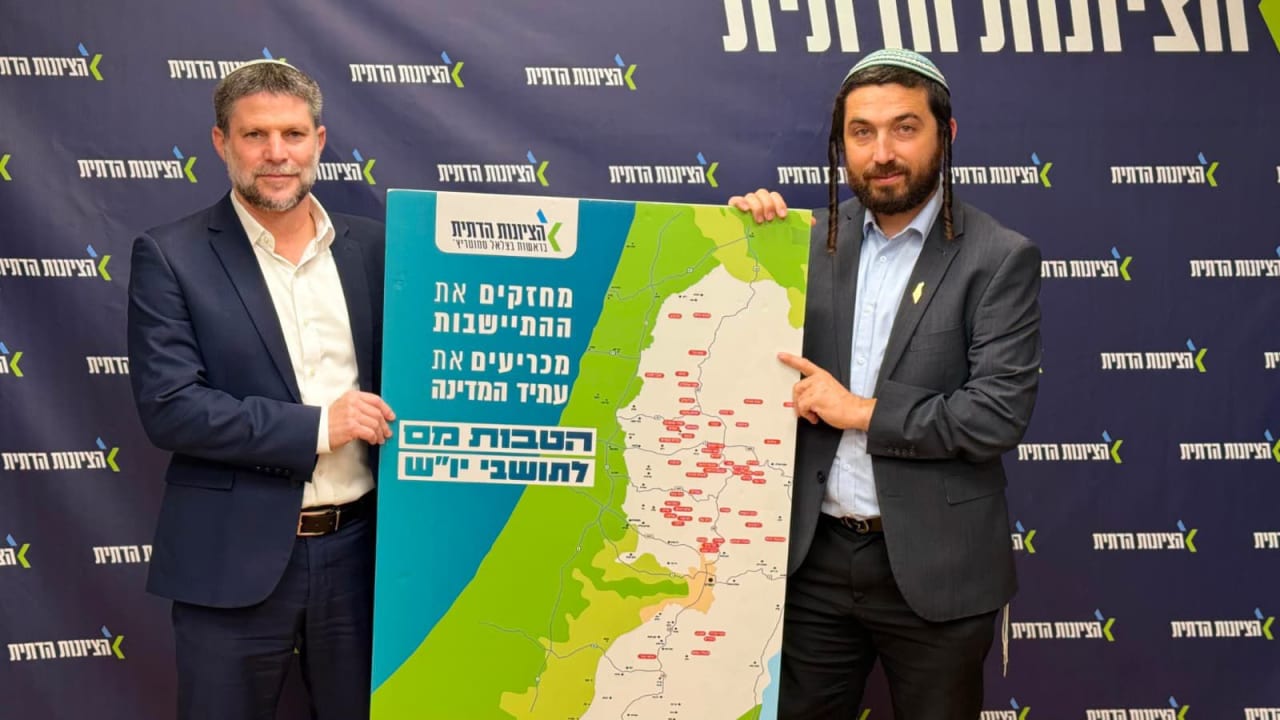
The Knesset Plenum approved in its second and third readings late on Wednesday night legislation that will grant tax benefits for numerous settlements in the West Bank.
The bill passed with 32 lawmakers in favor, while 23 opposed. The Tax Authority estimated that the budget cost of the proposal would be NIS 130 million in the Knesset Finance Committee meeting last week.
The authority added that there was an existing funding source for it.
The passage of the bill was controversial after benefits for northern border communities were initially included but then subsequently removed.
This led to criticism from opposition lawmakers over the government’s failure to prioritize aid for the North as the area remains under continued threat from Hezbollah attacks.
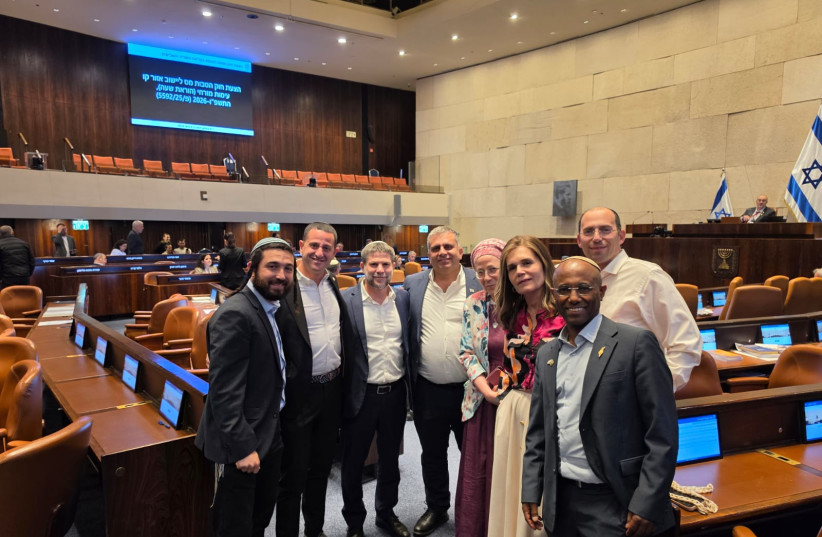
Other opposition lawmakers argued that the benefits for northern communities were purposely inserted into the legislation so that it would have higher chances of passing.
The bill was sponsored by MK Zvi Sukkot, a member of the right-wing Religious Zionist Party, which is led by Finance Minister Bezalel Smotrich, who backs the bill. A group of other far-right lawmakers also sponsored the bill.
Tax benefits for 'the eastern conflict-line area'
The legislation establishes tax benefits for communities located in a designated “eastern conflict-line area” in the West Bank. The area is situated east of a designated security barrier, and communities must be located more than two kilometers from the barrier to be eligible for the benefits.
Under the law, for a community to be designated as qualifying for the tax benefit, it must also meet a set of further conditions.
Settlements considered eligible include those in which transportation of students from the community is permitted only in bulletproof vehicles, according to Defense Ministry publications.
Communities are also eligible if they are ranked six or lower on Israel’s Peripherality Index or on its Socio-Economic Index. It is also required that the establishment of the settlement be approved in accordance with the law to be eligible for the benefits.
According to the legislation, the law will take effect in January 2026 and remain in force until December 31, 2027. The finance minister will be authorized, subject to approval by the Knesset Finance Committee, to extend the validity by additional periods of up to two years each.
Smotrich welcomed the legislation’s passage and argued that “an injustice toward tens of thousands of residents of Judea and Samaria living under a continuous security threat has been corrected.”
“The amendment to the Income Tax Ordinance provides appropriate recognition of the reality of life in threatened communities and reflects equal treatment for residents who are on the front line of defending the State of Israel,” he added.
Under the 1990s Oslo Accords between Israel and the Palestinian Authority, the West Bank was divided into three areas: A, B, and C, with Area C under full Israeli control.
Israel’s roughly 500,000 settlers live mainly in Area C, with most settlements considered legal under Israeli law and built on state land through government-approved decisions.
Right-wing push for Israeli sovereignty in the West Bank
Right-wing ministers and lawmakers have continuously pushed for Israeli sovereignty over all areas in the West Bank, drawing sharp criticism and condemnation from leaders of various countries worldwide.
In a separate decision, 2,162 new housing units were approved to be developed in West Bank settlements by the Higher Planning Council, which is a body that operates under the Defense Ministry, Smotrich announced on Wednesday.
In the settlement of Gvaot, located in the Gush Etzion bloc, 1,006 housing units were approved.
In Har Bracha, 922 units were approved for deposit in the planning process, and an additional 234 were granted final approval in the local council of Kiryat Arba.
Smotrich welcomed this decision as well, saying that “we are continuing to build the Land of Israel in practice.”
He added that the establishment of the new housing units was “not merely planning measures."
“They are national initiatives that strengthen our hold on the land, reinforce Israel’s security, and establish clear facts on the ground that prevent the creation of an Arab terrorist state in the heart of the country.”