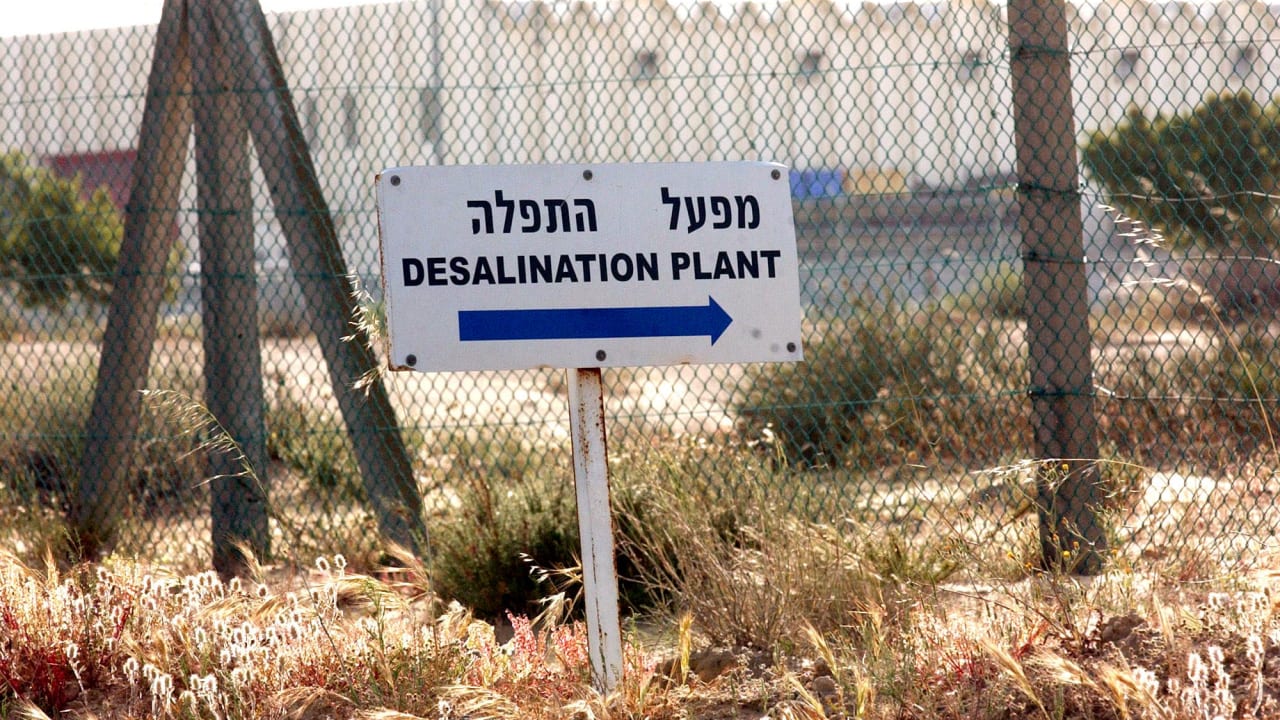
The Israeli government approved the Water Authority's latest long-term plan, which, for the first time, allows private entities to plan and develop large desalination plants, the Water Authority announced on Monday.
The overarching goal of the new plan is to enable the State of Israel to produce 2.3 billion cubic meters of desalinated water per year by 2050, and 2,75 billion cubic meters per year by 2075.
The decision to go foward with this plan, the Water Authority explained, is an anticipatory measure to expected increases in Israel's population, accelerated urbanization throughout Israel, and the effects of climate change over time, all of which put pressure on water supply and consumption rates.
Currently, the planning and construction process of a desalination plant in Israel can take up to eight years, according to the Water Authority. To shorten the process and ensure that Israel can reach its lofty desalination goals (or at least come close), the government will now be able to authorize private companies to build desalination plants with production capacities of at least 100 million cubic meters of water per year.
What do private companies need in order to get approval to plan a desalination facility?
Private entities wishing to participate in this program and plan a desalination facility will require approval from the Water Authority and the Energy and Infrastructure Minister, and they will have to obtain a recommendation from Israel's Planning Administration, which regulates land use and development.

Other conditions for approval will be determined by a team comprising representatives from the Planning Administration, the Water Authority, the Energy and Infrastructure Ministry, and the Finance Ministry.