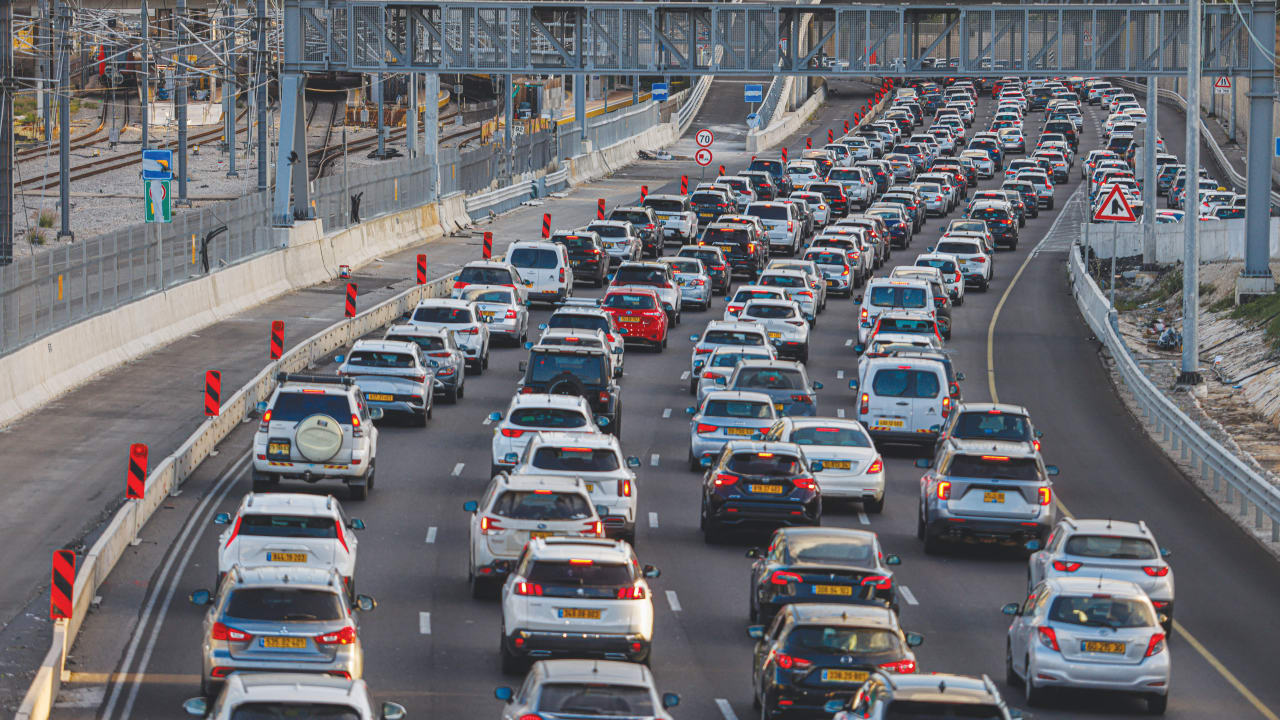
Israel’s road fatality figures for 2026 appear to show improvement, but National Road Safety Authority data indicate the decline was largely caused by an exceptional drop in traffic during March’s Operation Roaring Lion.
In March, 27 people were killed on the roads compared with 53 in the same month last year.
Excluding March, 157 people were killed this year compared with 147 in the same period last year, an increase of nearly 7%.
That rise came despite an intensive enforcement campaign launched by the Traffic Police and the National Road Safety Authority, funded by a special NIS 350 million increase in the road safety budget.
In January, road accidents declined, but the trend has since reversed. Even with more police officers on the roads and more tickets issued, the number of casualties continues to rise.
Despite the rise in road accidents and deaths, officials have yet to approve the NRSA-drafted two-wheeled vehicle driver education reform, which has reportedly been stuck at the Transportation Ministry for two years.
Police crack down on speeding, arrest motorcyclist going over 280 km/h
On Tuesday, Israel Police continued the nationwide crackdown, arresting a motorcyclist who was spotted driving at a speed of 285 km/h.
The driver, a 24-year-old resident from Arava, was brought in for questioning by traffic investigators from and was subsequently jailed.
Israel Police and the Transportation Ministry claimed the arrest was part of the joint operation to enforce road safety, although the ministry has done little to strengthen traffic education in high schools or encourage Israelis to shift to public transportation.
Israelis drive private cars far more than Europeans and use trains and buses too little, a pattern that contributes to the country’s high road fatality rate. A serious safety policy would therefore make public transportation more reliable, more frequent, and more accessible.
Drivers will leave their cars at home only when they know buses will arrive on time, that there will be no traffic because there are clear bus lanes, and that trains run frequently enough to be useful.
Instead, under Transportation Minister Miri Regev, the ministry’s answer is once again to crack down on drivers. Many senior professionals have either left or been dismissed from the ministry in recent years, and the policy response has remained centered on enforcement.
Changing penalty points for road violations
The Transportation Ministry is seeking to increase penalty points for several offenses from eight to 10, accelerating the path toward license suspension.
These include speeding, the offense most favored by enforcement authorities because it is easy to police, as well as genuinely dangerous violations such as running a red light, failing to yield to pedestrians, using a cellphone while driving, and making a dangerous entry to or exit from the road shoulder.
To “balance” the proposal, the ministry would reduce points for several minor offenses. Driving with a vehicle license expired for less than four months would drop from six points to none; several violations involving failure to obey directional arrow signs would fall from six points to four; and the six points attached to a vehicle smoke-emission ticket would be canceled.