
Golda Meir was “an amazing, charming, and emotional personality, who never sought personal greatness, but had it thrust upon her,” shared Prof. Meron Medzini, as he recalled the many years that he knew and worked with Israel’s only female prime minister. His remarks were part of the Begin Heritage Center’s series “The Buck Stops Here,” featuring conversations with experts about Israel’s prime ministers.
With the possible exception of her immediate family, Medzini, 93, knew Golda longer and better than anyone still alive. He first met her when he was two years old; his mother, Regina Hamburger Medzini, went to grade school with Golda when they lived in Milwaukee. They became instant friends, and it was a lifelong relationship, not only for Regina, but later for her son, who remained Golda’s close friend in good times and bad, until her death in December 1978.
Medzini, a celebrated personality in his own right, is professor emeritus of the Hebrew University of Jerusalem, where he taught Japanese history and Israel’s foreign policy for Asia. Previously, he had served as director of the Government Press Office, a government spokesman, and Golda’s personal spokesman when she was prime minister. He has been honored by the Japanese government in recognition of his valuable contribution to the knowledge and understanding of Japan; other Asian nations have likewise expressed their appreciation of him.
At his children’s urging, Medzini wrote Golda Meir: A Political Biography, which won the Prime Minister’s Prize in 2010. It is one of some 50 biographies that have been written about the former prime minister, only “two of which are good,” said Medzini. He did not include his own among them.
At the conclusion of his talk, he received a standing ovation. During the question-and-answer periods, he was asked why Golda had taken the fall for the misguided decisions made by then-defense minister Moshe Dayan during the 1973 Yom Kippur War.
“Because she was the prime minister; she was in charge,” Medzini replied.
Jerusalem-based Journalists win award from Jewish Press Association
Two Jerusalem-based journalists have won Simon Rockower Awards from the American Jewish Press Association. In the division of Web-based outlets – Digital only, Website only, and Wire Services – Judy Lash Balint, writing for the Jewish News Syndicate, won second prize for her empathetic article on the returning hostages unit at Beilinson Medical Center. In her piece, she described the efforts and services of the unit, which assisted the former hostages as they recovered from their time in captivity.
In the division of Weekly and Biweekly Newspapers, first place went to Gil Zohar for his article “US long interested in Mideast,” published in Vancouver’s Jewish Independent. His timely piece traces largely unknown efforts by private Americans to colonize or settle the Land of Israel.
Articles by both Lash Balint and Zohar have also appeared many times in The Jerusalem Post and its satellite publications.
Construction in Jerusalem creates frustration
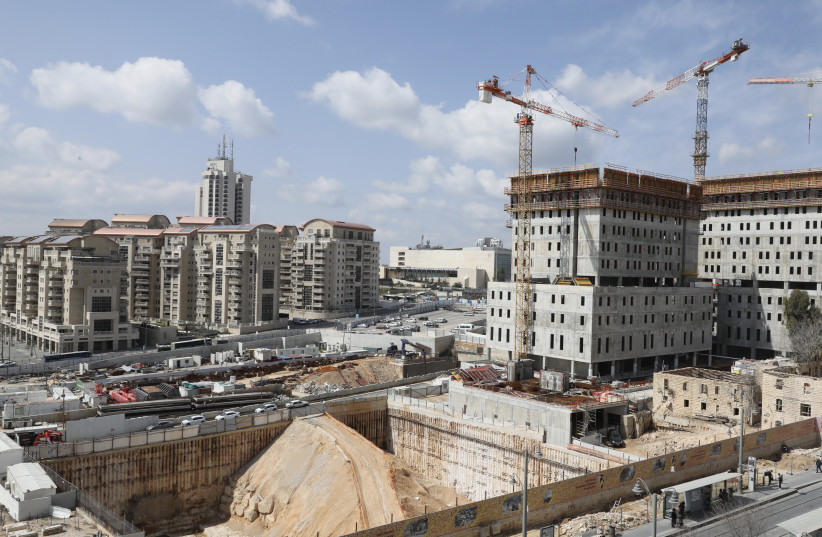
Grumblings about the wholesale digging up of the city erupted again this week as navigating the changing landscape became increasingly challenging – often without any warning. Traffic lights near the First Station have been removed. Crossing the road was dangerous even when the lights were there; now it’s a frightening nightmare, especially for anyone returning after dark from the Begin Heritage Center or the Jerusalem Cinematheque.
Worse still, the bus stop that is nearest the Begin Center has been removed, and some good-hearted bus drivers stop when they see would-be passengers standing by the roadside, trying to wave them down. David Remez Road is filled with construction equipment and lots of gravel. Pathways all over the city have uneven surfaces, which are perilous for pedestrians.
Whole blocks on some streets have been fenced off, causing landmarks to disappear from view. Many people are confused and frustrated, unable to get their bearings on streets where, not so long ago, they were able to pinpoint where they were, because the view is dominated by long rows of white boarding.
Side streets adjacent to light rail construction projects are also being excavated for approximately a 10 m. stretch. Buses and other vehicles often lurch on the uneven roads. A reader from Arnona wrote about a friend who is a senior citizen. When the device for swiping her bus pass was not working, her friend tried to make her way along the aisle to the next device. Then the bus lurched. She fell, broke five ribs, punctured her lung, suffered a head injury, and had to be hospitalized.
It’s not uncommon these days to see hands stretched out on the bus to prevent a senior citizen from falling. The situation is now beyond uncomfortable and unsightly. One Hebrew newspaper published a cover story urging Mayor Moshe Lion to put the brakes on construction. It’s a little late for projects already started, but those that have not begun should either be canceled or delayed until all existing projects are completed.
But Jerusalemites are not short of initiatives. On Fridays, the section of King George Street near Jaffa Road – which has temporarily been free of the light rail construction being carried out on the rest of the street – has become a site for concerts and sales, with tables of merchandise on both sides of the street. The pastry and coffee shop on the corner has expanded its outdoor seating; on Fridays, it’s full of people relaxing and chatting over coffee.
In response to criticism, Lion maintains that it’s better to get the construction done at once, so it will all be finished simultaneously. The unstated logic is that most construction projects will be completed by the next municipal elections, in 2029. By then, most voters will have forgotten their gripes and will have adapted to the new Jerusalem.
greerfc@gmail.com