Watch this episode without interruptions.
Listen wherever you get your podcasts.
Engraved outside the entrance to the Military Command Boarding School in Haifa is the biblical injunction to “walk humbly” (Hebrew: “hatzneah lechet”). The words, taken from the Book of Micah (6:18), are intended to instill modesty and humility in the school’s students, many of whom will become IDF officers.
Throughout his storied military career, personal life, and current position as chairman of The Jewish Agency, Doron Almog has succeeded in living up to– and even exceeding – the motto of his alma mater. Almog recently sat with the Magazine to discuss the values that have guided him, and the significant journeys and milestones of his life.
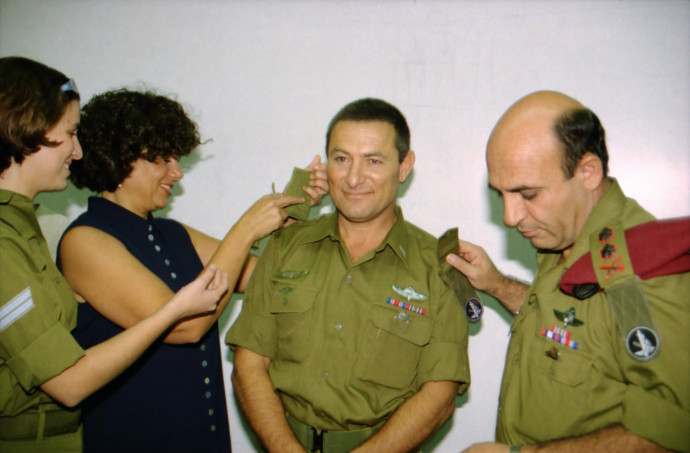
Born in 1951, the 75-year-old Almog looks far younger than his years, is trim and fit, has a broad, disarming smile, and speaks openly and frankly about his life experiences.
The timing of our interview was particularly auspicious as July 3 marks the 50th anniversary of the rescue of 105 Jewish and Israeli hostages who had been hijacked on an Air France flight by German and Palestinian terrorists and taken to Entebbe Airport in Uganda. Almog, who was then serving as the commander of the Paratroopers Reconnaissance Unit, was a key participant in the operation, was the first IDF officer to hit the ground at the Ugandan airport and the last to leave.
Prior to his role in the Entebbe rescue, he served as a company commander in the Yom Kippur War on the Sinai front, was a member of the team in Operation Rhodes, an Israeli heliborne assault on the Egyptian-held island of Shadwan in January 1970 and led an Israeli commando raid near Tripoli in February 173, targeting terrorists who had been involved in the 1972 Munich Olympics massacre of Israeli athletes.
During the Yom Kippur War, Almog’s 20-year-old brother Eran was killed in a tank battle on the Golan Heights. Almog learned of his brother’s death only after the war ended. When he called his mother, she broke the news and told him that his brother had been laid to rest in a temporary grave. Unsatisfied with the report, Almog traveled to the Golan Heights, where he located his brother’s burned-out tank and found his helmet, pieces of his uniform, and his shaver. Almog learned that Eran had been wounded in an attack from a Syrian tank, was left on the ground, and bled to death. “My first journey in military life was for him,” he says. “I swore near his burnt tank to never leave a wounded soldier behind.”
Almog progressed in his military career, leading the paratroopers in a 70 km. march to Beirut in the First Lebanon War in 1982, heading the air force’s elite Shaldag Unit in the airlift of 7,000 Ethiopian Jews to Israel in 1984-85 in Operation Moses, commanding the 35th Paratrooper Brigade in South Lebanon, and served as head of IDF Southern Command from 2000 to 2003, protecting Israel’s southern border from terrorist infiltration.
“My second journey in life,” he continues, “began 11 years after the Yom Kippur War, when our second child was born.” Almog and his wife, Didi, named their son Eran after his brother, who had fallen in the war. Shortly after his birth, doctors discovered that Eran had severe autism and intellectual disabilities and would never speak or be able to take care of himself.
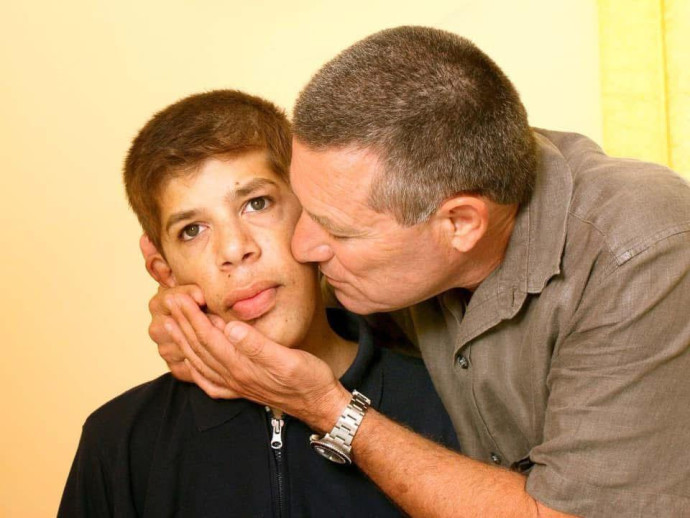
Determined that Eran and others with severe disabilities should live in dignity, Almog and Didi established ALEH-Negev Rehabilitation Center. The center is now known as ADI Negev-Nahalat Eran, in memory of his son, who passed away in 2007. ADI Negev-Nahalat Eran combines a residential village, special education campus, rehabilitation hospital, research center, and employment programs into a single inclusive community that treats 3,000 people, including 175 children who have suffered severe brain injuries. “It is an amazing, amazing place,” says Almog.
“Eran was the greatest teacher in my life,” says Almog of his son. “In my second journey in life, I became a spokesman for a child who was unable to do anything on his own power, who was a ‘hostage’ in our society.” Comparing his role freeing the hostages at Entebbe to raising his son with disabilities, he says, “The voice of our child is always there, saying, ‘My dear father, you flew to Entebbe to save 105 Israeli hostages. I have been a hostage since birth. The hostages in Entebbe were held for one week. I’m unable to do anything on my own power. Will you do something for me?” Almog and his wife chose not to hide behind walls of stigma and shame, but rather to raise him proudly.
“More than anyone else,” he continues, “my son prepared me for my position as chairman of The Jewish Agency for Israel. Why? Because all his life, he was stereotyped and stigmatized by people who called him retarded. In this respect, he resembled the Jewish people, who were pointed out and called ‘dirty Jews’ for 2,000 years.
“Eran taught me the meaning of love, commitment, and what it means to establish an exemplary society. From my point of view, the absolute victory of the Jewish people should not be expressed in battle, but in creating an exemplary society in the State of Israel. It is a moral imperative for us as a society to guarantee freedom and liberty and quality of life for the disabled.”
Returning to his account of the Entebbe rescue, Almog has vivid memories of the special forces’ preparation for the operation, which began on Friday, July 2, 1976. Assembling at an abandoned British airfield near Petah Tikva, the soldiers practiced their roles. They were then debriefed by Shimon Peres, secretary of defense, and Motta Gur, head of the General Staff. Late Friday morning, four Hercules transport planes took off from Tel Nof and flew to Sharm el-Sheikh. It was only after they had taken off from Sharm el-Sheikh that afternoon that they received the government’s official go-ahead.
“We landed at 11 p.m. at the international airport of Entebbe,” he recalls. “I was the first to jump out from the first Hercules transport. My mission was marking the runway for the next three Hercules planes.” After that, he continued on his mission to capture the airport’s control tower that was located on a hill.
Commenting on the meaning of Entebbe, Almog says, “The most important thing is the commitment of the State of Israel to every Jew in the world. It’s not only commitment – it’s unconditional love for Jews. The most important thing is to have a commitment to any Jew in trouble who is suffering.”
Almog reflects on the values of Entebbe that shaped his generation and the responsibility of passing them on to those who will shape Israel’s future.
“I don’t know if kids today remember Entebbe or know what it was, but they want to participate. Why do they want to join combat units or become pilots, or join Shaldag or Sayeret Matkal [the elite General Staff reconnaissance and special operations unit]? Because they are inspired, and Entebbe is a source of inspiration for many Jews, and for the younger generation. They may not know the details of what took place, but they are inspired. And from generation to generation, we need inspiring power to continue moving people to participate in the building of the land of Israel.”
Having spent his life serving the Jewish people as a soldier, commander, general, and now as the head of The Jewish Agency, Almog says that the concept of mutual responsibility exemplified by the Entebbe rescue is the key to the Jewish people’s survival.
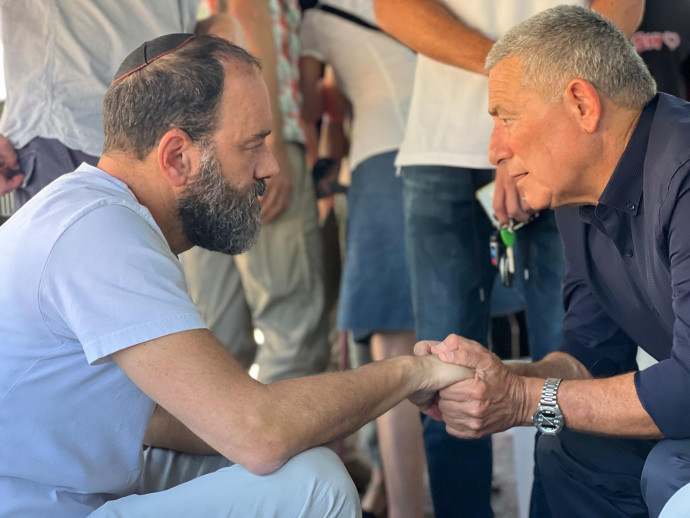
“I believe that the survival of the Jewish people in the Diaspora for 2,000 years is due to the value of mutual responsibility. In the special forces, we say ‘One for all, all for one.’ It’s the same idea. This is the power behind the Jewish people. This commitment is the secret of the existence of the Jewish people.”
Almog points out that after the war broke out on Oct. 7, thousands of Jews around the world stood up to help volunteer for Israel in a mass mobilization, which epitomized this concept of mutual responsibility. “As the chairman of The Jewish Agency for Israel, I was privileged to see this. Solidarity missions arrived, billions of dollars were raised, and many new olim arrived.”
The Jewish Agency, he explains, has a two-fold mission in putting this mutual responsibility into play. First, Almog explains, is its mission in strengthening Jewish communities by sending emissaries from the Agency to Jewish communities, as well as to college campuses and universities, where antisemitism has been rampant. He calls this strategy “boots on the ground of Jewish identity.” The Jewish Agency has 3,000 emissaries worldwide and operates in 66 countries.
An additional component of strengthening Jewish communities is The Jewish Agency’s security fund, which defends and helps protect Jewish communities worldwide. The second area, he adds, focuses on the importance of aliyah. “This is an emergency wake-up call for Jews all over the world,” he says. “The State of Israel needs more Jews to continue its growth.” The Jewish Agency has some 21 absorption centers for olim. “We need to integrate them by loving them. This is imperative. We must teach them Hebrew, help provide them with an occupation, and help them have a home.”
For Doron Almog, the most important value is love. “Love your people. Love your family. Love your nation. Love what you do, and do meaningful things every day. The most meaningful things to do are for other people. Perform acts of charity and kindness every day.”