Teaching staff working in border communities will receive a NIS 60,000 grant as classes started nationwide on Tuesday. The grant is part of a plan to push for more educators to move to these areas, which were among the most hurt during the last almost three years of war.
The program, formulated by the Tnufa Directorate for the North, the Education Ministry, and the Finance Ministry, is part of the government’s push to rehabilitate northern Israel.
The grant is intended for teaching staff, both teachers and administrators, working in communities located up to 9 kilometers from the northern border, with the personnel allowed to live up to 30 km. from the border in order to apply for the grant.
Unique learning environment
Along with the release, two educators currently working in border communities shared their experiences of working in this area.
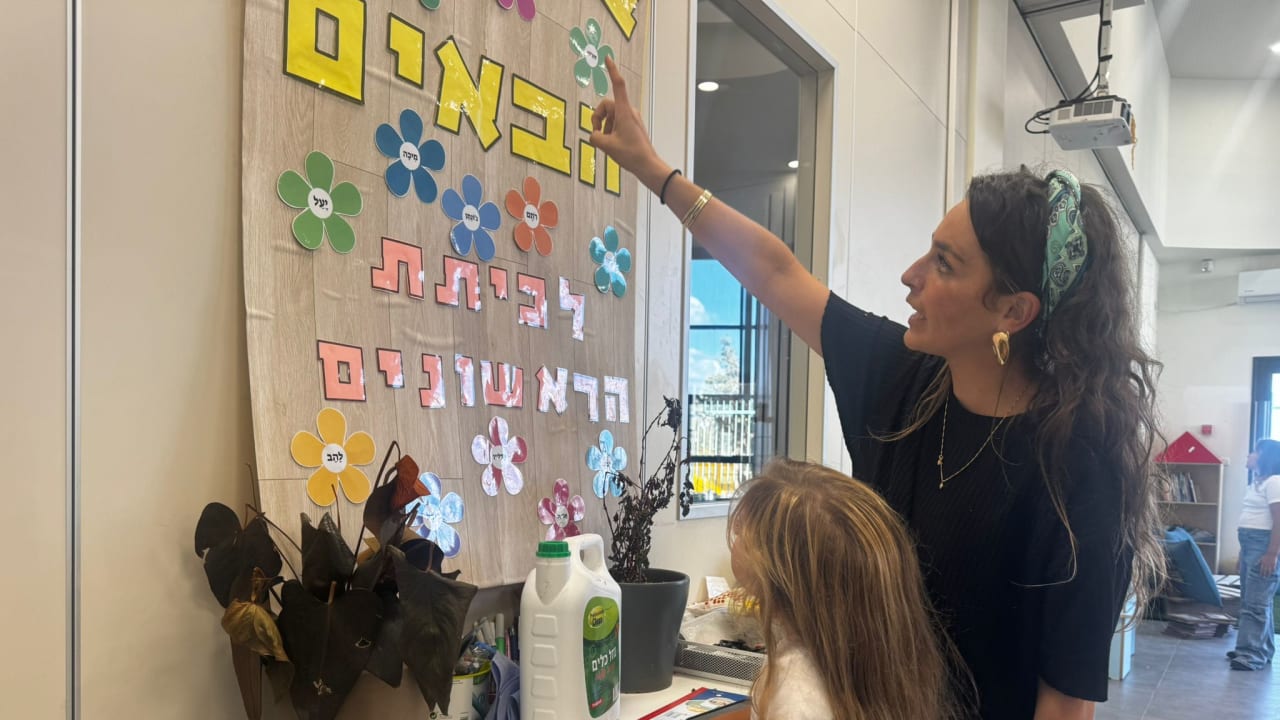
Ofra Erlich, who is originally from Tel Aviv and decided to move to Metula to work as a first- and second-grade teacher at Hanadiv School, explained that her main objective is to “establish something anew in the wake of the war, in the wake of the security situation, and mainly to give some kind of horizon and hope to these children, who didn’t choose anything from the situation they found themselves in.”

“In Tel Aviv, kids who hear ‘Lebanon’ think it’s some kind of monster. So in Metula, kids look at Lebanon and see clouds. That’s kind of my hope – to remind them that this war is something that, in the end, doesn’t have the same power in their eyes,” she explained about why she chose to move to Metula.
“We have 14 children in the class; it’s the dream of every teacher, and also of every child and parent,” she said. “And yet, first of all, we give these children an anchor. Before all the pedagogy, we come to give them an anchor and hope. Before we learn the alphabet – first of all, let’s be here, together.”
Yuval Sharon, who moved from her homeland to Shlomi to work as a kindergarten teacher focused on special education, said that moving to a border settlement is not a given, mainly because of the distance from home and the different security situation in these areas.
“I think it’s very important because not everyone wants to move there; it’s not easy. It’s living in a different reality than what I’m used to,” she said about the importance of going to northern Israeli areas to work as an educator.
What are the program's main objectives?
The government said it will place special emphasis on teachers in shortage subjects, including mathematics, English, computers, physics, biology, chemistry, and technological and therapeutic subjects, as well as kindergarten teachers and educational counseling.
“Within this framework, we are working together with the Education Ministry to encourage the absorption of new teachers who move to live in the north and join the education system in the Tnufa region settlements and provide a response to the boys and girls of the Galilee,” said Aviad Friedman, Head of the Tnufa North and Resurgence Directorate.
The outline is groundbreaking and is one of the drivers of growth in the communities along the conflict line. It allows us to attract new teaching staff and to ensure the persistence of teaching staff in the area,” added Dr. Orna Simhon, director of the Northern District at the Education Ministry.