To bring up an age-old quandary, what is jazz? If you’re looking for clues in the lineup of this year’s Jerusalem Jazz Festival (June 9-11), you may come away more baffled than enlightened.
But there’s nothing new there. Since the dawn of time – well, since the advent of jazz – the discipline has fed off and accommodated multifarious cultural baggage and, hence, stylistic channels of endeavor.
But before we get into the nitty-gritty of next week’s event at the Israel Museum, it may help to sketch something of an overview of the art form’s timeline and evolution.
All that jazz: How it evolved
How did we get, for example, from the rollicking syncopated melodies of late 19th-century ragtime – the earliest form of jazz – through to the lilting joyous sounds of Louis Armstrong and His Hot Five and Hot Seven bands of the 1920s?
Then, on we march to the irrepressible joie de vivre of Swing jazz, personified by clarinetist-bandleader Benny Goodman and the gloriously exuberant big band scene, the epitome of unapologetically entertainment-oriented music designed to get the folks out on the dance floor to shake a hip or two.

That seemingly insouciant way of thinking was then abruptly headed off at the pass in the early 1940s, when the likes of saxophonist Charlie Parker and trumpeter Dizzy Gillespie sprang bebop on the world, with its incendiary solos and ferally cerebral ethos. But then – and this is a salient, even pivotal, point – like all art forms, jazz continued to evolve, and soon morphed into the cool sounds crafted primarily on the West Coast, and melodic hard bop.
While there were artists who identified with a particular style and remained steadfast exponents thereof throughout their careers, there were others who kept their ears, hearts, and brains constantly on the lookout for new lines of thought. The likes of Duke Ellington, Louis Armstrong, Miles Davis, and John Coltrane, all titans of the field, kept up a relentless pace of growth and, to the untrained ear, it is pretty tough to equate their earlier work with their later creations.
Consider for example, Davis’s role as a young bebopper, seeking to develop his ability to improvise – one of the cornerstones of the modern jazz genre – alongside Parker, Gillespie, et al, before segueing into hard bop and thereon to his groundbreaking modal jazz of the late 1950s, most conspicuously on his hugely successful Kind of Blue record – still the bestselling jazz album of all time.
Always keen to take the next leap of faith, Davis continued to make strides and, by the late Sixties, was at the forefront of what came to be known as fusion, which, in rough terms, was a sort of synthesis between jazz and rock. It must be said, however, that Davis, who many call the most important artist in the history of jazz, tended more toward the ethereal side of the fusion mindset. And that’s without even mentioning the major movers and shakers behind the avant-garde and free jazz scene of the late 1950s and 1960s, such as Ornette Coleman and Albert Ayler, who pushed the stylistic and genre borders way beyond anything anyone had ever previously conceived of.
All of which – and there is plenty more where that bifurcating lot came from – takes us right back to our opening query: How can one define jazz? It seems to be an intrinsically amorphous, ever-changing and adapting music that constantly transcends boundaries and defies all attempts, marketing and artistic alike, to nail it to one category or another.
The late German writer and music producer Joachim-Ernst Berendt, whose anti-Nazi Protestant pastor father was murdered in Dachau, was among the first Western music industry professionals to venture into other geographic and cultural climes, visiting places like Tunisia and India to get a handle on their sonic traditions and philosophies.
He was also at the forefront of what eventually became known as World Music, and was instrumental in marrying that with jazz. Indeed, much as the term is maligned by many in the field, perhaps jazz is the true “world music,” as it imbibes and weds itself with indigenous fare.
That seems reasonable if we consider that jazz traces its roots to Africa and subsequently gestated and predominantly emerged in New Orleans. This was home to a multitude of communities, including African Americans, French, Jews, Creoles, and Europeans, all of whom brought their accrued seasoning to the heady jazz brew to varying degrees. Berendt once talked about the common ground between seemingly diverse genres, like Andalusian music and Gregorian chants. Jazz continues to embrace and adopt an expansive spread of sounds and cultural baggage.
The license to stray from the “authentic” core approach and material from the United States, the original homeland of jazz, was given a resounding stamp of approval by, among others, Manfred Eicher, when he established his ECM record label in Germany in 1969. That opened the floodgates for largely European jazz musicians to dip into their own national musical heritage and wellspring, and marry that with the more recognizable structure and textures normally associated with their craft. They no longer had to try to sound like their American counterparts in order to earn the right to be considered bona fide jazz musicians.
The same dynamic developed in this country, as locally bred jazz artists increasingly look to the Israeli Songbook and elsewhere for inspiration. Records and shows by Israeli jazz players frequently feature intriguing readings of time-honored folk and pop chestnuts originally performed by the likes of Yemenite-rooted diva Shoshana Damari, Russian-born composer-pianist Sasha Argov, Ukraine-born Mordechai Zeira, and preeminent Sabra songwriter Naomi Shemer.
Israelis, as we have witnessed in numerous walks of life and professions, tend to be quick on the uptake when they discover something new they like. Some of our globetrotting star jazz artists, Paris-based pianist Yaron Herman and longtime New York resident guitarist Gilad Hekselman, for instance, have obtained significant creative mileage out of some beloved items from the “good old Israel” musical treasure chest.
Jazz goes bigger-time in Israel – and Jerusalem
Jazz here really began to take off with the aliyah, in the late 1990s, of Arnie Lawrence, a Jewish American saxophonist and noted educator who had played with such giants of the art form as Louis Armstrong, Dizzy Gillespie, and bassist Charles Mingus.
That was when the Internet was still in its infancy and long before YouTube and Spotify made every kind of music instantly available at the click of a mouse button or cellphone key. There had been a few Israelis who had made the transition to the Big Apple, including bassists Omer Avital and Avishai Cohen, and trombonist Avi Lebovich in the early 1990s, and they began studying there and mixing it in the buzzing multinational New York jazz scene. But back then, the US was physically and artistically a long way off from this tiny country stuck at the far end of the Mediterranean.
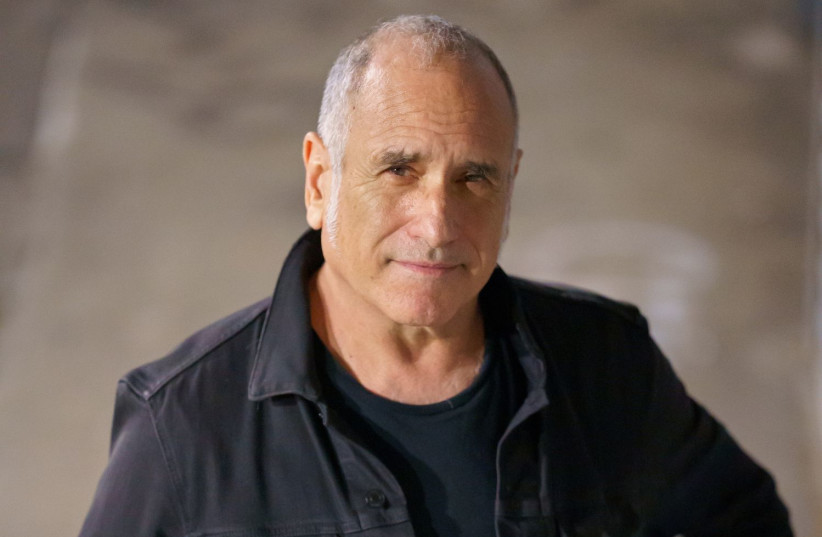
Just how far we have run with the jazz theme, here, is reflected by the nature of the program of the forthcoming Jerusalem Jazz Festival, curated for the first time by internationally acclaimed pianist Nitai Hershkovits. He takes over from stellar trumpeter Avishai Cohen who served as artistic director for 11 years. The variety on offer makes for heady perusal, stretching every which way across generous cultural and stylistic tracts.
There is, for example, a slot for singer-actress Riff Cohen, whose multi-stranded oeuvre arcs across Middle Eastern urban rock, North African folk and rai music that emanated from 1920s Algeria where her mother was horn. We also have seasoned producer, and bassist, Jonathan Levy launching a new album that proffers groove, jazz, electronics, and more commercial material fed through a prism of complex compositions and free improvisation.
The eclectic beat doesn’t stop there; far from it. We can, if we desire, head east to Iraq and get some vibes from the sumptuous musical tapestry that was woven in Baghdad across centuries of Jewish presence there. That came to an abrupt end in the early 1950s, when almost all Iraqi Jews made aliyah and relocated to other climes, such as London and various spots around the US, and included the likes of the al-Kuwaity brothers, Sallah and Daoud, favorites of King Faisal II who, an old Iraqi-born musician once told me, pleaded with the siblings not to leave and tried to keep them close at hand by promising to provide them with their own radio station.
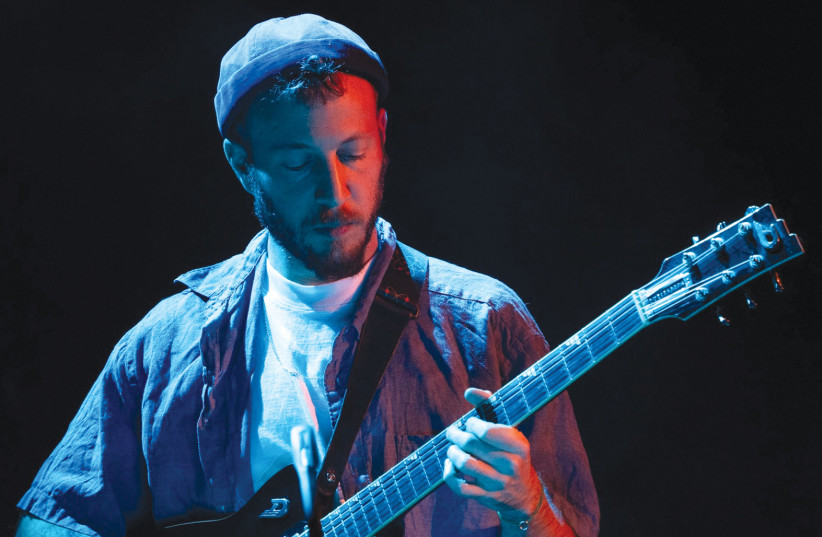
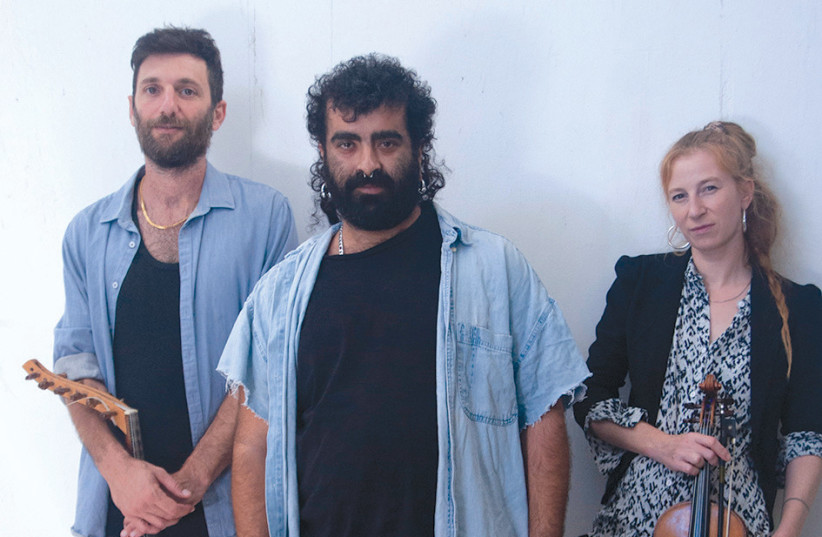
That legacy is saluted at the three-day event at the Israel Museum, including shows on June 10 (7 p.m. and 9 p.m.) by the Radio Baghdad quintet. The group will unfurl their rooted yet eminently contemporary musical takes on Iraqi Maqam poetry, and craft shades of a glorious past by conjuring up the joyous, free-for-all ambiance of traditional hafla get-togethers
What is jazz?
Is any of that jazz, per se? Is any of that somehow linked to jazz roots, the widely roaming jazz ethos, the improvisational approach to music? And so we return along the never-ending loop trajectory to the $64,000 question: What, for heaven’s sake, is jazz?
I thought it was high time I turned to the authority or, at least, the one I had easiest access to. I noted to Hershkovits that jazz festivals across the globe, including the most venerated and prestigious like the Montreux Festival in Geneva, often feature categorically extramural acts to the extent that the titular genre, in fact, is far outnumbered by the other stuff.
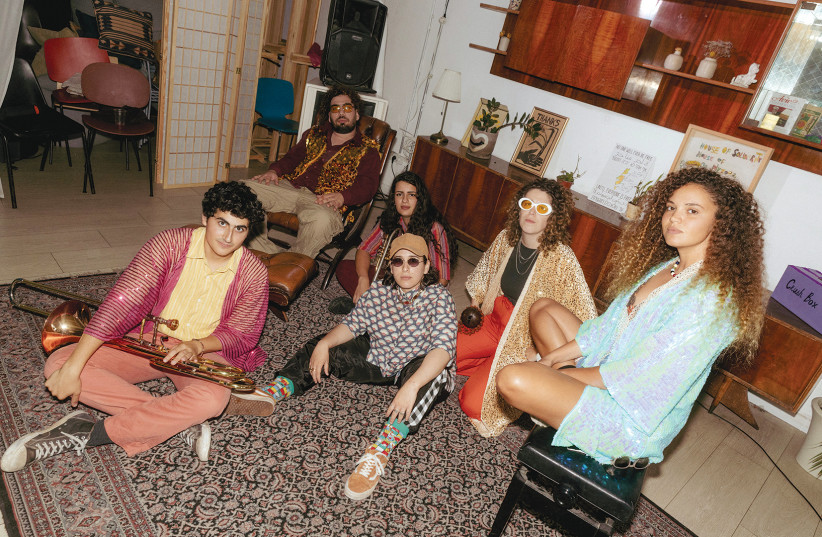
The debutant artistic director, 38, was happy to grab the quandary bull by the horns. “First of all, you have to define what jazz is to decide whether or not you like it,” he parries. “I don’t really have an answer for that,” he confesses before offering an eye-opening insider angle on the conundrum.
“I want to add in parentheses that the conversations I have about this are, in some way, connected to what music we surround ourselves with, why we engage in this music, and how much we invest in communicating it to the outside world. That, for me, is a critical point.”
That is an interesting topic indeed, and necessarily begs a question about balancing pure artistic intent, and producing something genuine and essentially creative, devoid of commercial or populist interests, and the need to convey the artwork in question to a captive audience. After all, as a yesteryear artist friend once told me as he laid down his paintbrush in his studio, no work of art is complete until it has received some kind of feedback from the observer-listener.
“With pop music, too, you try to say ‘this will reach as many ears as possible, and as many people as possible will understand it.’” Still, it is not, Hershkovits hastens to add, about pandering to mass appeal tastes. “You don’t have to ingratiate yourself. You can just communicate.”
Sounds perfectly simple, and the pianist-composer dips into his personal bio to amplify the overarching theme. “Where do I come from in terms of jazz? It’s bebop, hard bop, it’s [iconic saxophonists] Sonny Rollins and John Coltrane, and Miles Davis. They were people who enveloped themselves in this [jazz] music, and it was their life every day.”
But Hershkovits is the product of a very different environment and genetic strains. “Here, this is not our life. I grew up with a mother from Casablanca and a father whose parents came from Warsaw. So you can say that my [natural] connection to jazz is very distant.”
Ostensibly, it could hardly be more tenuous. Nonetheless, thus far Hershkovits has five studio albums to his name as leader, including one under the aforementioned prestigious ECM label, three more with an experimental troupe called Apifera, three during an invaluable stint with global star bassist Avishai Cohen, and another threesome as co-leader. There are 10 more to which he contributed as a featured artist. Not bad going for an Israeli with Moroccan-Polish blood coursing through his veins.
Then again, as previously noted, jazz is a most accommodating and malleable art form. “This is my place. This is my jazz,” Hershkovits declares. “Within this thing we call jazz I feel that the definition of jazz is expressed in that, in what I have, and also in the degree of freedom I allow within the framework I set for myself.”
Jerusalem festival offerings for all
Hershkovits has certainly forged a capacious programming framework for his first run as Jerusalem Jazz Festival itinerary honcho. Betwixt manifold offerings of discipline-adjacent or even extraneous material, there are some promising vignettes for jazz fans – after all it is a jazz festival – to sink their teeth into. Fittingly, there is a baton passing juncture with Hershkovits and predecessor Cohen joining formidable forces on stage on the first evening.
Their learned jazzy input will be augmented by more ethnic-leaning lines when they are joined by percussionist Itamar Doari and world-renowned Azerbaijani kamancheh player Sultan Nadirov, who tends to lace his traditional spike violin sounds with liberal doses of electronic sounds and textures. Naturally, and sadly, in the current political climate, it is difficult to coax foreign artists over here, so Nadirov’s appearance at the Israel Museum is all the more appreciated.
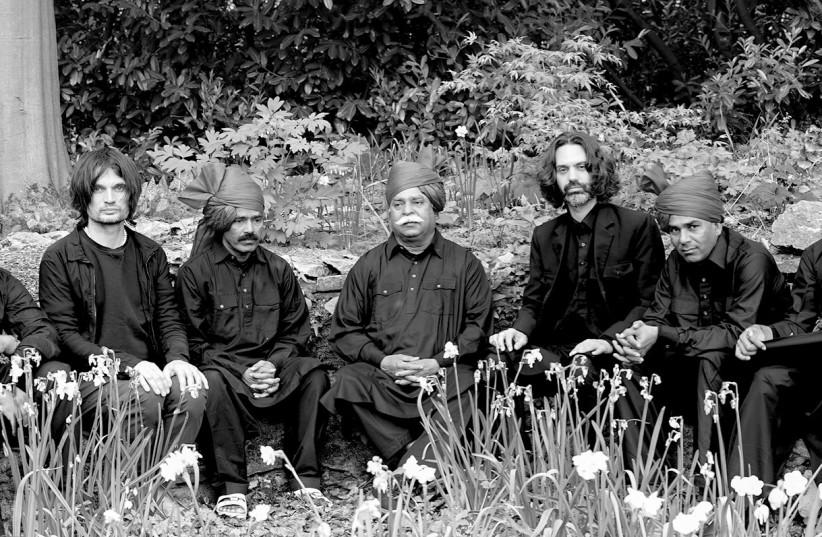
The other “import” slot is taken by another confluence between Israeli musician-producer Shye Ben Tzur and The Rajasthan Express ensemble, with whom Ben Tzur has been working for over a decade. Their principal genre anchor comes from the Qawwali, the spiritual Sufi side of the music tracks, with plenty of infectious groove and funk embedded in the mix.
Folks looking for more recognizable, even traditional, jazz efforts should get themselves to the trio gig headed by pianist Alon Tayar with comrades in musical arms, bassist Oren Handy and drummer Daniel Dor, happily in tow. The threesome will dip into the early days of the art form, referencing pioneering late 19th-to-early-20th-century ragtime pianist Scott Joplin, and stride ivory tickler James P. Johnson who was highly active in the first half of the 20th century. There will also be some original charts in the lineup, taking the show ethos right up to the here and now.
As per Hershkovits’s observations and jazz artists feeding off their own DNA and accrued cultural baggage, the first evening of the feature sheds a highly deserved beacon on the work of late musician, author, poet, and songwriter Tzruya Lahav, who passed away a few months ago. The roster of pop and rock artists who have recorded and performed her work includes such titans as Rita, Yehudit Ravitz, Riki Gal, Yehuda Poliker, and David Broza.
Broza, in fact, makes a guest appearance at the museum and the tribute includes readings by Lahav’s actor-son Yosek Albalak, with her other son, Yonatan Albalak, playing guitar and singing, and providing fresh arrangements of his mother’s songs. These include the hits “Yemei Hatom,” “Derech Hameshi,” “Al Hagesher Hayashan,” and “Perach” performed by Rita, Ravitz, Rami Kleinstein, and Poliker, respectively.
Musical matters take a sharp cultural and energy-level turn when pianist Tom Meira Armony takes the stage to close out the first evening, along with his Turkish-psychedelic band Satellites. The program blurb talks of “celebrating the bond of love between time, place, and folklore” as psychedelia, disco, rock, and Oriental lines mesh with funky grooves. And if that weren’t enough to get the patrons going, the sonic sensibility ante will be appreciably upped when Turkish-rooted veteran pop-rock songwriter, guitarist, and vocalist Miki Gavrielov joins the fun.
As we lurch from war to war, living with a constant sense of impending crisis, a sizable injection or two of joy-inducing sounds and beats could be just the ticket to provide us with some brief respite from the pervading doom and gloom.
The aforementioned contributions to that sorely needed mindset will be bolstered by the Deswa outfit’s foray into the realms of Afro-jazz and groove. And when producer, percussionist, DJ Idan K hits the stage along with his 10-piece Movement of Rhythm troupe, the happiness factor should soar. Electronic music and Afrobeat, African rhythms, Latin, house, funk, and reggae will all be in there for the energizing, life-affirming fun taking.
Nowadays, the festival shows take place under the Jerusalem sky as the sprawling hilltop museum grounds play their aesthetic part in providing an ambiance-enhancing backdrop to the sonic and visual – dance slots included – offerings. Hershkovits is keenly aware of the location’s unique added value.
“It is such a beautiful place, and it is a great anchor for building an artistic program. You know it is going to happen in the [renewed Billy Rose] Sculpture Garden. It is the most magical place in the world.”
With the Jerusalem Jazz Festival about to roll out at the museum for its 12th successive year, Hershkovits is alert to the umbilical cord that has grown between the location and the annual event.
“The bond between the Israel Museum and festival is unbreakable,” he posits, suggesting that the alfresco setting adds much to the bottom line, both for performers and audiences.
“The festival started out inside, and then partly inside and partly out. For the past two years, it has been entirely held outside. That feels right. There is a festive spirit to all the shows.”
That, and top-quality fare across the free-ranging genre and stylistic board, make for an enticing entertainment proposition next week.
For tickets and more information: www.jerusalemjazzfestival.org.il/en