
Senior healthcare, government and emergency response leaders from around the world will gather at Tel Aviv Sourasky University Medical Center, Ichilov, for the Emergency Management & Preparedness Course, EMPC 2026. Participants from Latvia, the Philippines, Azerbaijan, Germany, Lithuania, Denmark, Sweden, Nigeria, France, Canada, the Czech Republic, the United States and Hong Kong will take part in the three-day program.
Among the participants are deputy health ministers, senior representatives of the European Commission’s health-security framework, military medical and resilience officers from Germany, civil defense and disaster-management officials from Asia and Africa, and senior leaders from major university hospitals and academic medical centers.

The course comes at a moment when hospital preparedness has become a strategic concern for governments worldwide. Across Europe and beyond, health systems are reassessing their ability to continue operating during war, mass casualty events, cyberattacks, infrastructure failures, pandemics, climate-related emergencies and prolonged national crises. Hospitals are no longer viewed only as places of care. They are increasingly understood as critical national infrastructure.
For Israel, this is not a theoretical discussion. Since October 2023, hospitals have repeatedly moved between routine medicine and emergency operations, while continuing to provide complex care to civilians, soldiers, children, trauma patients and vulnerable populations. At Ichilov, preparedness has become part of the medical center’s organizational culture, from command and control to protected infrastructure, trauma response, cyber continuity, staff resilience and crisis communication.
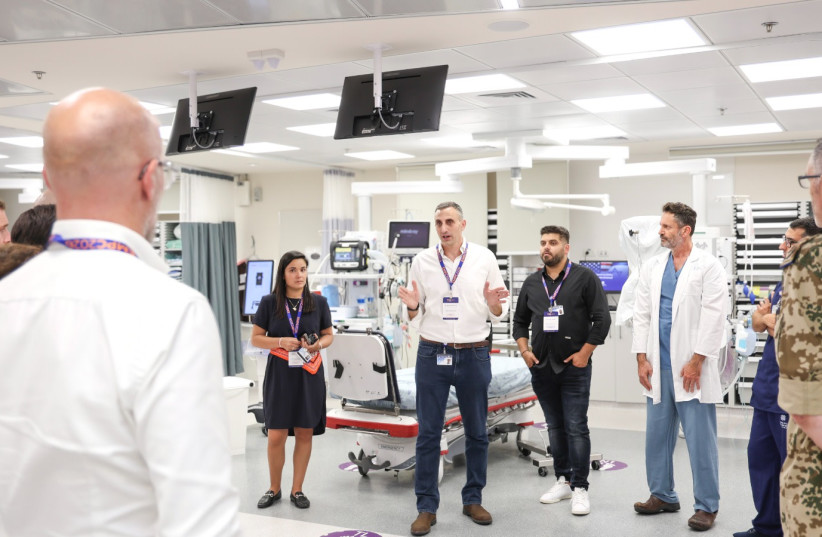
“Healthcare preparedness is no longer something hospitals can leave for the day of the emergency,” said Prof. Eli Sprecher, CEO of Tel Aviv Sourasky University Medical Center. “The question facing every health system is how to continue caring for patients when the crisis is already unfolding. EMPC is about sharing practical experience and strengthening the ability of hospitals to remain open, functional and trusted when society needs them most.”
EMPC was created to share Israel’s operational experience with international partners in a practical and open way. The purpose is not to present a perfect model, but to examine real lessons from real events: what worked, what failed, what had to be adapted in real time and what other systems can apply in their own countries.
During the course, participants will meet hospital leaders, emergency physicians, government officials, national response organizations and Israeli innovation companies working on emergency response and healthcare resilience. The program includes sessions on mass casualty management, crisis leadership, command and control, protected hospital operations, trauma care, cyber resilience, logistics, infrastructure continuity, mental health, workforce readiness and public communication.
Participants will also visit key parts of Israel’s emergency ecosystem, including Magen David Adom’s National Headquarters and Marcus National Blood Services Center, Soroka Medical Center in Be’er Sheva, and the National Health Emergency Operations Center. These visits will show how Israel connects hospitals, emergency medical services, government agencies, security authorities and national command structures during times of crisis.
“Preparedness is ultimately about people, leadership and decision-making under uncertainty,” said Dr. Daniel Trotzky, Deputy Medical Director and Director of Emergency Medicine Services and Preparedness at Ichilov. “Plans and infrastructure matter, but in a real crisis, hospitals must adapt quickly, protect their teams and continue treating patients. That is the experience we want to share - and also learn from our colleagues around the world.”
As global instability grows, hospital resilience is becoming a shared international challenge. Next week in Tel Aviv, health leaders will not come only to observe Israel’s experience. They will come to exchange knowledge, challenge assumptions and build a professional network around one essential goal: ensuring that hospitals remain operational, humane and ready when the next crisis arrives.