

Twenty years is undoubtedly a significant passage of time. That goes doubly for any venture in the cultural sphere in these here parts where state and municipal funding for the creative domains is generally frustratingly scarce. Thankfully, Beit Avi Chai has its own source of financial wherewithal and, as it enters its 20th year, appears to be in robust shape.
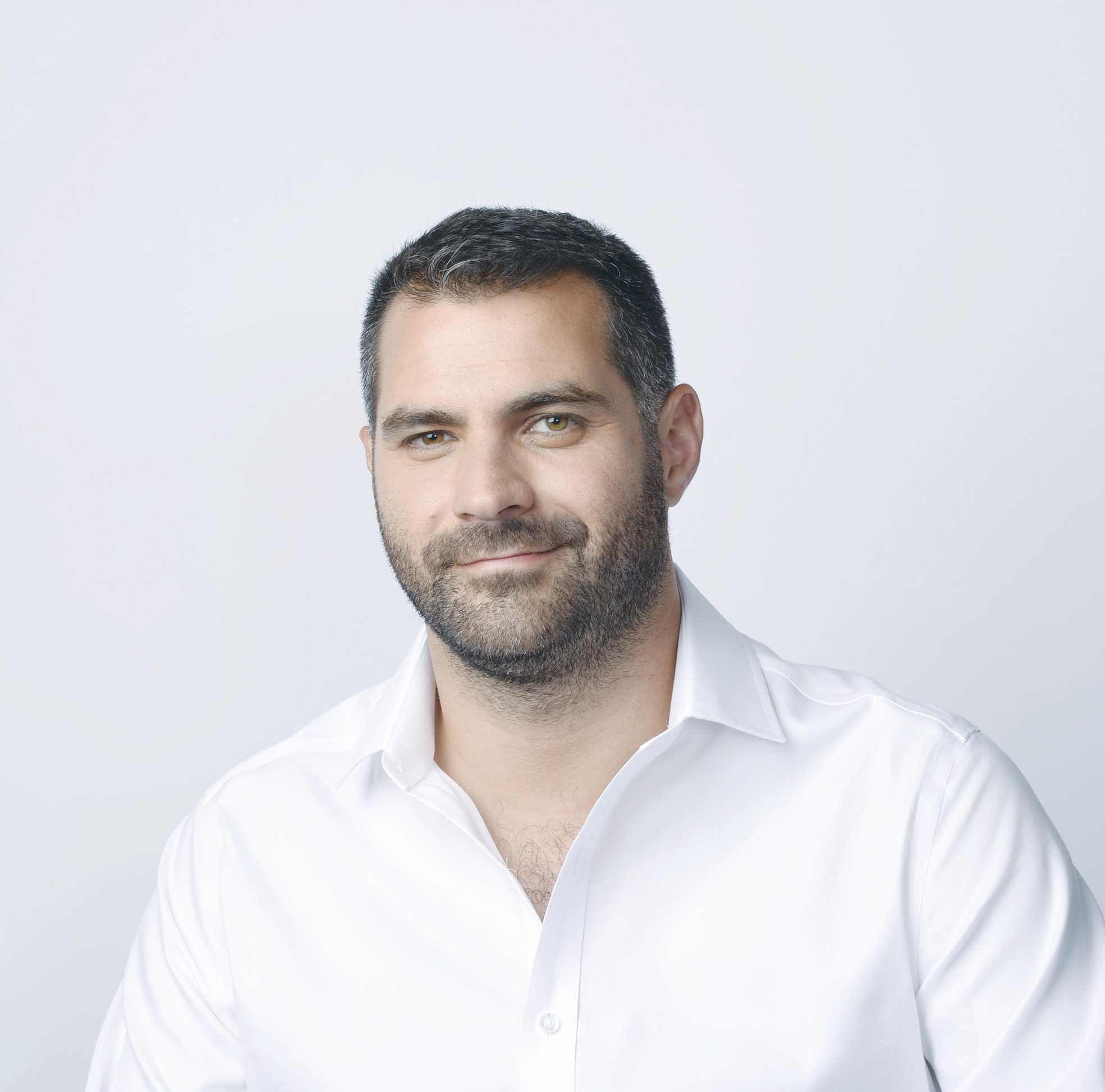
After 13 years as CEO, Dr. David Rozenson says the center has spread its wings during his tenure. “I think that, in the beginning, Beit Avi Chai was very much a Jerusalem institution. It had lectures and music. That was basically it.”
The Leningrad, Soviet-born, American-bred cultural and educational market player set his sights on far greater and more expansive matters from the outset. “I thought, what do you do to engage an interested audience? And how can you enrich their experience, their cultural experience?”
Targeting youngsters
For starters, he was looking to bring the younger crowd into the Beit Avi Chai fold. “Back then, there weren’t programs for students. There weren’t programs for the army,” Rozenson observes. He was aiming to broaden the age group and geographic reach. “It was very much a local kind of institution.”
It was, he felt, time to reach out by launching some adventurous programming initiatives. Time to take a leap or two of faith. “We started with programs for youth, young adults, and high school students. People asked, ‘How do you draw high school students?’ The municipality struggles to draw high school students. It is the holy grail, getting people from 15 to 22 to come in.”
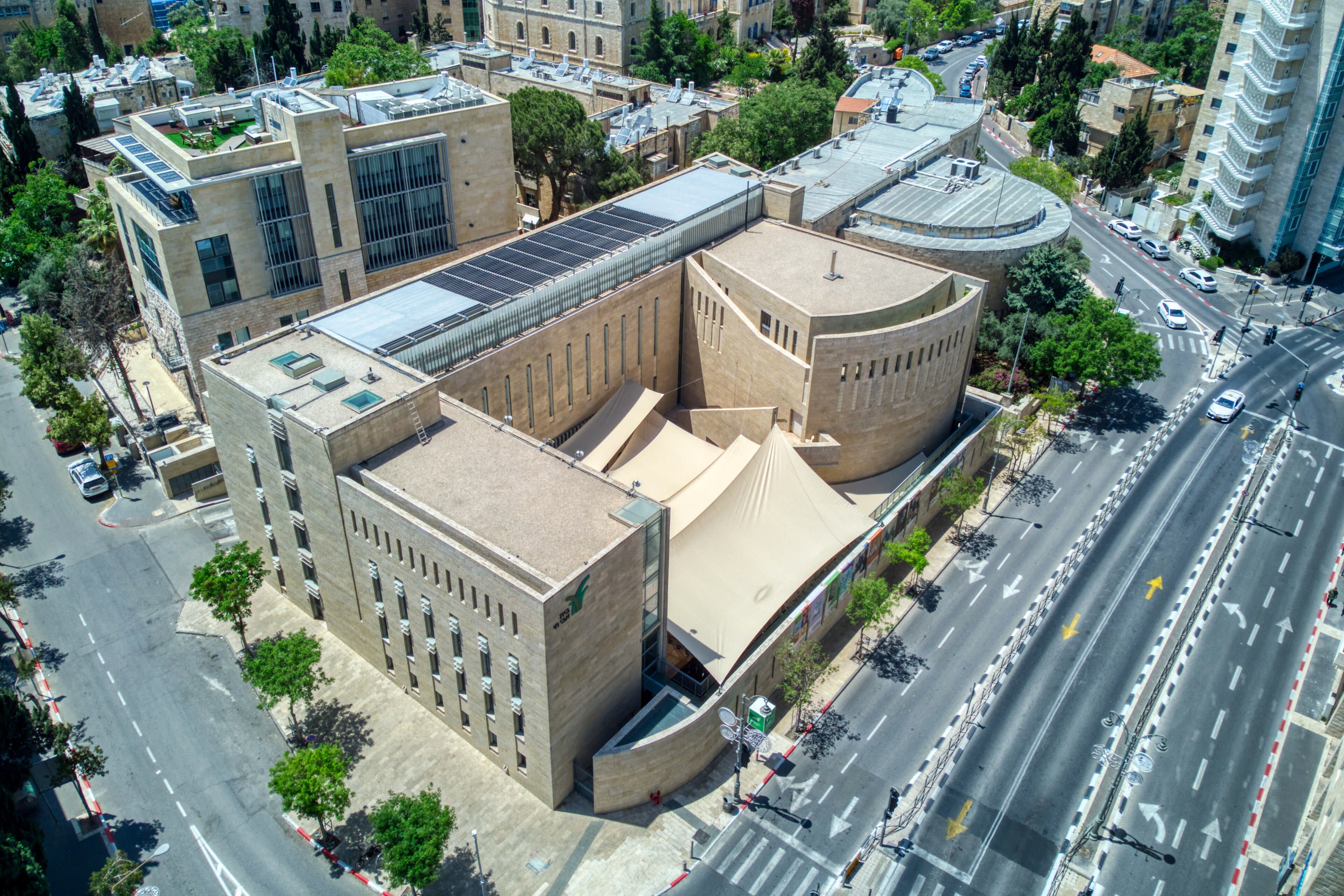
That is a perplexing dome scratcher, coaxing youngsters after school hours, tapping into 20-year-olds’ precious downtime from their military service, or attempting to encroach on zealously guarded leisure time during their busy day, as they take their first steps in the adult world. The marker had been set high, and expectations were rife.
“Initially, there was this hope that there would be a line down King George Street of people who wanted to hear intellectual lehrhaus [centers of Jewish learning and culture] kinds of discussions, as you would have found in the old European coffee houses,” Rozenson chuckles. “We thought, what do we do? Where is the niche that Beit Avi Chai could take?”
Fast forward 13 years and, as you cast your eye across the institution’s sprawling programs, you get the idea that Rozenson, artistic director Amichai Chasson, and the rest of the voluminous staff have managed to lock into requisite cultural market needs and, indeed, bring the crowds in. The organization’s purview talks of promoting Jewish-Israeli culture, creativity, and identity.
Today, it offers a diverse cross-section of artistic performances, academic lectures, public events, podcasts, online series, and art exhibitions that address a range of takes on Jewish life, thought, and contemporary Israeli society, in an eminently user-friendly way.
Rozenson feels his institutional endeavor is very much in keeping with the traditional national line on enlightenment. “I think Israel is the only democracy in the world that has an educational component as part of its required process for soldiers, and for officers. It’s usually dictatorships that have that because they have to brainwash you to get you to believe their ideology. We have to understand why this is our country. Why would someone die for this country? What’s the ideological background?”
It seems there is documented political collateral for Beit Avi Chai’s programming aimed at members of the IDF. “David Ben-Gurion had this famous speech in which he talked about yichud veyi’ud (uniqueness and designation). The army is very careful [about its dealings] with various organizations. It took us about two years to get that [IDF] approval.”
Persistence paid off. “Today, monthly, we have 90 officers from a group called Yi’ud Veyichud, and the IDF spokesperson will be here in a couple of weeks with a group.”
Making Jewish culture accessible to all
That, says Rozenson, reflects the center’s role in educational-cultural climes here. He gets down to philosophical brass tacks. “It’s basically a general direction and general ethos of Beit Avi Chai – how do we take Jewish and Israeli texts, whether they are contemporary or biblical or Talmudic – and make them relevant to today’s world?”
That practical, pan-consumer-friendly approach impacts much of what Beit Avi Chai is about. Rozenson is not one for dogma. “I wear a kippah. I know a lot of people around me in Jerusalem, who don’t wear a kippah, and they are far more religious than I am. A kippah is not a sign of [religiosity].”
That is quite a declaration in a country that appears to largely operate on clearly delineated religious-secular frontiers. The accommodating view of the roots of religious practice, and the substrata of our national heritage, informs the way Rozenson and the enterprise he oversees go about their business.
“We try to act through different cultural genres – theater, dance, film, literature, poetry, and the creative writing groups that we’ve started since Oct. 7.” The latter infers some much-needed remedial intent, which has enabled trauma sufferers to offload some of their angst in a safe, supported, creative manner.
Spreading the Beit Avi Chai word
Other obstacles life threw in Beit Avi Chai’s path have helped direct it to a more expansive and inclusive line of thought. “We got some encouragement from COVID,” Rozenson notes, referencing the explosion in online means of communication and sharing informational content. “We began to realize that our audiences are not only in Jerusalem.”
Conversely, the center’s eclectic offerings have also been making terrestrial forays. For instance, one of Beit Avi Chai’s popular onstage productions currently doing the rounds of the country is Who by Fire, recounting poet-singer-songwriter Leonard Cohen’s visit to the Sinai frontlines during the 1973 Yom Kippur War. The performance is based on the 2021 book by Matti Friedman, an American-born journalist and Jerusalemite, who explores Cohen’s game-changing wartime experiences here with IDF troops, at a time when the feted poet himself was at a personal crossroads.
“The performance took place in Haifa, for the third time, two weeks ago. We also had it in the largest hall in Tel Aviv – Beit Hachayal,” Rozenson notes.
Following that and other successes, Rozenson, Chasson, et al, began to realize there were other domains to be plied, where they could proffer the center’s cultural wares. “We understood our message could resonate much wider,” the CEO says.
That newfound market sector-flexing ability also paved the way to younger age groups. “Our target audience is from [the age of] children. We have a whole series of programs for children up to young adults.”
The center’s lineup, as it completes its first score years, features a musical based on poems by Leah Goldberg called Hayalda Shetzachaka Bechalom (The Girl Who Laughed in a Dream). Here, too, there are some invaluable curative pickings to be had. “That’s a new play being written. It is going to premiere soon,” Rozenson informs me.
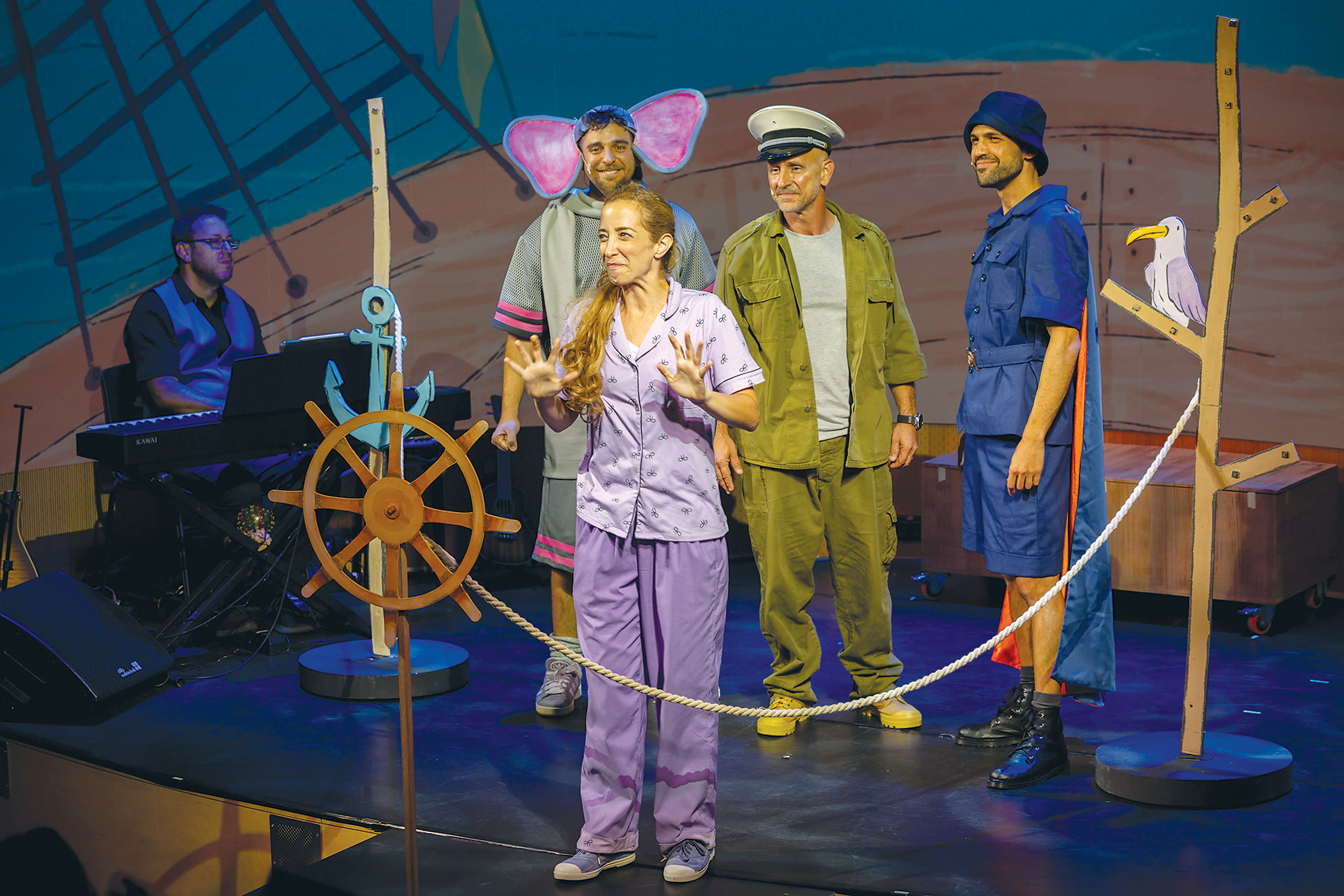
The theme of the play, written by Avshalom Chori, is, sadly, an all-too-familiar scenario whereby a father has to leave for a stint in the IDF reserves just before his daughter’s 10th birthday. He tells Ayala that, while he is away, they can always get together with the help of the Dream Master. Ayala duly heeds her dad’s advice and she follows a long and winding route through a string of Goldberg works, and some new ones, in an effort to reunite with her father in time for her birthday.
The military context is a given. “I wrote the play throughout the years of the war [in Gaza],” explains Chori, a Beit Avi Chai employee who, like Chasson, writes poetry in his spare time.
Fending for itself
The play, says Rozenson, exemplifies the center’s credo. “That’s another thing that sets Beit Avi Chai apart. First of all, working from young children to adults. And there are programs all the way through. The second thing is that 80%, even 90%, of our programs today are original.”
The latter is a double-edged state of affairs. “Sometimes I don’t sleep at night because I don’t have anyone else to blame,” Rozenson laughs. “If you bring programs from the outside, and they fail, you can always say something like, ‘They didn’t rehearse enough.’”
Then again, the director does feel he is on pretty safe professional ground. One of the tried-and-tested marks of a good boss is their ability to delegate and assemble a reliable team. “I am very proud of the staff here. They are very diverse, very different, with their own kinds of understanding. In terms of their creativity, they are a top-notch team.”
Rozenson may be keen on spreading the center’s catchment reach, but he never loses sight of his locale, a home base that is dear to his heart. “I think that Jerusalem has to be the strongest, the most vibrant, city in Israel. It’s the capital. There is no capital that doesn’t have strong theaters, that doesn’t have jazz festivals. And there’s the National Library. I am very proud of the National Library. And there are other various cultural centers – the Bezalel Academy of Arts and Design, Hansen House, the new Knesset Museum, the Jerusalem Theatre.”
That could lead to some zestful, if not downright bullish, jousting for consumer attention, but Rozenson feels there is room for everyone. “I never compete, or think of competing, with any cultural institution in the city. Every cultural institution has to be as strong as it possibly can, using the talents and the funding and the abilities it has.”
Bringing in culture consumers
If I were then to deduce from Rozenson’s the-more-the-merrier approach that all is well on the cultural scene, as long as the purveyor in question keeps its nose to the grindstone and keeps pumping quality fare, I was to be immediately disabused of that tidy notion.
“Our competition is Netflix,” he intones. “If there’s someone young, say in their twenties, and they binge on a series, or they could go to a café down the street, why would they come to a program in a place that wants not only to have musical performances but also wants to be based on the history of the musical performances, on the personalities, to bring back the various writers, thinkers, people from Israeli cultural life? We have to be as professional as anything that is out there that has nothing to do with Jewish or Israeli content.”
That is a lofty mark to aspire to, but clearly in this day and age, it is very much the name of the game if Beit Avi Chai is going to pry youngsters away from their computer and cellphone screens. Rozenson makes no bones about banging the core Jewish identity drum, and is doing his best to keep it uppermost in our everyday thoughts. Beit Avi Chai, in his view, provides the ideal vehicle for achieving that objective.
“We are working on a musical with content, based on Psalms,” he tells me, returning to the spiritual theme, and ways of bridging seeming gaps between observant and secular Jews, while also finding healing and common denominators in the process. There is added value, and heightened market presence, to be had as well. “That shows the difference in the way we approach things. Why would Psalms be something that has a universal message?”
Rozenson walks me through the tailored creative process. “First of all, we chose the musicians.” This was not just about the music. “We had a full day of study – the musicians and even the people doing the video art, they all came together for a day of learning about Psalms.”
The idea was for the artists to connect with the content, in their own way regardless of any religious undertones. “The drummer and [famed cellist-vocalist] Maya Belsitzman, Amichai [Chasson] sat for hours, going through the verses of the Psalms and trying to understand whether or not there’s a message for them in there.”
That is a refreshing stance in a country where almost anything you proffer in public is construed, or misconstrued, as having some covert agenda. Rozenson carefully walks that tightrope. “We try not to touch on politics here, as much as that’s possible in Israel,” he adds with a wry smile. “If we can sit around a table and talk, that can help.”
It can also offer some succor for those most in need. “I have watched as families of the fallen – we have creative writing groups for them here – how they study texts, what we call traditional Jewish texts, what it all means, what it means to lose [someone] and what it means to suffer. They then either write music or write essays, and in some cases poetry, about their own suffering. It doesn’t make any difference if you are religiously observant. It makes a difference if you are united by something far stronger.”
There are, Rozenson observes, inescapable facts on the ground, and then there is intent, and how that is imparted. The latter, he says, is part of the Beit Avi Chai thought process. It is also something he relates to on a very personal basis.
“I have two sons in the army, in combat units. I am very scared, but I am also proud of them. We have to defend the State of Israel. Defense can’t be our ideology. It’s our reality. But who they [soldiers] are as people has to be shaped by ideas.” Openness and the ability to listen come into play here. “If those ideas are shaped by agendas, then it becomes somewhat problematic.”
He believes the institution he heads steps into the breach. “We have this oasis. Inside Beit Avi Chai, we do it on a small scale. Outside of Beit Avi Chai, through our programming, podcasts, video series, and other things, we try to go for much larger [audience] numbers.” That includes a moving series called Adam Ve’adama (Man and Land), which examines the bond that exists between Israelis and their land.
Getting out into the world
Grand plans are in the pipeline, across a range of Jewish and Israeli cultural and historical areas, including expanding to the United States and Europe.
“We have signed agreements in America with MoMa, the Morgan Library, and others [in New York],” Rozenson notes. “We try to identify objects inside these museums that have a story to tell about the Jewish people, focus on that story, and try to bring that to life through a video series. Matti Friedman is working on that.”
There is also a fresh-off-the-press collaboration agreement with leading global cultural heritage organization, the Berlin-based Stiftung Preussischer Kulturbesitz (SPK), which will aim to bring Jewish history and culture from SPK’s collections to international audiences through Beit Avi Chai’s multimedia Let Objects Speak series.
There is already a Russian three-parter, fronted by Friedman, that looks at relevant Jewish artifacts at the State Hermitage Museum in St. Petersburg, the Pushkin Museum of Fine Arts in Moscow, and three unique objects at the State Museum of the History of Religion in St. Petersburg.
Chasson shares Rozenson’s creative philosophy and broad consumer designs. “We produce our own material, and we try to devise things that are unique and complete. There are dozens of cultural places in Jerusalem. Even people from Tel Aviv are impressed by how much there is going on here,” he chuckles. He also serves as the institution’s art curator, and is currently working on an exhibition of late award-winning Jerusalemite photographer Aliza Auerbach.
The artistic director says that Beit Avi Chai, notwithstanding its achievements over the years, has its work cut out for it. “Kids come out of the education system these days incapable of writing or reading a book,” he posits. One presumes that having the seismic capabilities of AI at their fingertips does not help in that regard. Chasson cites the currently gestating hands-on Tehilim musical project that Rozenson highlighted earlier.
“Most of the team members working on Tehilim are not religious. Anyway, it is not a definitively religious venture. For them, it is the first time they have encountered these psalms, either as prayers or as literature. These texts are simply something that will inspire them in their lives, and their art.”
That inclusive, non-discriminatory, ethos informs much of Beit Avi Chai’s work, from its popular Kabbalat Shabbat events through to theatrical and musical performances, all of which feed off Jewish sources without surreptitiously, or otherwise, drip feeding some religious content.
Rozenson has at least one eye firmly set on the world of tomorrow, and how things will pan out when the kids of today find themselves in leadership positions, and set the tone. “There are things I am beginning to think about for the next 20 years – the next generation that’s going to come through here. If people can sit together in our programs – people who are very different sitting down around Jewish texts to find meaning – that will be good, that can help.”
Amen to that. If we can, indeed, get away from political squabbling, cross-religious divides, and some of the bad stuff funneled through various media outlets, and focus on positive areas of Jewish culture, we just may stand a chance of achieving a more peaceful, healthier, and stronger Israel. And we could do far worse than pop around to Beit Avi Chai for some show or event, or drop into the website to watch some emotive and inspiring video material.
For more information: www.bac.org.il/en