
Can an audience laugh at the horrors of October 7?
It is a question that the women of the Sderot Women’s Theater Ensemble have wrestled with for months.
“There were scenes we ended up cutting because they were simply too dark,” says Ilanit Swissa, the theater’s artistic director. “But when I look for the legitimacy to laugh, I draw it directly from the bereaved families – from some of my closest friends.”
On September 1, the ensemble will premiere Laughing on the Border at the Sderot Community Center. The title plays on a double meaning: the reality of living on a physical geopolitical border, and the psychological boundary of using humor to process unspeakable trauma.
The opening night will play to an all-female crowd, followed by a performance for a mixed audience the next evening.
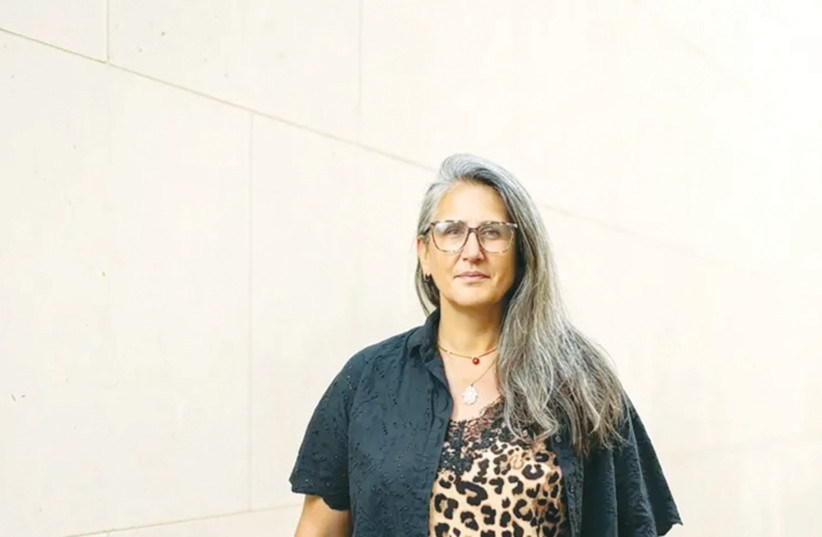
“We openly declare that this is a black comedy,” Swissa says. “It is about crying and laughing in the exact same breath. It is entirely possible that some people won’t be able to stomach it and will choose not to come. In fact, the dilemma of whether it is too soon to laugh is a debate that plays out inside the show itself.”
Swissa, who moved from Tel Aviv to Sderot 17 years ago to establish the ensemble, has long enjoyed total creative freedom and municipal funding. Before the war, the group’s final production was a lighthearted musical based on the songs of Israeli pop icon Rita.
Then came the Hamas-led attacks. Swissa, who was evacuated from Kibbutz Kfar Aza, found herself entirely paralyzed creatively.
“It was a life-altering event,” Swissa recalls. “Making theater and film felt like an irrelevant luxury. Our community needed immediate, basic support. For the first year, I wasn’t writing scripts; I was organizing funerals for our murdered neighbors, planning memorial services, and coordinating community rituals.”
While Swissa navigated grief, the women of the ensemble were scattered across evacuation hotels nationwide.
“We actually started a WhatsApp group without Ilanit,” says Limor Hagbi, an actress in the ensemble who survived a harrowing escape on October 7 during which her daughter was wounded, and extended family members were murdered.
“We were constantly checking on her, worrying about her future and our own. When Ilanit told us she didn’t know if she would ever return to the theater, we felt the ground slip from beneath us. This group had always been our safe haven.”
Black comedy becomes a way back to the stage after October 7
It took six months of displacement before Swissa realized that the only way she could return to the stage was through comedy.
“I knew I didn’t want it to be a spectacle of weeping and wailing,” Swissa says. “I wanted something comic, sharp, and critical. I wanted to reflect what we endured, but not through the lens of pure tragedy. I had seen more than enough eulogies and tears. Fortunately, the women agreed.”
The production aims its sharpest satire at the clichés that have dominated Israeli public discourse since the war began.
“Phrases like ‘a nation of lionesses’ or ‘resilience’ – we just cannot stand hearing them anymore,” Swissa says. “These words became part of the standard jargon, but they cannot truly encompass the scale of what happened. We treat this as a ‘Rumpelstiltskin’ event – just as the characters in the fairytale cannot figure out his true name, we still do not know what to call the catastrophe we lived through.”
The fairy-tale serves as a central motif. In the play’s final monologue, Swissa addresses the audience directly, noting that the performance is an attempt to “spin straw into gold.”
It is a metaphor grounded in reality: During production, Hagbi gave birth to a girl.
The play also tackles the pervasive national obsession with assigning blame. In one recurring sketch, Hagbi interrogates her fellow cast members, trying to find who is responsible for the systemic failures of October 7.
“In the end, my character claims the blame,” Hagbi says. “She admits she had a nightmare a few days before the attack but failed to report it to the military. When the others ask what happens now, she replies: ‘Nothing, it’ll just be a line on my resume.’”
Rehearsals force cast to confront trauma still close to the surface
Bringing the show to life has been a fragile process. Originally slated for a March premiere, the production was delayed by the military confrontation between Israel and Iran, as well as Swissa’s own struggles to finalize the text.
Even in rehearsals, the trauma remains close to the surface.
“When we are on stage, and the script requires us to say the words ‘Tzeva Adom’ (Code Red), it is incredibly difficult,” Hagbi says. “I live October 7 every single day. But because the ensemble is a protected space, the process ultimately empowers me. I can show up completely drained and leave feeling strong.”
To help the cast navigate the material, a drama therapist from a regional resilience center accompanied the group through every rehearsal until the script was finalized.
Sderot women hope to take Gaza border voices across Israel and abroad
Now, the group is looking beyond Sderot. While women’s theater ensembles in the region typically perform only for local female audiences, Swissa is determined to take the voices of the Gaza border communities to a broader stage.
“I want people to come, laugh, and feel that what happened is being actively processed,” Swissa says.
She hopes to tour the production to Haifa, Tel Aviv, and Jerusalem, and eventually to Jewish communities abroad – though she notes the logistical reality of touring 10 local women who collectively care for 36 children.
“We are a local voice,” Swissa says, “but it is a voice that needs to be heard.”