Rosh Hashanah is a time for looking in two directions. We look back at the year that has passed and ask what we learned. Then we look forward and ask what we hope the new year will bring.
For those of us working in emergency response, that second question carries a particular tension. We hope for a year in which we are needed less. But hoping is not a preparedness strategy.
During 5786, ZAKA Search & Rescue volunteers responded to more than 10,000 incidents across Israel. Some were familiar emergencies: road accidents, drownings, missing persons and building collapses. Others came from a country confronting another year of war and terrorism, including missile and drone attacks from Iran and Hezbollah and terror attacks against civilians.
Our volunteers responded to all of them.
They searched damaged buildings. They rescued the living. They recovered those who could not be saved. They remained at scenes long after the headlines moved on, helping families find answers and ensuring that the dead were treated with dignity.
But the most important lesson of the year was not how many emergencies we answered. It was how much preparation was required before we could answer them.
Emergency response is measured in minutes. Preparedness is measured in years.
The equipment must already be there. The responder must already be trained. Communications must already work. Specialized teams must already exist before the emergency requiring them occurs. None of that can be built after the sirens begin.
The war with Iran demonstrated that reality repeatedly. When missiles and drones struck communities across Israel, ZAKA volunteers could respond quickly because the infrastructure had been built long before the attacks. Specialized teams could operate because they had trained for scenarios they hoped never to encounter.
That preparation cannot stand still. Threats change. Technology changes. Disasters change. The geographic scope of emergencies changes. So must the response.
This year marked the 20th anniversary of ZAKA's Dive Team, an example of how specialized capabilities develop over time. Two decades of training and operational experience created a capability that can be activated when a water recovery is too difficult or dangerous for ordinary responders.
At the same time, ZAKA expanded its international response. Our teams responded following the terror attack in Sydney, the catastrophic fire in Switzerland and the earthquake in Venezuela. In Maryland, the newly re-established ZAKA North American unit mobilized following the deadly Bowie plane crash.
These missions demonstrated that expertise developed in one place can strengthen emergency response somewhere else.
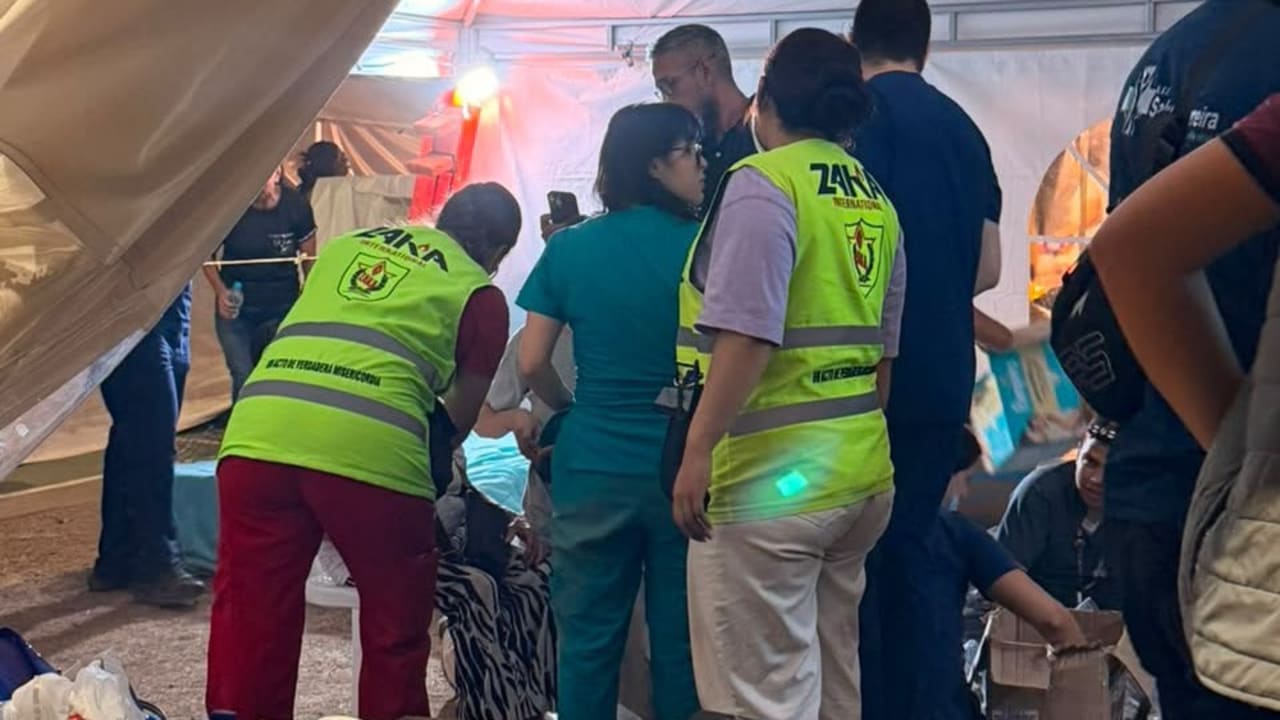
In Venezuela, ZAKA search and rescue specialists, engineers, paramedics and humanitarian responders worked alongside Venezuelan authorities and international teams. Specialists supporting the operation from Israel provided satellite imagery, GIS mapping, structural analysis and operational planning.
We did not go to Venezuela to replace the responders already there. We went to strengthen the response. That distinction matters. The strongest emergency operations are built through cooperation among people and organizations with different skills, experience and resources.
It also illustrates why an international emergency organization cannot simply remain the same size and assume it will always be able to meet the demands placed upon it.
If ZAKA is going to respond when a community or partner emergency service needs specialized assistance, the capability has to exist before the call. That means trained responders, specialized expertise, equipment, communications systems and logistical capacity. It means relationships established before the emergency, not during it.
Preparedness has an unusual characteristic: its greatest successes are often invisible. Nobody sees the training exercise that prepares a responder for a building collapse that never happens. Nobody notices equipment sitting ready because there was no disaster that day. Nobody sees the hours spent developing communications systems or establishing relationships that become essential when something goes wrong.
Preparedness looks unnecessary until the moment it is not. That is why growth in emergency response is not simply about answering more calls. It is about ensuring that the organization can meet the next emergency if it is larger, more complex or farther away than the last.
As Jews enter the Days of Awe, we ask to be written into a year of life.
For the families we encountered this year, that prayer is not abstract. It is a mother waiting for her child to come home. It is a family waiting for confirmation after an attack. It is someone standing outside a damaged building hoping a loved one will emerge.
Our greatest hope for 5787 is that there will be fewer such moments. We will continue to train. We will continue to strengthen our capabilities. We will continue building partnerships in Israel and around the world.
We have to be ready. But readiness is not expectation. We do not prepare because we want disaster to come. We prepare because if it does, someone has to be ready.
So this Rosh Hashanah, I will pray for fewer sirens, fewer attacks, fewer accidents and fewer funerals. May more families remain whole. May our volunteers spend more time training than responding.
And may the greatest success of 5787 be a year in which ZAKA is stronger, better prepared and capable of meeting every challenge, while being blessed with far fewer tragedies to answer.
Shanah Tovah.
Dubi Weissenstern serves as CEO of ZAKA Search & Rescue.