
Last week, Israel’s defense establishment conducted another test of the Arrow system, the country’s primary air defense system against ballistic missiles from Iran and Yemen.
Arrow is a veteran weapons system whose development at Israel Aerospace Industries (IAI) began in the 1980s. Its capabilities were ahead of much of the rest of the world, and it entered operational service more than 25 years ago.
The system has successfully intercepted hundreds of missiles from Iran and Yemen over the past two years, and it is finally securing its place in the national consciousness as Iron Dome’s “big sister.”
It is tasked with confronting far more lethal threats, as Israelis learned from the few cases in which Arrow failed to intercept its target.
Unlike weapons systems that may only be mentioned with the prefix “according to foreign sources,” Arrow is not classified. It was developed with US funding, the Pentagon closely follows its development, and American companies participated in its serial production.
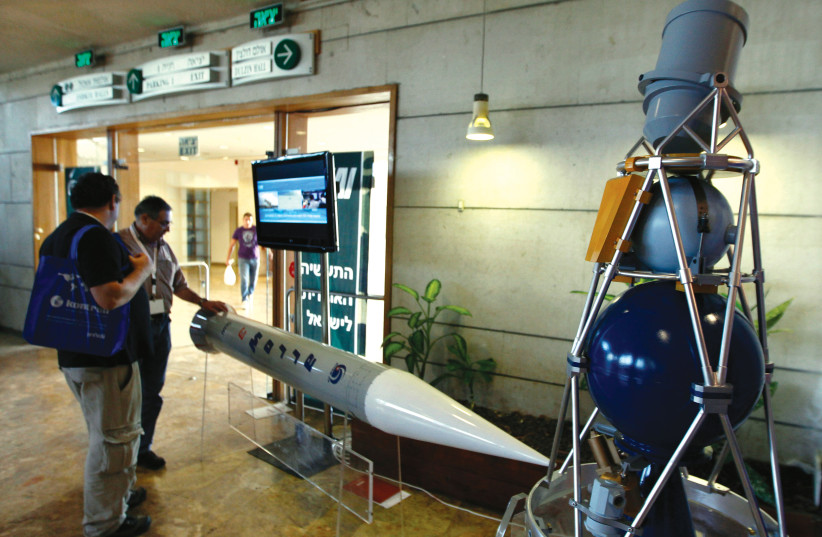
The Arrow system was also sold to Germany in two deals worth a combined $6.5 billion. Components of the system, including its radar, have also been sold separately to other countries, such as India and South Korea.
Under normal circumstances, Arrow tests are a national event. Tens of thousands of residents in central Israel can see them when the missile is launched from the IAF’s test unit at Palmachim, with its trail visible from great distances.
The launch is usually followed by breaking news alerts, reports, interviews with senior Defense Ministry officials, officials from the Israel Missile Defense Organization and IAI, along with expressions of thanks to the American partners.
Graphics and explanations are released detailing the system’s new capabilities, technological breakthroughs, and unique technology.
Middle Eastern missile arms race unfolding
This time, there was silence.
In the middle of a war, and as a Middle Eastern missile arms race unfolds between Iran, which is working to replenish and upgrade its ballistic missile stockpiles, and Israel, which continues to upgrade its defense system and interceptor inventory, officials decided not to release any information about the test.
On the one hand, the decision is legitimate and responsible during wartime, allowing officials to focus on their work without providing unnecessary information.
On the other hand, it also reflects how the defense establishment views the Iranians.
Unlike politicians, from Prime Minister Benjamin Netanyahu and Defense Minister Israel Katz to Knesset members and associates who repeatedly boast of total victory in Tehran, the professionals are not underestimating the Iranians, their capabilities, or their motivation.
Israel may be technologically advanced and demonstrated during the war capabilities possessed by no other country in the world; yet there are those within the defense establishment who understand that the enemy facing Israel is also a country with significant capabilities.
Arrow can't win alone
Iran is not a weak or disintegrating country. It is an enemy whose ability to learn and develop must be taken seriously, and one Israel must continue preparing to confront precisely because it is not weak.
For years, Israel fought countries and terrorist organizations that depended on weapons and knowledge acquired from abroad.
Iran, however, has a population 10 times larger than Israel’s, is rich in oil, and over the years has developed a weapons and terror industry unmatched by any other Middle Eastern country.
This is an important campaign, and the Arrow cannot win it alone. The conduct surrounding the test tells the public the truth that the political echelon is trying to hide.