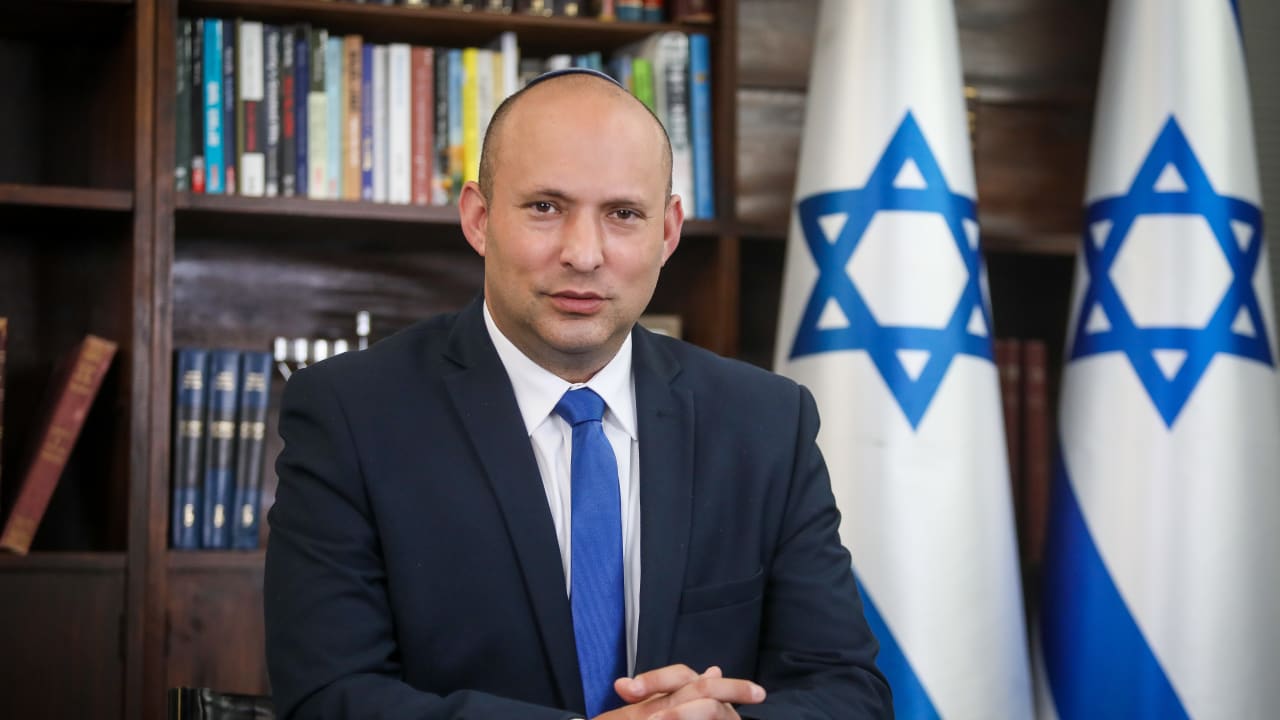
Former prime minister Naftali Bennett warned on Tuesday that Israel’s relationship with the United States had entered a precarious period, saying Jerusalem must rebuild its image in America and stop assuming that support from President Donald Trump alone can secure the alliance.
Speaking at the JNS International Policy Summit in Jerusalem, Bennett said Israel’s public standing in the US had deteriorated sharply, arguing that “Brand Israel” was now viewed negatively by many Americans for the first time since the state’s founding.
“That’s a disaster,” Bennett said, adding that the trend “totally distorts good and bad, right and wrong,” but must be treated as a strategic reality.
Bennett, who heads the Together list and is seeking to challenge Prime Minister Benjamin Netanyahu in the upcoming election, said Trump remained a strong supporter of Israel. He cautioned, however, that Israeli policy could not rest on the personal sympathy of a single president.
“A nation cannot base its long-term strategy on a president who currently supports Israel,” Bennett said during a conversation with Jennifer Sutton, executive director of the Council for a Secure America.
Israel has neglected public diplomacy for too long, Bennett told the audience
His comments came amid growing Israeli concern over the direction of US policy in the region, including Washington’s handling of Iran, Lebanon and Hezbollah, and the wider shift in American public opinion toward Israel since the October 7 Hamas attacks and the wars that followed.

Bennett blamed part of the damage on the conduct of the current government, saying Israel needed ministers who understood the importance of responsible messaging abroad. He called for the creation of a serious national public diplomacy system that could push back against anti-Israel narratives in the US and elsewhere.
Israel, he said, had failed to treat public diplomacy as a strategic arena. Were the country a public relations firm, Bennett added, he would not hire it.
The former premier also pointed to Qatar as an example of a country that had invested heavily in influence operations and international messaging, saying Israel should learn from that model and use it for a positive purpose.
Bennett said rising antisemitism around the world had reached levels he had not expected to see, warning that hostility to Israel was feeding broader threats to Jewish communities.
To repair the situation, he said Israel needed a “big, broad, Zionist, bipartisan government,” adding that he hoped to lead one.
No more 'terror empires' along Israel's borders
Bennett also addressed Israel’s security doctrine after October 7, saying the country could no longer allow large terrorist organizations to build military infrastructure on its borders.
“You have to prevent the monster from being built to begin with,” he said, referring to Hamas in Gaza. Israel, he argued, could not rely only on border guards or defensive barriers once terrorist armies had already been established.
“We can’t allow huge terror empires to be built in Lebanon, in Gaza or along any of our borders,” he said.
On Lebanon, Bennett criticized what he described as American restrictions on Israel’s freedom of action against Hezbollah. He said Israel valued its friendship with Washington, but rejected any arrangement in which Israeli soldiers were told they could not defend themselves.
“Israel is not a client state or a vassal state,” Bennett said. “Israel is a friend, an ally of the United States of America.”
He said Israel had both the right and the duty to act in Lebanon when Hezbollah threatened Israeli forces or communities.
Turning to Iran, Bennett said recent regional fighting had shown Arab states and Israel that Tehran remained the central destabilizing force in the Middle East. He described the Iranian regime as “rotten,” “old,” “disconnected” and “incompetent,” and predicted that it would eventually collapse.
Bennett said regional states should work together to accelerate that collapse, comparing the approach to the pressure applied by US president Ronald Reagan against the Soviet Union during the Cold War.
He also said he had previously advanced an effort to help Iranian protesters access the internet through Starlink technology, but claimed that the current government had failed to follow through.
Bennett voiced strong support for the Abraham Accords, saying Israel and moderate Arab states had a shared interest in countering radical Islamist forces.
He also sought to frame his own politics as firmly right-wing while distancing himself from what he presented as ideological recklessness.
“I’m a right-wing guy, but I’m not a schmuck,” Bennett said. He said being right-wing means standing firmly for Israel’s national interests, opposing a Palestinian state, refusing to give up land and running an effective government focused on results.
Bennett said that, should he return to the Prime Minister’s Office, he expected to work well with Trump, describing both men as business-oriented leaders who value practical solutions.