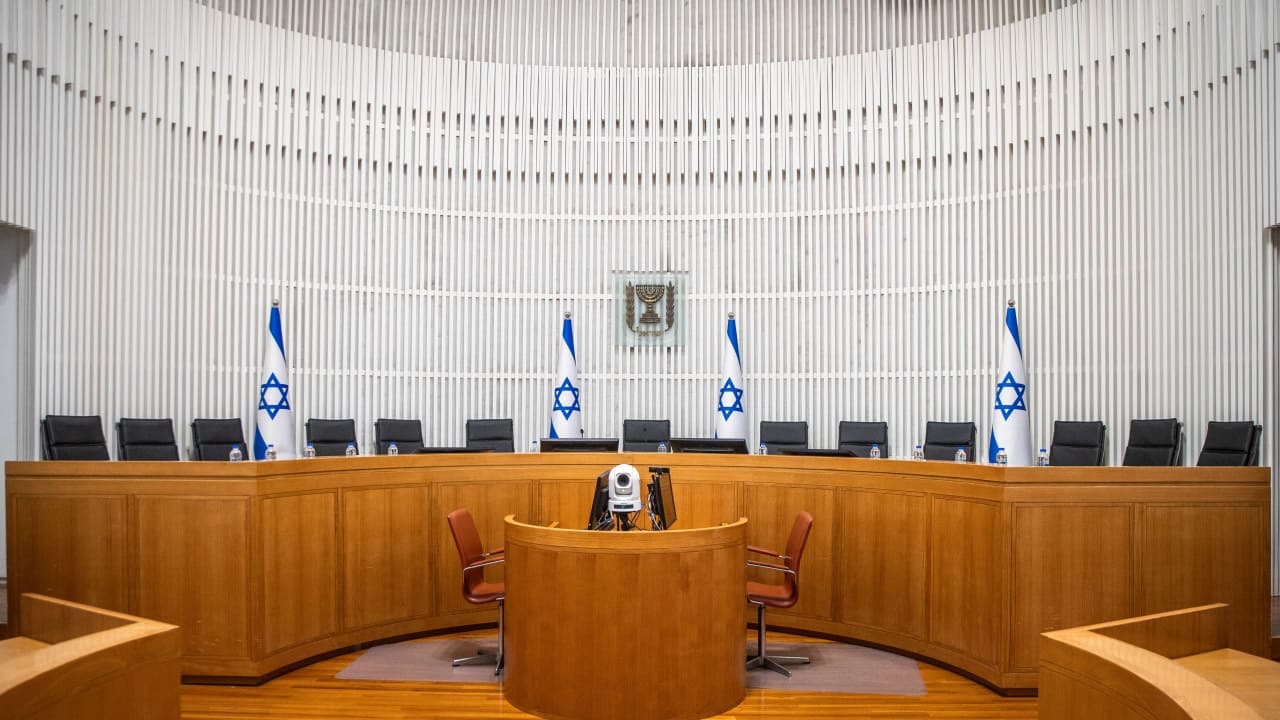
The government told the High Court of Justice on Wednesday that legislation to establish a proposed alternative framework for investigating the October 7 massacre is expected to pass its first Knesset reading on Monday, July 6.
In the same filing, the government asked the court for another 30 days to submit a further update in petitions demanding the establishment of a state commission of inquiry into the October 7 failures and the ensuing war.
The update was filed on the July 1 deadline set by the court in April, when the justices ordered the government to report on progress toward an investigative framework. At the time, the court said that more than two-and-a-half years after October 7, no appropriate mechanism had been established to investigate the disaster and draw lessons from it.
The government said the Knesset Constitution, Law and Justice Committee approved the bill for its first reading on June 9. It reiterated its position that the government, as the body responsible for state security, is legally authorized to decide whether to establish an inquiry, what mandate it should receive, and when it should begin its work.
The filing did not state that the government had decided to establish a state commission of inquiry under the existing legal framework. Rather, it pointed to the advancement of a separate government-backed bill, formally described as creating a “state-national” commission of inquiry.

The distinction has been at the center of a dispute that has now continued for almost three years. A state commission of inquiry is considered Israel’s most authoritative investigative mechanism: Its members are appointed by the president of the Supreme Court, it operates outside the political echelon, and it has the authority to summon witnesses and issue personal findings.
The government-backed bill would establish a different process: Under the version approved last month, the Knesset would first seek to appoint a six-member panel with the support of 80 MKs. If that failed, the committee chairman and the leader of the opposition would each appoint three members.
Commission may operate with 3-member minimum
However, the revised proposal also allows the commission to operate with as few as three members. Since opposition parties have boycotted the bill’s advancement and opposed participation in the proposed commission, the framework could ultimately allow a panel consisting only of coalition-appointed members to begin operating.
Earlier versions of the proposal would have allowed the state comptroller to fill vacant positions if either side failed to make appointments. That provision was removed in the version cleared for its first reading.
Supporters of the bill, including Prime Minister Benjamin Netanyahu and Likud MK Ariel Kallner, have argued that an inquiry formed through agreement between coalition and opposition representatives would have broader public legitimacy than one whose members are appointed by the Supreme Court president.
Critics, including opposition parties, bereaved families, and the Attorney-General’s Office, have argued that the proposal would allow politicians to shape the composition of an inquiry into their own conduct.
The attorney-general previously warned that transferring appointment authority from the judiciary to political actors risked undermining the independence and effectiveness of the investigation.
Even after a first-reading vote on Monday, the bill would still need to return to committee and pass a second and a third reading before it could become law.
Keshet Neev contributed to this report.