

In journalism, war correspondents are often seen as having the most exciting jobs. They get to cover the literally explosive news events on the frontlines of combat, as well as behind the scenes.
It isn’t all bombs and blasts. However, in the course of his career, Arieh O’Sullivan has seen more than his fair share of explosions.
A former farmer and soldier, O’Sullivan worked for years in the news before coming to The Jerusalem Post, where his tenure as defense correspondent started off with a literal bang.
After 10 years and over 4,000 articles to his name, O’Sullivan’s time as a reporter is the stuff aspiring journalists dream of. And if he ever chooses to write an autobiography, it is sure to be a bestseller.
In Jerusalem sat down with O’Sullivan to get a small glimpse at his incredible career – one we can only be envious of.
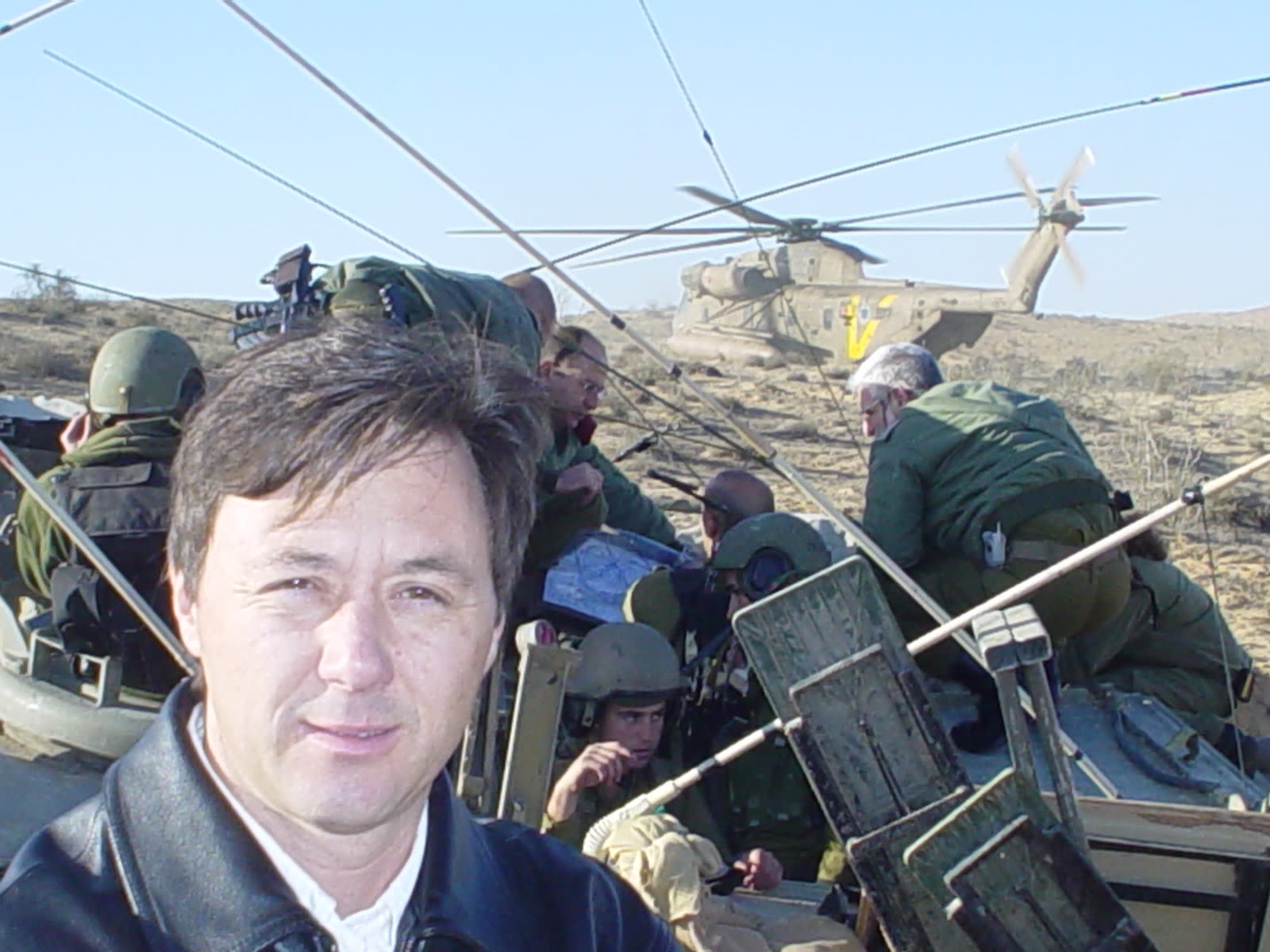
What got you interested in journalism?
Actually, I never wanted to be a journalist. I wanted to be a farmer in true Zionist ethos, and spent two years in university studying agriculture, and lived on a kibbutz for over three years. But after my army service, when I returned to studies, I found my true calling was news and storytelling.
I’d kept a journal since the age of 17 and loved writing, and was also drawn to adventure. Also, I didn’t know – never did – what I wanted to be when I grew up, and journalism let me do that. Each story could let me put myself into other people’s shoes and lives. Every single day was different. I embraced that.
What brought you to ‘The Jerusalem Post’?
I was a foreign correspondent, working for about seven years for The Associated Press covering Israel and the Middle East, when, in 1996, then-Post editor Jeff Barak recruited me to be the defense correspondent. I believed it to be a dream job; to have a real beat and be a voice with a byline, quite the contrary of the anonymity of wire service journalists.
The first day on the job, an Arab suicide bomber blew up (again) the number 18 bus in downtown, murdering about 20 people. Writing news I could do – but now I had to develop sources and break into that exclusive “military reporter” clique that would allow me to cover the defense beat without any grace.
What roles have you had here at the ‘Post’?
I worked for over a decade as the defense correspondent, a role that had me writing loads of hard news, but also analyses and in-depth features for the weekend paper and Magazine. Occasionally, I’d write archaeology stories, food critiques, and of course travel pieces. In all, I wrote over 4,000 stories for the Post in my 10 years there – a feat I think only Judy Siegel-Itzkovich surpassed me!
It was rarely a quiet beat, but at one point there was a lull, and I convinced then-Post editor Bret Stephens to let me go to Dublin to write about Bloomsday, the crazy June holiday celebrating James Joyce’s Ulysses.
What’s one of your favorite anecdotes from your career?
As the military reporter, I covered loads of battles and raids and bombings, etc. But I also got a chance to parachute with King Abdullah and his special forces in Jordan, spent long periods on submarines and other navy vessels. I hop-scotched across Lebanon in helicopters; accompanied a defense minister to China, where we walked the Great Wall together; and I “blew up” all the other military reporters from the Israeli media in war games.
But, when I first got to the Post, I went to the archives and read every story that one of my predecessors, Hirsch Goodman, had written, as I saw him as a model defense reporter for the English media. I read that he had flown in a fighter jet for a story. That became my quest: to fly in an Israeli fighter jet.
After much persistence and numerous articles, I convinced the then-head of the Israel Air Force, Eitan Ben-Eliyahu, to let me fly. I did – doing faux dogfights high over Jerusalem in an F-4 Phantom jet. (And the truth is, that’s the real reason I became a defense reporter. I believe I was the last journalist to ever have the chance to fly in an IAF Phantom jet)
What’s something about journalism that most people don’t realize?
Journalism is changing dramatically and exponentially in this time. But for me, it was a way of life. Good journalists are hooked on news and are constantly “on.” Your brain never stops churning to get and write the story. Every person you meet, or experience you have, finds you thinking: “This is a possible story. I’d like to hear more about it.”
What advice do you have for any aspiring journalists out there?
My advice is to keep your political beliefs well hidden and strive to be objective.
It’s not about you; it’s about the news. Always seek a dissenting opinion. Credibility is supreme, and be prolific. Write, write, write.