
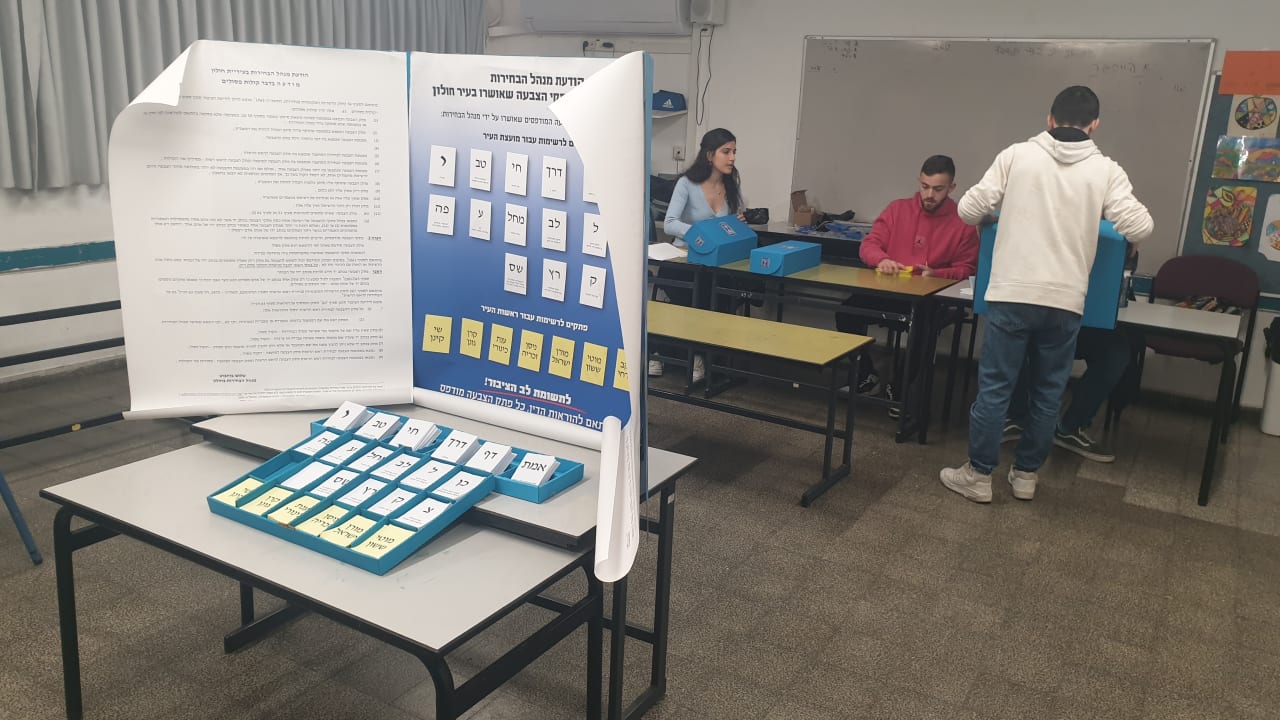

Israel is a democracy and, in many respects, a vibrant one. Its robust ecosystem of civic engagement, grassroots organizing, and civil society organizations is a case in point.
Yet when it comes to elections, the fundamental pillar of democracy, Israeli citizens have strikingly few opportunities to participate.
For one thing, Israelis vote only in elections for the Knesset and local government. They do not elect representatives to other institutions or offices: there are no elections at a regional tier of government, such as the state level in the United States; no elections to an additional legislative chamber, like in the structure of the House and Senate in the US; no direct presidential elections; and no referendums.
For another, even Knesset elections offer voters a highly constrained choice, with no candidate-based or regional component whatsoever. Voters may choose only among party lists; they cannot express support for specific candidates. And because the entire country constitutes a single nationwide constituency, no candidate or list represents a particular region.
No representation
On both counts, Israel is an extreme outlier. Indeed, Israeli citizens have fewer opportunities to vote, in fewer democratic arenas, than citizens of any other developed democracy.
This comes at a considerable cost to the Israeli people. Such a system sharply limits Israelis’ ability to influence politics and decision-making, while creating a wide gulf between voters and those they elect.
The Knesset electoral system, with its complete absence of any candidate-based or regional component, leaves voters particularly distant from their representatives and makes it difficult to hold them to account. At the same time, members of Knesset are politically dependent not on the electorate at large, but on the small number of individuals or bodies that control how each party’s candidate list is determined.
Put simply, Israel would benefit from vast improvements in some of the most fundamental dimensions of democracy: participation, representativeness, responsiveness, and accountability.

What can be done?
One promising reform would be to introduce a “semi-open ballot” in Knesset elections. Voters would continue to choose a party list, as they do today. But they would also be able to mark on the ballot the names of several candidates on that list whom they specifically support.
Candidates who receive substantial personal support could then move higher up the list – the higher a candidate is on the list, the more likely it is they will end up receiving one of the Knesset’s 120 seats.
Institutionally, this would be a relatively modest change. Democratically, however, it could be highly significant.
It would neither weaken political parties nor transform elections into contests between individual candidates. But it would bring another actor into the equation, one who is almost entirely absent today: the voter.
Members of Knesset would know that securing the confidence of the party leader or party apparatus is no longer enough – they would need to answer to the public.
Systems with a semi-open ballot, which are common around the world, have real potential to increase voters’ influence, strengthen the accountability of elected officials, and give parties a greater incentive to put forward higher-quality, more representative candidate lists.
The reform enjoys support across the political spectrum and among the general Israeli public.
Regional reach
But electoral reform should not necessarily end there. Over the longer term, Israel should also consider introducing a regional component into its electoral system.
The country could, for example, be divided into several large electoral districts, each electing a number of members of Knesset proportional to the district’s population.
This would produce members of Knesset with a clearly defined geographic base and a local electorate, attuned to the region’s specific needs.
A representative elected in the Galilee, the Negev, or the Haifa area, for example, would have a clear political incentive to address transportation, healthcare, employment, public safety, and the other issues that concern the region’s residents.
More far-reaching ideas are also worth considering. One of the most prominent and troubling features of Israeli democracy is its scarcity of checks and balances and the excessive concentration of power in the executive, relative to both local government and other institutions, such as the Knesset.
Divided chambers
Two major mechanisms that limit executive power in other countries, but do not exist in Israel, are an upper legislative chamber and an “elected regional tier” – that is, geographically defined subnational units of self-government whose institutions are democratically elected, like states in the US, Spain’s autonomous communities, or the devolved legislatures of Scotland, Wales, and Northern Ireland in the United Kingdom.
Such institutions, first and foremost, improve citizens’ representation and make government both closer to citizens and more effective, especially in the case of subnational government. They also disperse power by creating additional “veto points” and involving more actors in legislative and decision-making processes.
Not all these reforms should be undertaken at once. Some are already well developed and relatively straightforward; others are far more complex. Moreover, changing a country’s system of government is a sensitive undertaking that carries risks of its own.
The prudent course is therefore to begin with a cautious step that does not upset the system’s basic balance.
First steps
A semi-open ballot is an excellent place to start, with an eye toward future election cycles, not the current one (implementing electoral reform in such close proximity to elections is ill-advised).
For future elections, it would preserve proportional representation and the party-list electoral system, while giving citizens somewhat more power and their elected representatives somewhat more reason to listen to them.
In a democracy, elections do more than determine who will govern the country in the years ahead. They are also the mechanism through which a relationship of representation and accountability should be forged between citizens and those who exercise power on their behalf.
In Israel, it is time to strengthen that relationship.■
Assaf Shapira is the head of the Israel Democracy Institute’s Political Reform Program.