

On October 7, 2023, Israelis awoke to the familiar sound of Color Red rocket-warning sirens piercing the air and the unfamiliar sight of a white pickup truck flashing across their screens. The armed, masked men hanging off the back, we would soon learn, were Hamas terrorists, and the country was under attack.
What followed has been three years of seemingly endless war, an agonizing struggle to bring home those taken hostage on that day, a surge in global antisemitism, increased violence by Jewish settlers in the West Bank, extremism on both the Left and the Right, and an almost incomprehensible level of death and destruction.
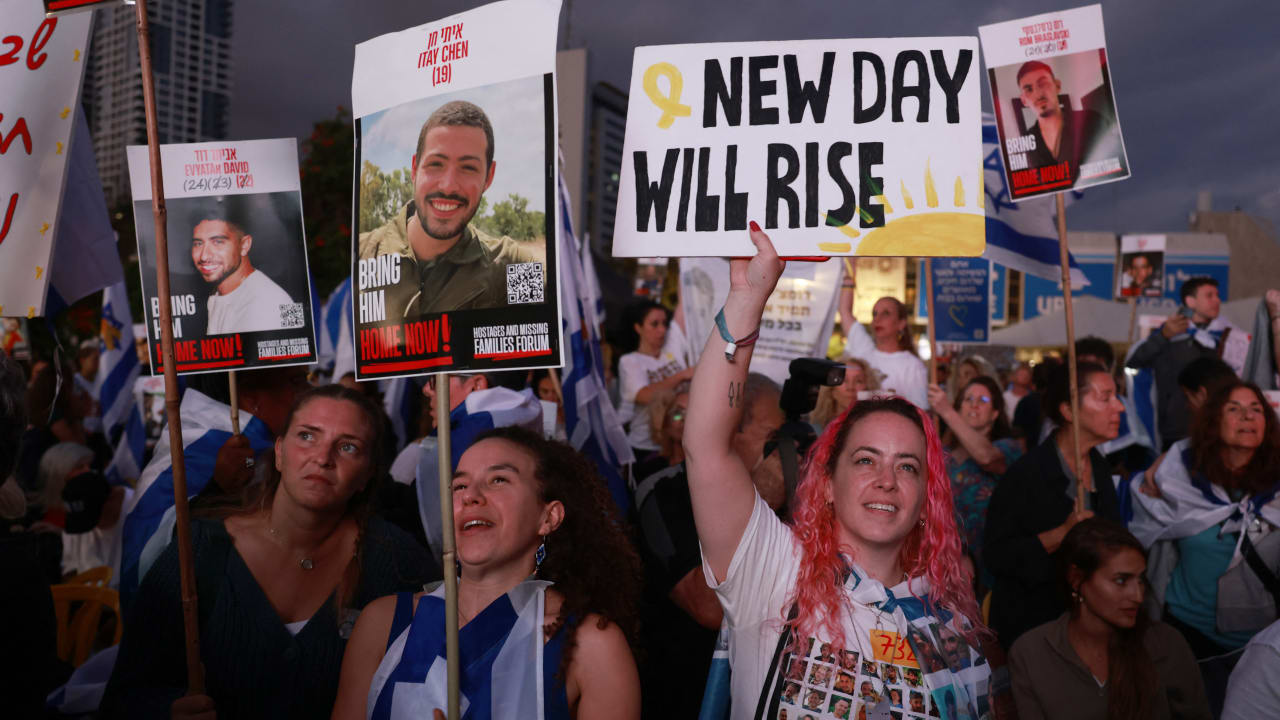
But somehow, time has also moved forward. The last living hostages returned home exactly a year ago – sparking a rare moment of unity for a deeply fractured Israeli public – and have begun reclaiming the lives stolen from them. Their engagements, marriages, and new babies have rekindled the collective joy that once radiated from Hostages Square in Tel Aviv.
October 7 and the wars that followed irrevocably changed the trajectory of countless lives – not only those directly affected, but those in ever-widening circles beyond them.
For this article, The Jerusalem Report spoke to three people whose lives took profoundly different turns in the wake of that terrible morning, three years ago.
The following interviews have been edited and condensed for clarity.
Rebecca Geller: A rescue leads to a mission
Rebecca Geller’s story begins with a miraculous rescue. Her beloved dog Stevie, who escaped from the southern border village of Talmei Yosef on October 7, was found and returned to her six weeks later. The experience eventually led her to join the Hostages and Missing Families Forum as an international media liaison. Today, she lives in Tel Aviv with a happy, healthy Stevie.

On the morning of October 7, Geller was in London, glued to the news and frantically texting her friend who was watching Stevie for any possible update.
I had been doing PR for hi-tech companies for almost 20 years, but I was ready for a change. I went home to London to think about my next steps.
When I was able to get back, I was consumed with the search for Stevie. After he was found and I nursed him back to health, I started looking for ways to help.
The forum needed PAs for their international media team. Because of Stevie, I understood how it feels to have someone who needs you, who is suffering, who you can’t get to. I also had 19 years of international media experience.
I started the next day.
This was December 2023. About 20 of us were on the team, and it was nonstop. For two years, my phone was literally attached to my body every waking moment. In some ways, the pace kept me sane. I didn’t have time to stop and get emotional, which was good. I needed to be totally available for these families who were in excruciating pain.
It was rare that I broke down, but it did happen. The six hostages who were murdered in captivity – that was awful. Usually, I felt like we were making a real difference. But their deaths made me realize how powerless we were, how much was just dumb luck.
There were amazing moments too. One day, I got a call from one of Aviva and Keith’s (Siegel) kids. They were practically screaming, “Where is my mom? Have you seen my mom? My dad’s on the list!” Aviva was at the forum giving a speech, so I sprinted over there. It was one of the few times I allowed myself to be truly excited.
I will remember that day for a long time.
By the end, I was emotionally and physically exhausted. I basically hadn’t done anything for myself for two years. I started baking sourdough bread. I got back to exercising and doing art. I read. I did my taxes. And I slept. A lot. Life started to get back to normal.
But then the Iran war started, because there is no normal life here.
Only recently have I begun to reengage. I’m helping a few of the hostages and an author whose book moved me. I feel incredibly lucky to have been able to use my experience to help the families. I am so proud of what we accomplished. Now I want to work with people I believe are doing good things. I want to help those who have important, peaceful messages.
Rabbi Zach Truboff: When the Zionist promise broke
Rabbi Zach Truboff made aliyah in 2018 with his wife and four young children. He is the director of research for an international beit din (rabbinical court), which helps agunot (women whose husbands refuse to give them a bill of divorce), and the author of Zionism in Crisis: Jewish Power and Moral Responsibility After October 7.

On the morning of October 7, Truboff and his family were at home in Jerusalem, preparing to leave for synagogue, when rocket-warning sirens suddenly began blaring.
I am a lifelong Zionist. I have closely studied the teachings of religious Zionists Rav Kook and Rav Shagar. I had dreamed of making aliyah my entire life.
But October 7 felt like the Zionist promise itself had been broken.
I remember the first moment when I felt an existential shift. A few days after October 7, the entire country got an alert about a drone incursion from Lebanon. It was a false alarm, but for about 10 minutes, it felt like the gates of hell were opening. I was huddled with my kids in our hallway, realizing that I may have brought them to this country to die.
And I was having that realization as a father, as a rabbi, and ultimately as a Zionist.
The Torah tells us that when a catastrophe occurs, we have an obligation to “blow the silver trumpets,” which the Rambam interprets as a call to do teshuva (repentance). For me, the silver trumpet of this catastrophe was the siren, which not only sounded for hours that day, but became a soundtrack for the next three years of life in Israel.
Which is not to say Israel is to blame for October 7. Hamas terrorists are to blame. They should feel guilty. But teshuva isn’t just about guilt; it’s also about responsibility. For me, that meant admitting that before October 7, I, like most Israelis, had accepted the story that Israel had no real choices and therefore bore no responsibility.
It was an illusion that was shattered by the piercing sounds of the missile siren.
My writing emerged from a need to examine the broken shards. I started writing about two weeks after the war began, and I wrote all the time. I wrote about the things I was seeing that were unquestionably problematic. I wanted to name them and grapple with them, to show people that we must learn to hold contradictory ideas.
I turned about 25 essays into a book, which I published after the war was over and the hostages returned home.
This is where the title, Zionism in Crisis, came from. That is what I was experiencing. Zionism had lost the ability to ask itself hard questions about what it was doing and what was happening to it.
But I could not give myself the “get out of jail free card” that so many around me were willing to accept. Nor was I going to walk away entirely. I do not believe we can separate ourselves from the things that have formed us just because they are hard. Being in a covenant with God does not allow for that.
Ultimately, this is the commitment I have made after these three profoundly difficult years: to keep writing, speaking, and teaching, and to try to make clear that each of us has to take ownership over what is happening. If I am a Zionist, then Zionism’s problems are my problems, and the question becomes, how am I going to take responsibility for them?
Lauren Smith: Finding Judaism again
Lauren Smith was born and raised in Houston, Texas. Her parents instilled in her a strong Jewish identity, but in adulthood her connection to Jewish life began to fade.

After the Hamas attacks, Smith found herself back in synagogue, where she rediscovered the traditions and values of her childhood. This past August, she fulfilled a lifelong goal when she became a bat mitzvah after two years of intensive study.
On the morning of October 7 – the middle of the night in Houston – Smith watched news reports as she texted with a friend who also couldn’t sleep. One emotion overwhelmed her: fear.
It was the first time in my life that I felt truly afraid simply because I was Jewish. Of course, I grew up learning about the horrors of the Holocaust and the emotions that come with that. But this was different. This was unfolding before your eyes in real time.
I also wanted so badly to help. But here I was, halfway across the world. I couldn’t just pick up and go to Israel. I felt so helpless.
I thought maybe if I reintroduced myself to our Jewish community here in Houston, I could find a way to advocate or contribute. I began attending services at Congregation Beth Israel. One Shabbat, Rabbi Adrienne Scott gave a sermon about leaning into Judaism – how reconnecting with your faith can be one of the most meaningful forms of self-care.
I’ve never been a big self-care person, but it was the push I needed to do something for myself and for those who came before me. But I also thought about those young people who would never again have the privilege of attending services. I wanted to show up for those who could no longer be part of a community that’s so inclusive and beautiful.
The experience was life-changing. I started attending services regularly, going to Torah study, and volunteering. On the first anniversary of October 7, I officially became a fourth-generation member of Beth Israel. A couple of months later, I decided to have the bat mitzvah I never had as a child.
For two years, I carved out space for my weekly lesson. I prioritized studying. And on August 22, surrounded by my family, friends, and beloved congregation, in a room filled with love and support, I became a bat mitzvah.

From the bima, I read these words: “I discovered a part of myself I had not known I was searching for. I found shleimut – wholeness. I came looking for comfort but found community. I was searching for answers but found purpose. Being Jewish is no longer an identity I inherited. It is something I actively choose to embrace, and I am a better person because of it.”■