


Something happened recently that I can’t stop thinking about.
Flydubai flight 1073 was carrying more than 170 people, most of them Israelis, from Dubai to Tel Aviv when the copilot attacked the captain with a cockpit crash axe and the aircraft plunged thousands of feet.
The wounded captain managed to unlock the cockpit. Passengers and crew intervened and subdued the copilot, and reserve pilots aboard the aircraft ultimately brought the plane safely to the ground in Saudi Arabia.
Investigators will examine everything that happened in that cockpit. But something about what happened outside it struck me immediately.
When ordinary Israelis understood that something was catastrophically wrong, some moved toward the problem. Nobody appointed them. Nobody convened a committee. Nobody explained that responsibility had arrived.
They understood that it had. And they acted.
The more I thought about that instinct, the more I realized that we often misunderstand what Israel has actually built over the past 78 years.
We talk about an army, an economy, universities, technology, agriculture, Hebrew, cities, and institutions. We measure Israel through GDP, military strength, population, start-ups, and patents.
But perhaps Israel’s most consequential creation cannot be measured so easily.
Israel built a different kind of Jew.
I do not mean a better Jew. Israelis are not inherently braver, stronger, or more valuable than Jews living elsewhere. There is also nothing biological about what I am describing.
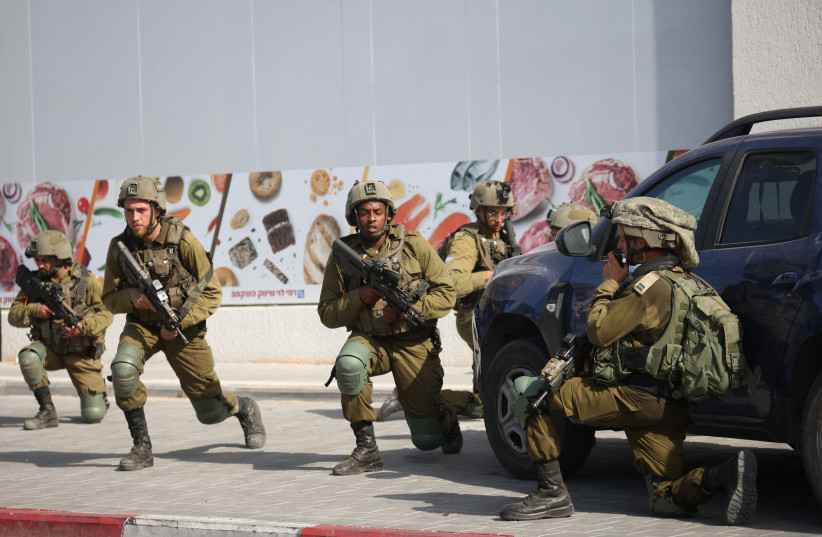
The explanation is simultaneously more ordinary and profound: cultures form human beings. Institutions form human beings. Expectations form human beings. Responsibility forms human beings.
And sovereignty forms human beings.
For generations, Israeli society has been quietly teaching its children a lesson that eventually becomes almost subconscious: you are responsible for what happens next.
The country is yours, so its problems are yours. The person bleeding beside you is your responsibility. The war is not something happening on television; your brother may be fighting it. The stranger whose car has overturned is not automatically somebody else’s problem. The future of the Jewish people is not somebody else’s problem.
You are somebody.
This is not merely an accidental consequence of Zionism. In many respects, it was one of Zionism’s original ambitions.
The Zionist vision
We have flattened Zionism over the years into a political proposition: the Jewish people needed a state. Of course they did.
But many thinkers behind the Zionist revolution were asking an even deeper question: they were not simply asking where Jews should live. They were asking what Jews could become.
Max Nordau called for Muskeljudentum, muscular Judaism. His argument was larger than physical strength. It reflected a desire to restore confidence, capability, and action to Jewish life.
AD Gordon approached the problem differently, seeing physical labor, nature, and responsibility for the land as instruments of national and personal renewal.
They disagreed, as Zionists always have. But running through major strands of early Zionism was an extraordinary proposition: Jewish national restoration required Jewish human restoration.
Zionism was not only going to build a country. It had to build people capable of having one. And so it did something extraordinary.
Zionism did not merely drain swamps, revive Hebrew, plant vineyards, build cities, raise an army, and gather exiles. It took people who had spent centuries living inside civilizations built by others and told them: “Build one yourselves.”
Grow your own food. Defend your own children. Speak your own language. Govern your own cities. Fight your own wars. Make your own mistakes. Take responsibility for the consequences.
Farmers appeared where Jews had been told they did not belong on the land. Soldiers appeared where Jews had depended upon other people’s armies. An ancient language moved from prayer books into kitchens, playgrounds, universities, and fighter jets.
Refugees stepped off boats and airplanes and became citizens responsible not simply for surviving history, but for making it.
Israel built kibbutzim and moshavim. It created military and national service, reserve duty, and volunteer organizations. It asked teenagers to accept responsibilities that much of the modern world postpones well into adulthood.
Generation after generation, that responsibility did something to the people carrying it.
The farmer. The soldier. The nurse. The immigrant. The reservist. The teenager leading a youth movement. The stranger who stops beside a wrecked car because leaving another human being there is unthinkable.
These were not separate achievements of Zionism.
Together, they were its human achievement.
Sovereignty shapes people
Israel did not merely build a Jewish state. The Jewish state built Israelis.
Not perfect Israelis. Certainly not invulnerable ones. October 7 demonstrated with unbearable clarity that Israeli confidence can become complacency and that Israeli institutions can fail catastrophically.
Israel has no monopoly on courage either. Diaspora Jewish history contains extraordinary examples of resistance, service, sacrifice, and communal responsibility.
The distinction is not between brave Israelis and weak Diaspora Jews.
It is between two different ideas about what Jewish institutions should produce. Israel has spent generations asking, consciously or unconsciously: What must a Jew become in order to carry Jewish sovereignty?
Much of the organized Diaspora has increasingly asked a different question: What must we do so that a Jew continues identifying as Jewish?
For decades, Jewish institutions in the West have worried about continuity. Assimilation. Intermarriage. Declining affiliation. Antisemitism.
So we constructed an enormous infrastructure designed to keep Jews connected: schools, camps, synagogues, Israel trips, federations, advocacy organizations, and countless programs devoted to Jewish identity.
But somewhere along the way, I think we confused maintaining Jewish identity with building Jewish people.
We became extraordinarily concerned with whether someone would remain Jewish and insufficiently concerned with what remaining Jewish was supposed to make someone become.
Jewish identity cannot merely answer the question, Who am I?
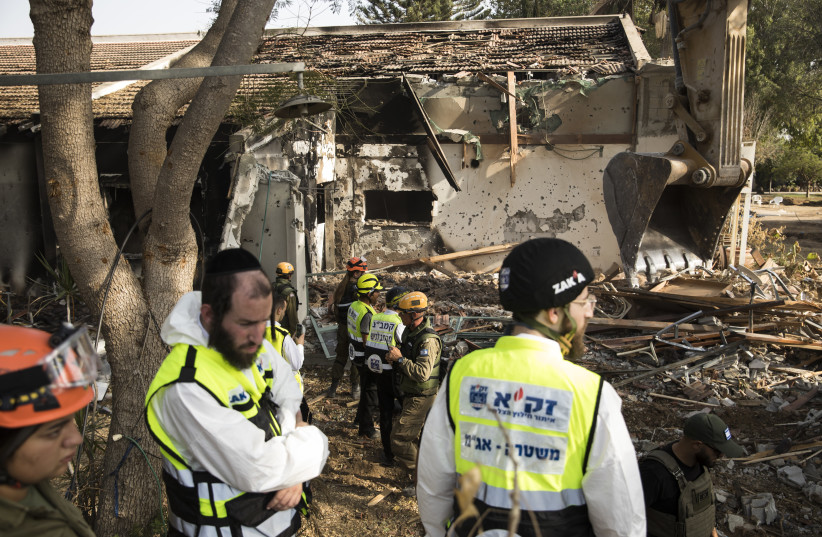
It must also answer: What does belonging to this civilization require me to become?
What qualities should Jewish civilization cultivate in a human being? Courage. Literacy. Discipline. Responsibility. Service. Hebrew. Physical capability. The ability to save a life. The ability to protect another person. The confidence to walk into the world without apologizing for belonging to an ancient civilization.
Because if Judaism becomes merely an identity we inherit, defend, and occasionally celebrate, we have reduced one of humanity’s oldest civilizations to a demographic category.
Judaism has always demanded more.
Our civilization is built around obligations precisely because Judaism understood something modern institutional life sometimes forgets: a civilization is supposed to form its people.
Study. Remember. Teach your children. Feed the hungry. Visit the sick. Honor your parents. Build a family. Build a community. Protect life. Accept responsibility for something beyond yourself.
Judaism was never supposed to be merely something you were; it was something you practiced until it changed who you became.
And this is where I believe the divergence between Israel and much of the Diaspora has become consequential.
Israel, imperfectly and sometimes accidentally, preserved something that too much organized Diaspora life allowed to weaken: the expectation that Jewish life should improve the quality of the Jewish person.
Their character. Their knowledge. Their capabilities. Their confidence. Their sense of obligation. Their relationship with their body, community, history, and people.
The frustrating part is that the Diaspora possesses almost everything necessary to do this.
The infrastructure exists. What has too often been missing is the ambition.
We have become remarkably sophisticated at asking whether Jews feel connected while strangely hesitant to ask what Jewish connection should require of them.
That has to change.
Building Jewish capability
I do not want Diaspora Jews pretending to be Israelis. I do not want Jewish schools turned into military academies. I certainly do not want Jewish children raised believing everybody hates them or that catastrophe waits around every corner.
I want Jewish civilization to start building Jews again.
A Jewish child should emerge from Jewish education stronger because he or she went through it. Knowledgeable, capable, and physically confident. Connected to Hebrew and comfortable accepting responsibility.
Able to help another person in an emergency. Deeply rooted in Jewish civilization and Israel. Conscious that belonging to a people gives you not only an inheritance, but obligations.
And yes, harder to frighten.
Imagine if graduating from a Jewish school meant knowing CPR as naturally as knowing the Four Questions. Imagine if Jewish teenagers learned first aid, physical fitness, and self-defense alongside Jewish history.
Imagine if Hebrew stopped being a language many Jews painfully sounded out at 13 and became a living bridge connecting Jews across continents.
Imagine if Jewish institutions measured success not only through enrollment, affiliation, fundraising, and continuity, but by asking a more demanding question: Are the people leaving this institution stronger than the people who entered it?
Not merely stronger physically. Stronger in knowledge and character. Secure in their sense of belonging. Confident in their responsibilities and capable of taking care of themselves, their families, their communities, and one another.
Imagine if a synagogue were not simply somewhere Jews went to practice Judaism, but one of the institutions through which Judaism practiced upon them.
Changed them. Strengthened them. Prepared them.

Beyond ‘Never Again’
This is the philosophy behind Project Maccabee.
When we begin launching it next August, I do not want Project Maccabee understood simply as another response to antisemitism. Antisemitism makes this work urgent. It is not what makes the work worthwhile.
Even if antisemitism disappeared tomorrow, I would still want Jewish children to know Hebrew. I would still want Jewish teenagers to know how to save a life.
I would still want Jewish women capable of defending themselves. I would still want Jewish communities accustomed to taking responsibility for one another.
Because the objective is larger than protection; it is formation.
Project Maccabee begins from a proposition that once sat close to the heart of the Zionist revolution: the Jewish world should take responsibility for the kind of human beings Jewish civilization produces.
That does not mean manufacturing little Israelis in New York, Toronto, London, Paris, or Sydney. Diaspora Jewish life has its own traditions, achievements, and possibilities, and they should not be erased.
It means recovering an older Jewish idea: belonging to this people should ask something of you.
For decades, we have asked how to make Judaism attractive enough that our children will choose it. Perhaps we should also ask whether we are making Judaism demanding enough that choosing it actually means something.
That produces a very different Jewish future.
One in which we stop measuring Jewish strength only by how many Jews remain and begin asking what kind of Jews remain. One in which Jewish institutions do not merely preserve Jewish identity but cultivate Jewish capability.
One in which “Never Again” stops being only a warning inherited from our grandparents and becomes a collection of skills, habits, obligations, and instincts handed to our children.
This month, aboard an airplane falling thousands of feet from the sky, we caught a glimpse of what those instincts can look like. Something was terribly wrong. Somebody had to act. And some of the people aboard understood that somebody meant them.
That instinct was not born in that moment. It had been cultivated long before anyone stepped onto that airplane. Which means it can be cultivated elsewhere.
Perhaps that is one of the greatest gifts Israel can now give back to the Jewish world. Not another explanation of why Israel matters. Not another lesson in advocacy. Not another warning about antisemitism.
Something deeper.
A reminder that Jewish civilization was never designed merely to preserve Jews; it was designed to form them. We have spent an enormous amount of time asking how Judaism will survive the 21st century.
I think we have been asking the question backwards. The question is what kind of Jews the 21st century will require. And whether we are willing to build them. Because Jewish continuity is not enough if we cannot answer a much more important question: Continuity of what?■
Adam Scott Bellos is the founder and CEO of The Israel Innovation Fund, creator of Project Maccabee and Wine on the Vine, and the author of What Is Zionism? Why Never Again Is Not Enough.