
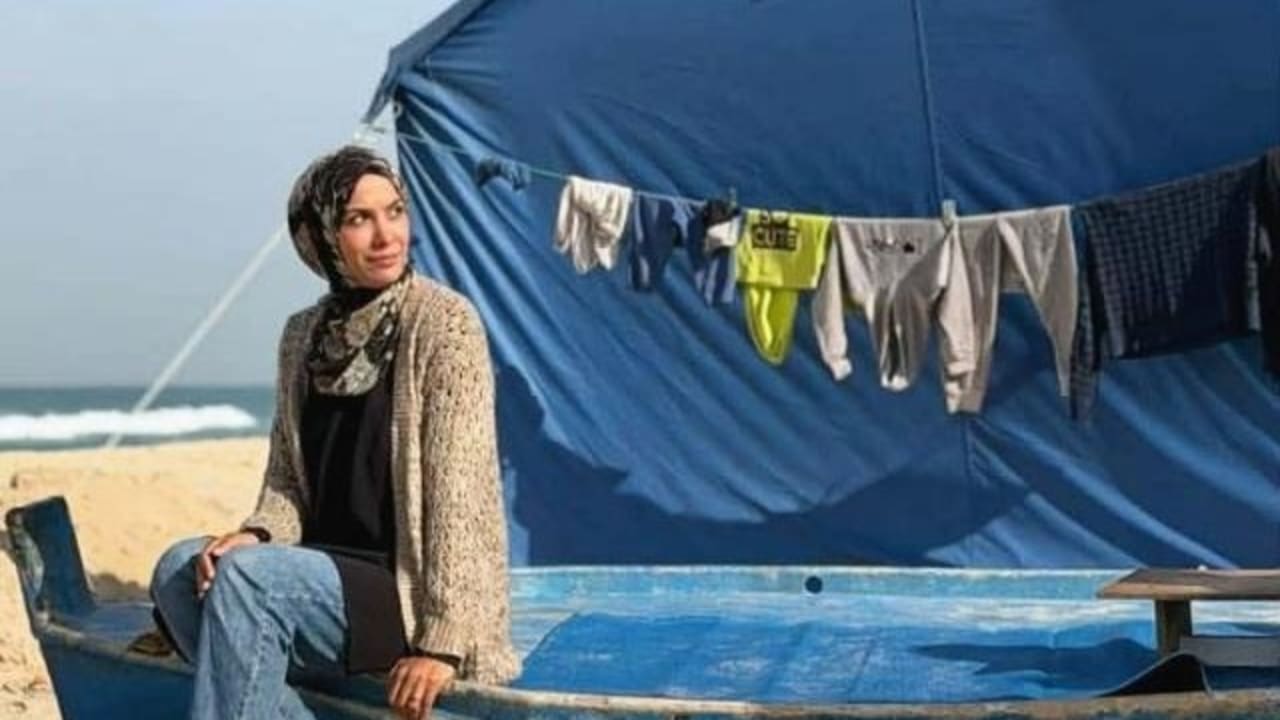

In a makeshift tent in the Al-Mawasi camp area of Khan Yunis, 35-year-old Najia Mahmoud, originally from Rafah, has spent much of the past three years displaced with her parents and siblings, enduring daily hardships while witnessing a troubling phenomenon that many in Gaza prefer not to discuss: a rise in underage marriages.
“This has become much more common since the war began,” Najia told The Jerusalem Report in a recent interview.
“Some families, struggling with poverty and fear, marry off their daughters when they’re only 15 or 16,” Najia said. “These girls are still very young; they have barely experienced life, they know nothing. Many of them haven’t even finished school.
“Their future is decided for them,” Najia added. “I don’t think these girls are aware of what they are entering into or how much it will shape their lives. Their parents are so focused on getting through each day and meeting basic needs that they may not have the energy to consider what this means for their daughters’ futures.”
According to Najia, and a recent UN agency report, the issue of child marriage had existed in the Gaza Strip even before the current war started, triggered by Hamas’s attack on Israel on October 7, 2023. But such marriages occurred on a relatively small scale and were mostly limited to isolated cases.
“The problem has intensified because of the harsh conditions people are living in now,” Najia emphasized.
She said she is not willing to judge families for their decisions, as she understands that they believe they are doing what is best for their daughters under “impossible circumstances,” though she personally believes it is a mistake.
“These parents see early marriage as a way to protect their daughters’ honor and the reputation of the family, especially with so many people crowded into small spaces of tents and makeshift shelters, where there is no privacy and girls are exposed to risks,” Najia explained.
Before the war, families felt ashamed of child marriage, but have now lost that sense of shame, Najia said
A false protection
“Families are struggling to live, so anything that is not related to aspects of daily survival is pushed aside. Marrying off girls, which used to be somewhat hidden, has now become something normal even though it’s not.”
A sense of insecurity has driven parents to push their daughters to marry at such a young age, she noted.
“They think that the girl is unsafe, so they want to provide her safety and a secure environment, believing the husband will take care of her and protect her from any harm or harassment she might face from others in such vulnerable conditions,” Najia said.
However, the protection parents hope to give their daughters can sometimes turn into exactly what they fear most. Najia described a 15-year-old girl living near her tent who was married off and then violently abused by her husband.
She also addressed the issue publicly on her Facebook account. “What’s happening around us is disgusting. The sudden spread of child marriage in Gaza isn’t marriage; it’s the open selling of girls,” she wrote.
“My 20-year-old neighbor married a 15-year-old girl. He beats her day and night. She stays silent for more than half an hour in pain, and when she finally cries out, he hits her again,” Najia bravely shared in her post.
“What’s even more outrageous is that her family is just a few meters away, and his family is right there too, and everyone stays silent!”
The economic burden
“The age of slavery isn’t over. It’s just been renamed ‘protecting girls’ because of the war and life in the tents,” she continued.
Najia said that, to a lesser extent, some families are also motivated by the desire to shift economic responsibility, seeking to transfer the burden of daily necessities, such as food and basic care, to the husband, as they struggle to survive.
“You can also see cases linked to families’ economic situation, as there is no income, but that’s a common problem that we all suffer from,” Najia told the Report. “The solution is not to force your daughter to marry because you can’t afford to support her. It could only bring more problems in the future.”
A growing crisis
According to figures released recently by the United Nations Population Fund (UNFPA), reported cases of forced and child marriage in the Gaza Strip surged by 120% from January to June 2026.
The agency, which advocates for sexual and reproductive health, noted that before October 7, 2023, child marriage rates had been declining – from 26% in 2019 to 11% in 2022. However, since the start of the war, it has documented a sharp increase in child marriages and adolescent pregnancies.
Gazan women interviewed by the UN agency described economic exchanges, where girls are married off in return for resources, as a growing form of forced child marriage.
They attributed the rise to financial hardship, the collapse of the education system, and the need for protection in displacement camps.
Some families saw marriage as a way to secure aid or shelter, while others cited fear of sexual harassment and rape, along with strict gender norms, as reasons for marrying off young girls.
Riham Jafari, a Palestinian women’s rights activist who serves as communications and advocacy manager at the non-governmental organization ActionAid, explained that the lack of services, the neglectful environment, and the living conditions of displacement have all contributed to a rise in child marriage in Gaza.
However, she added that in some cases, girls could be married off even to poor men.
“Financial hardship absolutely plays a role. But there is concern among families that an unmarried girl could be left vulnerable, so they have to do something to make her safe and preserve her honor,” Jafari said.
She also emphasized that the “breakdown of social systems, especially with educational facilities barely functioning because of the war,” has escalated the crisis.
“Whenever the basic things people need in daily life are missing, it’s a warning sign that problems could get even deeper and deteriorate; and girls are among the most vulnerable groups who may pay the price.”■