
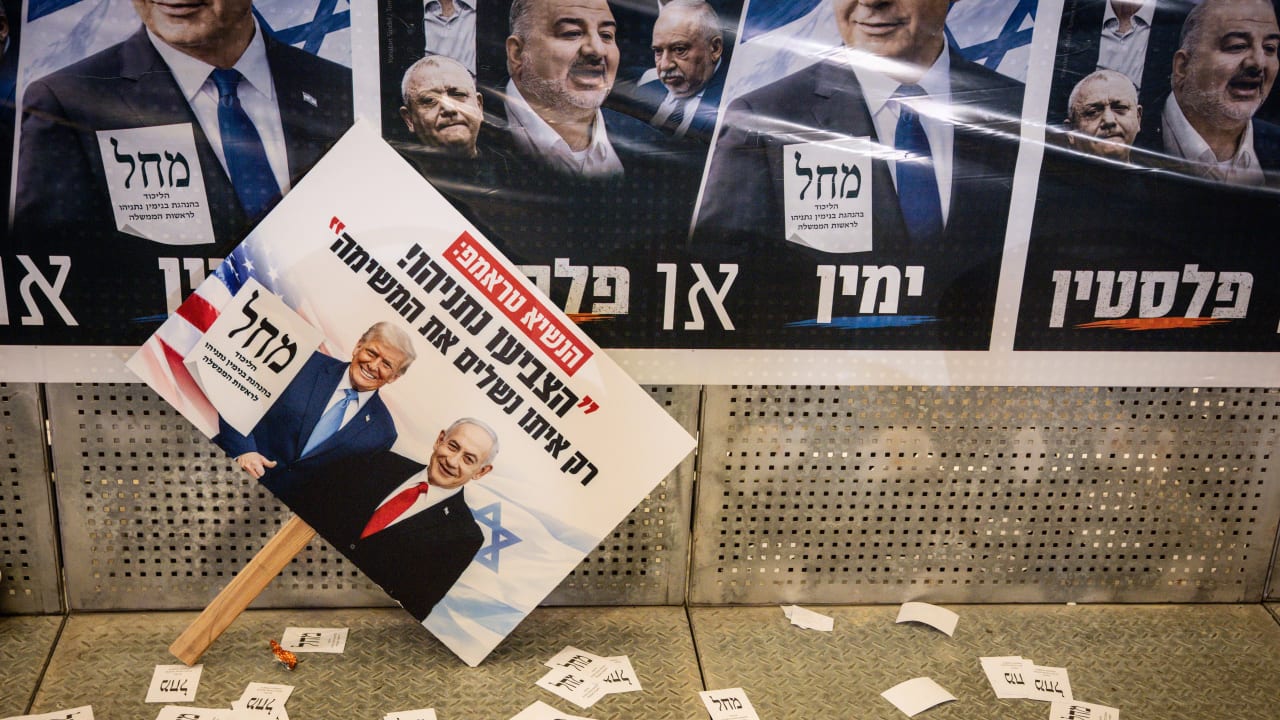

It was after 2 a.m. at Likud’s campaign headquarters in Petah Tikva, and Prime Minister Benjamin Netanyahu wanted to know whether our diplomatic correspondent, Amichai Stein, and I were tired. Some of the people around him had fallen asleep on couches and chairs. He had just turned 77 and seemed perfectly happy to carry on. We were doing our best to keep up.
That conversation has been on my mind since the election. Listening to Netanyahu describe his political position, I thought he was living in a fantasy world. I had been following polls that showed a much weaker Likud. His confidence in his support struck me as another example of a politician believing his own campaign.
We had challenged him on Qatar, his coalition partners, and Israel’s relationship with Washington after US President Donald Trump. When we raised the polls and his difficulty assembling a majority, he gave a fairly measured answer: “I think right now it’s an even tie. That’s what I see in the big numbers.”
On the strength of his support, he understood something that I had missed. I brought my own picture of the country into that room, and the polls I trusted had helped draw it. I had also distrusted the surveys on Channel 14 and i24NEWS. Their findings deserved more attention than I gave them, and the election has changed my mind about both.
On election night, we began with Netanyahu apparently losing, or coming close to losing. Then Likud strengthened. The Arab parties emerged with far more weight than we had anticipated, and we had to change our coverage. We were already explaining the implications of a result that was still taking shape. Looking back at the campaign, I keep returning to how confidently we had described the contest.
N12, Channel 12’s news site, offered an especially revealing example. Shortly after polls closed, it assessed that President Isaac Herzog would ask Gadi Eisenkot to form the next government, with qualifications about the count and the parties’ recommendations.
Four hours later, the channel’s revised exit poll had Netanyahu’s allies ahead of Eisenkot’s camp. That small qualification had become a fairly large part of the story.
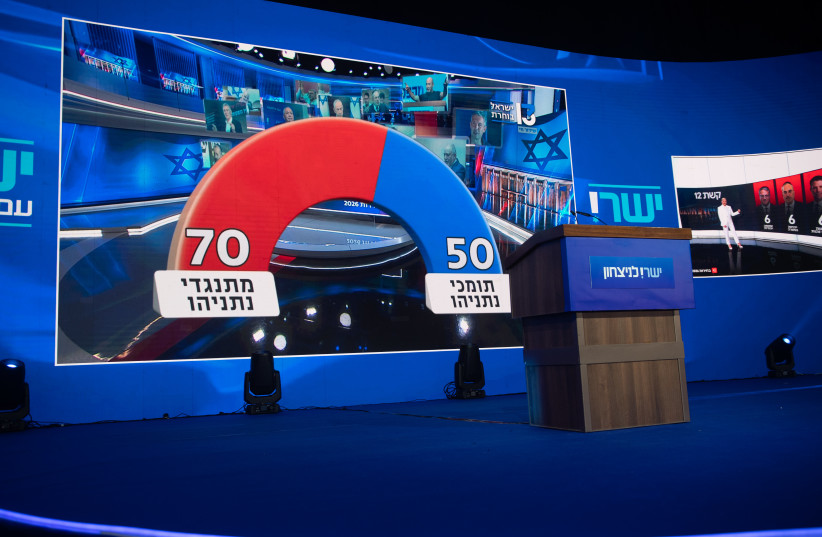
By November 1, the count put Likud at 27 seats and Eisenkot’s Yashar at 21. Netanyahu’s incumbent coalition parties held 53 seats; the four Jewish-led opposition parties held 48. The Joint List and Ra’am had 19 between them. Formal publication of the results was still pending. Netanyahu remained eight seats short of a majority in the 120-seat Knesset.
His difficulty forming a government was real. So was the failure to measure his party’s strength. The largest party, the largest bloc, and a coalition capable of governing can be three different things in Israel. Our readers abroad depend on us to explain how those pieces fit together, especially when a confident television panel has already supplied an ending.
Who got it right
The final campaign surveys from Channel 13, public broadcaster Kan and Channel 12 gave Likud 19, 20 and 21 seats respectively. All put Yashar ahead. Against Likud’s 27, those were misses of eight, seven and six seats. Three familiar broadcasters had offered viewers the same wrong answer about which party would finish first.
Tzuriel Sharon’s Direct Polls survey for i24 gave Likud 26. Shlomo Filber’s Next Data poll for Channel 14 gave it 30. Both saw support that the others were missing; Sharon was much closer on its size. His survey also came closest across the full party distribution among the five final campaign polls compared here.
On X/Twitter, Sharon wrote about the pressure of publishing findings that differed from his competitors’. “Criticism and pressure are no reason to change a professional finding,” he wrote in Hebrew. His company had repeatedly checked its assumptions, he said.
There had been an 11-seat difference between Channel 13’s and Channel 14’s final estimates for Likud. Eleven seats in a parliament of 120. Before the election, that should have sent reporters to the polling companies to ask how they were finding such different electorates. Too much of the argument became a judgment about which broadcaster deserved to be believed.
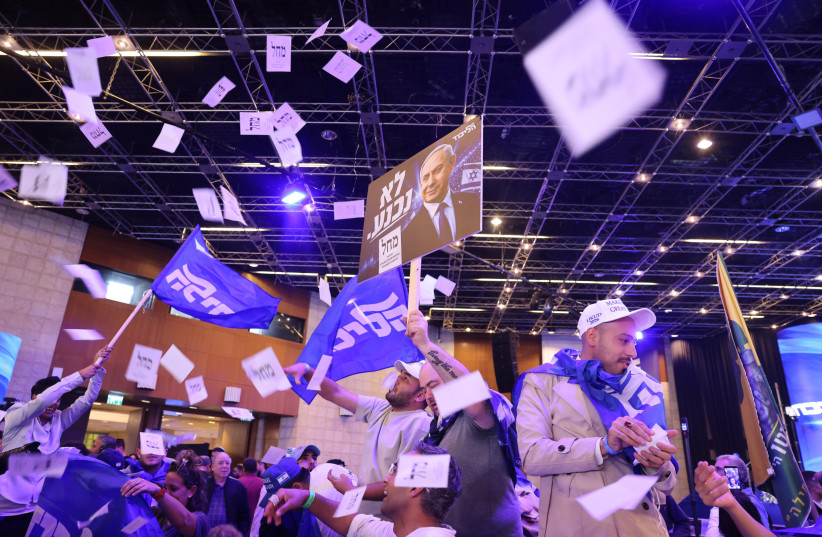
Sharon and Filber are often grouped together. They founded Direct Polls in 2019, but Sharon became its sole owner in 2025 and polled for i24 in this campaign. Filber’s Channel 14 surveys came from Next Data.
Filber’s final campaign survey gave Netanyahu’s bloc 62 seats, a majority the count did not deliver. Sharon put Ofer Winter’s People of Israel party into the Knesset with four seats; it failed to cross the electoral threshold. He also gave the two Arab parties 14 seats, five below their combined result.
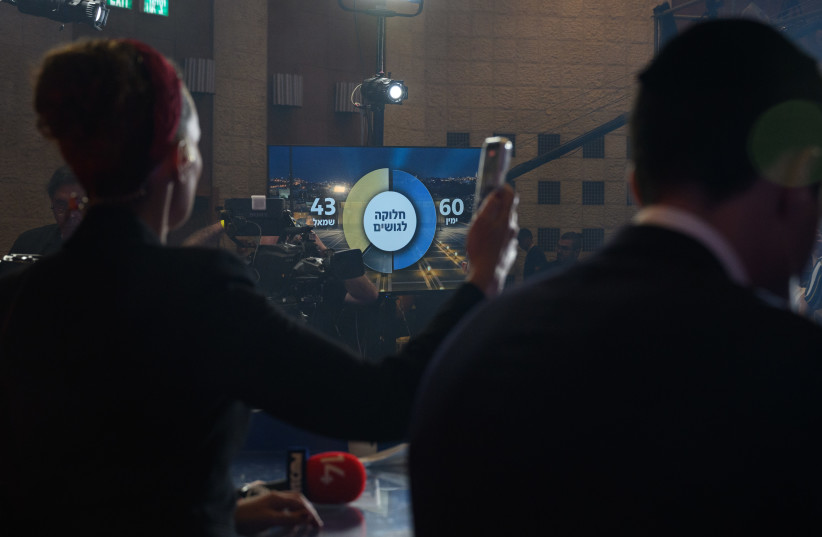
The opening exit polls complicate the verdict. Kan and Channel 13 came closest across the full party distribution among the six broadcasters. Channel 14 came last on that measure. Channel 16’s Yitzhak Katz matched Netanyahu’s eventual bloc total of 53 exactly; i24’s estimate was two seats higher. Filber put the bloc at 60, within one seat of a majority. It finished eight short.
Filber defended his broader reading of the electorate. “Nobody left the right-wing bloc,” he wrote on X, in a post reported by Srugim and ice. He acknowledged that pollsters had underestimated Arab turnout and said his assessment of Yisrael Beytenu needed examination. Testing that claim requires research into how people voted in successive elections.
Channel 12 commentator Amit Segal called it a “Yom Kippur for most pollsters,” invoking the intelligence failure before the 1973 war. In posts reproduced by Channel 14 and ice, Mishpacha editor Yossi Elituv wrote: “We all owe Momo Filber an apology.” Attila Somfalvi urged other pollsters to telephone him, while Bini Ashkenazi demanded an explanation for the discrepancies.
Channel 14 presenter Itamar Fleischman accused competing broadcasters of deceiving their audiences. That allegation needs evidence of deliberate manipulation. The published errors already give us plenty to investigate. A newsroom’s political sympathies can also affect which errors it chooses to dwell on, including its own.
Others examined the business of turning surveys into television. Walla columnist Liat Ron described the weekly poll as a household ritual and questioned its relationship with broadcast drama. Globes republished its pre-election interview with Sharon, whose warning that the others were missing something had been available while editors still had time to ask questions.
There were admissions, too. Channel 13’s Shmuel Rosner told Ynet that Likud’s strength was “something we didn’t see in the polls.” He pointed to findings his team had identified, including a stronger Arab vote and the likelihood that neither bloc would reach 61. Maariv pollster Menachem Lazar told 103FM: “We were wrong. We saw a picture that ultimately turned out to be different.”
The Arab vote forced us to rethink much of our election-night coverage. The Joint List’s 11 seats and Ra’am’s eight amounted to almost one-sixth of the Knesset. We had spent much of the campaign studying the contest between two Jewish-led camps.
Several polls had anticipated gains. Channel 13’s final survey gave the Arab parties 16 seats; Channel 12 and i24 gave them 14. Channel 12’s opening exit poll had already raised its estimate to 18. The size of the result still surprised even Sharon, he told Ynet.
Too often, the conversation about Arab voters begins with whether a Jewish politician would agree to rely on their parties. That is a legitimate coalition question. It is a very narrow way to cover citizens. Their reasons for voting, their expectations and the differences between their parties deserve reporting through the campaign, before their seats become essential to someone else’s ambitions.
Likud voters deserve the same curiosity. A person can be furious about October 7 and still prefer Netanyahu to the available alternatives. Understanding that choice requires asking what he expects from Netanyahu and what he thinks of the people offering to replace him.
Three years after October 7, Israel had given us ample reason to question old political loyalties. We still needed to establish which loyalties had changed and which had survived. Netanyahu’s reading of his own support should have made me more curious. I had been too ready to fit his answer into what I already believed.
What we owe our readers
I keep thinking about 2015. Final campaign polls had put Isaac Herzog’s Zionist Union ahead of Likud, sometimes by four seats. The major television exit polls suggested a close contest. Likud finished with 30 seats to the Zionist Union’s 24.
The explanations the following morning were familiar. Mina Tzemach told Reuters that Likud voters at some sampled stations had been less willing to participate in the exit poll. Camil Fuchs cited nonparticipation, potentially misleading answers and voting after collection had ended. Avi Degani, who had anticipated a Netanyahu victory, criticized internet panels for missing voters beyond the metropolitan mainstream.
Tzemach also defended the relatively small errors in individual party estimates in 2015. Viewers had been following the contest between two leaders, and the gap between them helped determine the story told that night. We are having much the same argument now about a poll that gets many parties fairly close and leaves the audience with the wrong political impression.
Israel has earlier memories of that experience. In 1996, initial exit polls pointed toward Shimon Peres before Netanyahu narrowly won, under the then-new system of separate direct elections for prime minister. In 2022, the opening exit polls correctly identified a Netanyahu-bloc majority, putting it at 61 or 62 seats before it finished with 64. Meretz and Balad’s failure to cross the threshold affected the allocation of seats.

Eleven years after the 2015 failure, polling companies ought to be able to explain what they changed to reach voters who were being missed. Degani favored telephone surveys. Sharon told Globes he preferred digital collection. Their contrasting answers are a reason to examine who each method reaches and who remains absent.
Before the election, Sharon told Globes that Direct Polls recruited its own panel and kept its analysis in-house. He also identified younger voters as a challenge. If competing companies draw on similar pools of respondents, their agreement may give editors more confidence than it warrants.
A larger sample can still miss the same kinds of people. The familiar margin of error measures only part of the uncertainty. Who agrees to answer, whose views are missed and who eventually votes can all affect the result. These are questions to put to a pollster before commissioning the next survey.
Lazar called for examining the stations chosen for exit polling and the gap between respondents’ answers and the ballots cast there. A claim that voters shifted late likewise needs evidence of when and where they moved.
I understand the attraction of a poll to an editor. It supplies a number for the headline and gives a sprawling political argument a manageable shape. A one-seat change can be discussed with great seriousness. Questions about who answered the survey tend to make less lively television.
The difficulty begins when repeated findings become the background against which everything else is judged. A politician’s confidence seems implausible because the polls say he is weak. A smaller party appears doomed because it keeps falling below the threshold. We then report the campaign through assumptions the surveys have helped establish.
The Jerusalem Post reaches readers who depend on us to explain a country they do not live in. A reader in New York or London may encounter the polling picture without hearing the argument over it around an Israeli Friday-night table. We owe that reader a sense of how much is still uncertain. The Post’s credibility accompanies every survey we give prominence.
Our October 22 coverage led with Eisenkot’s polling advantage and cited surveys putting Likud at 19. I acknowledged this in my first column after the election. We should have made the disagreement among pollsters much harder to miss. I am responsible for what we publish, including the prominence we give information that challenges the story we have been telling.
Changing this requires editors to take the full range of credible polls seriously, including Channel 14 and i24. Familiarity with a broadcaster can make its findings feel reassuring. Reliability has to be judged through the work: how people were recruited, what the pollster did about those who declined to answer and how likely voters were identified.
We should review the Post’s own polling arrangements and be prepared to change the company we use. I want a convincing account of what went wrong and what would improve the work. Continuing with a familiar provider needs a reason that readers could understand. So would choosing a new one.
We also need to be more careful with the language of certainty. A survey estimates preferences at the moment people are asked. Converting those answers into seats requires assumptions about turnout, undecided voters and parties near the threshold. Predicting a government adds assumptions about politicians’ willingness to cooperate. A tidy graphic makes the whole process look much more settled than it is.
For our readers abroad, understanding Israel means encountering people whose choices can be difficult to explain from a distance. I want more of those people in our coverage long before polling day. We should be willing to let their answers change the questions we ask, and to tell readers when our own judgment has fallen short.
The next time two credible surveys differ by 11 seats on the same party, I want us to spend the day finding out why. That would be a useful story to publish before an election.■
Zvika Klein is the editor-in-chief of The Jerusalem Post and a former Diaspora affairs reporter for the Post and Makor Rishon.