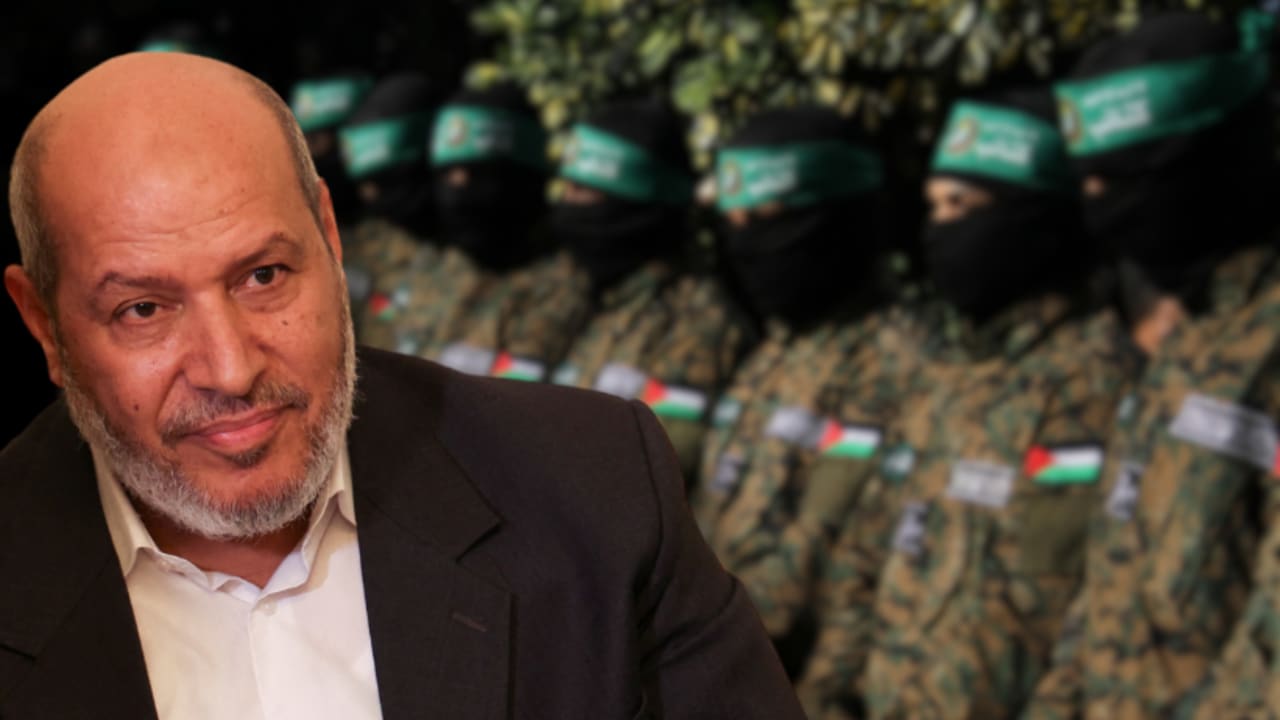
Little will change in Hamas now that Khalil al-Hayya has been named head of its political bureau, though the terror group will now enjoy not having the financial burden of administering the Gaza Strip, Dr. Michael Milshtein, the head of the Palestinian Studies Forum at the Moshe Dayan Center for Middle Eastern and African Studies at Tel Aviv University, told The Jerusalem Post on Tuesday.
Elected after two rounds of elections, Milshtein noted that Hayya has been functioning as the de facto leader for years in Qatar after the assassination of his predecessors.
Even if Khaled Mashaal had claimed victory, Milshtein said the most notable difference is that Mashaal would have prioritized restoring relations between Gaza and the West Bank, while Hayya has prioritized the Gaza Strip.
“There is a kind of an illusion that you know Meshaal is moderate, but there is no ideological difference between the two,” he said.
Milshtein said he would be “surprised” if Hayya made any real moves toward reconciling with the Palestinian Authority, despite talks in recent years about mending the rift that formed when Hamas chased the PA out of Gaza in 2007.

Embraced across the Muslim world, Hayya enjoys relations with Iran, Qatar, and seemingly Egypt, as the country’s intelligence chief was reported to have congratulated Hayya on his election on Monday.
This popularity will mean Hamas might have more room to act outside the traditional proxy relationship it has with Iran, having more freedom than Hezbollah while continuing to enjoy Tehran’s financial support and assistance, Milshtein commented.
“It doesn’t mean that Hamas is going to be kind of a proxy of Iran. They never saw themselves as a kind of player that must obey Iran, and right now it will be the same,” he commented.
Now firmly in his position, Milshtein predicted Hayya’s first focus will be hastening selective components of the second phase agreement with Israel. He will “promote the project of the technocratic government, the deployment of international forces and, at the same time, insist on saying no to the demand for total and immediate disarmament.”
“I’m quite sure that in the day after the elections, we will find ourselves in the same situation as the day before,” he said, reflecting on the fact that Jerusalem has been reluctant to make any dramatic moves until late October.
Hamas is not afraid of the future
When Hamas agreed earlier this month to hand over control of Gaza to the US-backed National Committee for the Administration of Gaza, a move welcomed by the international community, Milshtein said Hamas was anticipating little change in the Strip.
“Hamas doesn’t really feel afraid and knows that the technocratic government will be a kind of cosmetic cover, and that this kind of cover will enable Hamas to continue keeping its weapons and being the prominent player in Gaza” without having to fund civil society, he explained.
“If tomorrow the technocratic government ministers will enter Gaza from Cairo and start being active in Gaza and will sit in the governmental offices in Gaza, I think that the real boss in Gaza will be actually the political bureau, not in Gaza itself but outside, led by Hayya, and this will be the real government of Gaza.”
Asked if this will have any impact on civilian life in the territory, Milshtein said he doubted Hamas would end its theft of humanitarian aid and would continue to oppress Palestinians. Hamas will prioritize having the gangs working in opposition to them removed from Gaza, ensuring little changes domestically.
“I’m quite sure once again that the day after the establishment or the beginning of the work of the technocratic government will not be so different than the day before,” he concluded.