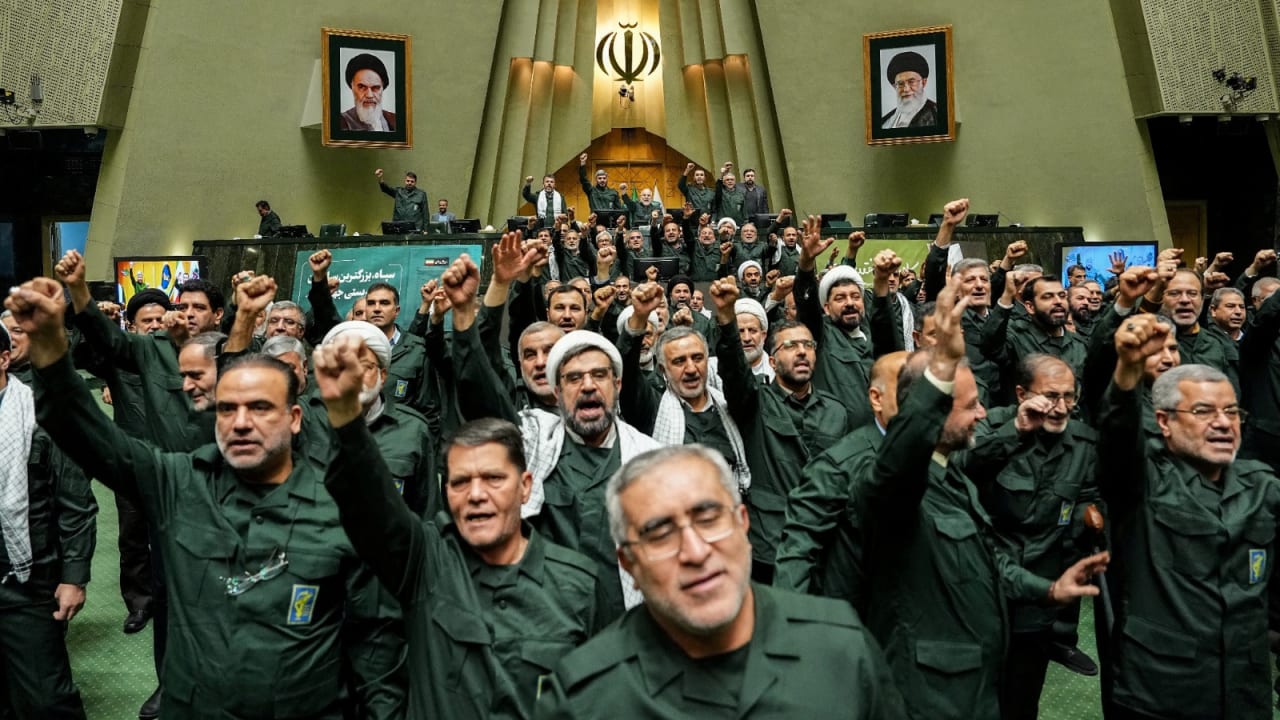
The Trump administration is beginning to conclude that it may not be able to force Iran’s surrender through diplomacy alone, bringing the possibility of toppling the Islamic Republic back into discussions in Washington, the Financial Times' Chief Foreign Affairs Commentator Gideon Rachman assessed on Monday, citing unnamed parts of the Trump administration
According to the column, elements from the Trump administration are already considering economic, political, and potentially covert measures aimed at destabilizing the Iranian government after negotiations failed to produce a satisfactory outcome.
Regime change had been among Washington and Jerusalem’s original ambitions when US President Donald Trump and Prime Minister Benjamin Netanyahu launched the war against Iran on February 28, the analysis said. The administration initially hoped that military pressure could help trigger a popular uprising capable of removing the Islamic Republic from power.
That expectation was not realized. Washington subsequently placed regime change on the back burner and prioritized negotiations intended to secure Iranian concessions over its nuclear program and the Strait of Hormuz.
The failure of those diplomatic efforts has now renewed interest in the regime-change route, according to the analysis. Trump administration officials are reportedly examining ways to intensify economic pressure, disrupt Iran’s oil exports, cultivate contacts inside the regime, and encourage opposition groups capable of challenging Tehran’s leadership.

The renewed discussions do not mean that Trump has formally approved regime change as US policy. They suggest, however, that the administration is questioning whether negotiations can produce an Iranian surrender on terms Washington would consider acceptable.
Trump team might resort to regime change over Strait of Hormuz tensions
The dispute over the Strait of Hormuz has become a central obstacle. Iranian officials have insisted that Tehran has the right to collect fees from vessels passing through the strategic waterway, despite Trump’s earlier claim that Iran had agreed not to impose such charges.
The column also noted that Washington’s definition of victory may already be narrowing. Former US defense secretary Mark Esper suggested that the administration could ultimately settle for reopening the strait without Iranian tolls and restoring limits on Tehran’s nuclear program similar to those achieved under the Obama administration.
Such an outcome would largely restore the conditions that existed before the war, rather than deliver the decisive Iranian surrender the administration initially sought.
Even those more limited objectives may be difficult to achieve. Intensified American bombing would not necessarily secure the Strait of Hormuz, while the White House has shown little interest in deploying the ground troops that could be required to seize and hold territory near the waterway.
Retired US general Barry McCaffrey estimated that a ground operation focused on securing Hormuz could require roughly 600,000 troops and last for a year, according to the analysis.
The conflict has also demonstrated Iran’s ability to threaten critical infrastructure across the Gulf, including energy facilities, airports, military bases, and water desalination plants. Tehran’s missile and drone capabilities could become more dangerous as its technology improves and its cooperation with Russia and China expands.
Iran has already attempted to strike targets far beyond its borders. Iranian missiles were launched toward Dimona and the US-UK military base on Diego Garcia, although neither attack succeeded in striking its intended target.
The Trump administration’s renewed consideration of regime change reportedly includes proposals to block Iranian oil exports, seek cooperation from insiders within the political and security establishment, and examine ways to support domestic opposition.
The analysis also cited an alleged Israeli effort to establish contact with former Iranian president Mahmoud Ahmadinejad and the possible revival of proposals to arm Kurdish groups inside
Any attempt to topple the regime would carry substantial risks. Iran’s government has survived decades of sanctions, internal protests, covert operations, and external pressure, while maintaining control over the security services and institutions needed to suppress opposition.
Efforts to destabilize Tehran could also produce a prolonged conflict rather than a quick collapse, particularly if the regime responds with additional missile attacks, disruption of international shipping, or strikes against American and Israeli targets.
The war is already placing pressure on US military stockpiles. Assessments of American missile inventories have indicated that the conflict consumed significant quantities of Patriot interceptors and Tomahawk cruise missiles.
Replacing some of those weapons could take between three and five years, according to an analysis by the Center for Strategic and International Studies. The depletion could weaken Washington’s ability to deter China or respond to a separate conflict in Asia.
Israeli officials have meanwhile assessed that Trump may be preparing to broaden the US campaign against Iran, potentially expanding attacks against strategic infrastructure and senior figures in the Iranian government. Such an escalation could increase the likelihood of direct Iranian retaliation against Israel.