
Lebanon’s Mount Amel Castles, the ancient Phoenician city of Tyre, and the historic site of Sebastia in Area C of the West Bank, were designated as World Heritage Sites in Danger by UNESCO’s World Heritage Committee during its 48th session in Busan, South Korea over the weekend.
The annual meeting is intended to evaluate new nominations to the list of World Heritage sites, a status meant to recognize places of "outstanding universal value" to humanity, and review the status of sites already on the list while making changes accordingly.
According to UNESCO’s charter, the List of World Heritage Sites in Danger includes only sites who form part of their country’s cultural and natural heritage and are under threat by “serious and specific dangers.”
Such dangers could be large-scale development projects, abandonment, armed conflict, or natural disasters. The complete list of criteria can be viewed on UNESCO’s official website.
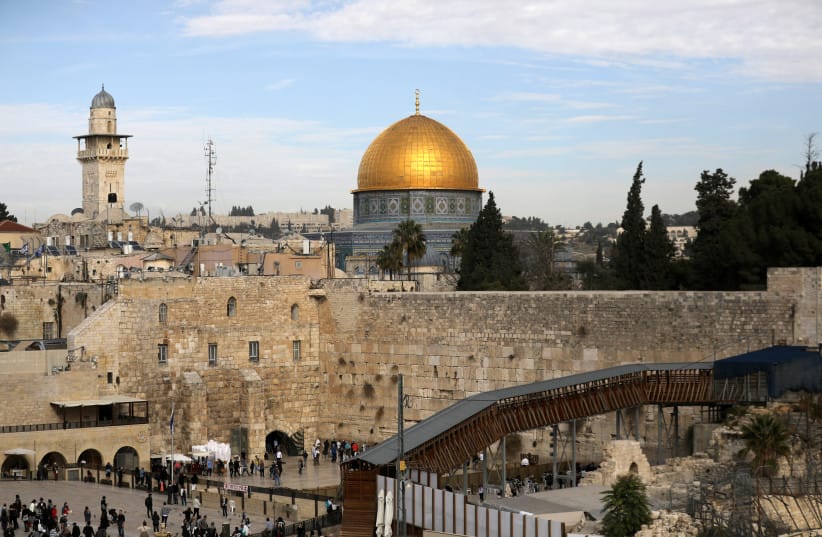
Currently, there are 58 World Heritage sites that have been designated “in danger,” including the Old City of Jerusalem, whose designation was proposed by Jordan and has been on the list since 1982 due to urban pressure and supposed excavation risks.
Mount Amel Castles, Tyre
Since the outbreak of the current war in 2023, heritage organizations in Lebanon have decried Israel’s actions in the region, warning of increased danger to historic cultural sites - a call that has increasingly grown since the IDF succeeded in recapturing Beaufort Castle on June 1.
In May, UNESCO said it was concerned about the state of conservation of Tyre, adding that the site was under the body's enhanced protection status.
It added that it was "deeply alarmed" by reports of damage to a citadel in the southern town of Chama and fighting by Beaufort Castle, while condemning what it described as "unlawful attacks against cultural property."
In June, Lebanese Culture Minister Ghassan Salame told Reuters that Israel's recent operations targeting Hezbollah has damaged or destroyed revered heritage sites across southern Lebanon.
"Heritage is not only Roman and Phoenician antiquities,” he added. “Heritage is also historic buildings, archaeological sites, and buildings with a cultural function."
Barriers set up in Tyre to shield ancient ruins from Israeli strikes or flying debris were blown into the middle of the site they were meant to protect.

The ancient city, believed to have been founded during the 28th century BCE, during the Bronze Age, before becoming a prominent Phoenician city-state in the Iron Age.
Later, after falling under Babylonian rule, the city was besieged by Alexander the Great and eventually conquered in 332 CE.
Tyre was designated a World Heritage site in 1984. The ancient city’s second designation, that of a World Heritage Site in Danger, was announced on July 22.
The five Mount Amel Castles, which include Beaufort Castle, were added to Lebanon’s tentative list in September 2025. Their designations as World Heritage Sites and World Heritage Sites in Danger was announced on July 24.
The castles, located in the Jabal Amel region in southern Lebanon, include Beaufort Castle (Qal'at al-Shaqif), Toron Castle (Qal'at Tibnin), Dubieh Castle (Qal'at Chakra), Maron Castle (Qal'at Deir Kifa), and Chama’ Castle Qal'at Chama’).
All five are from between the medieval period and the 19th century, and have been under the control of the Crusaders, the Ayyubid dynasty, the Mamluks, Ottomans, and other local feudal rulers.
In more modern history, Beaufort Castle, was held in 1976 by the Palestine Liberation Organization (PLO) until the First Lebanon War in 1982.
During the war, the site was captured by the IDF's Golani Reconnaissance Unit and held until May 2000, when former prime minister Ehud Barak ordered Israeli forces to withdraw from the region.

However, UNESCO’s designation of the sites was not passed without backlash.
Following the announcement, the Foreign Ministry slammed the allegations that the Mount Amel Castles were endangered due to being “presently under direct Israeli military occupation” as baseless.
“It is the terrorist organization Hezbollah who is endangering Lebanon's historical sites, including the Beaufort,” the ministry said in a Friday X/Twitter post, adding that for over a decade, Hezbollah had “transformed the 12th Century Crusader Castle into a terrorist stronghold.”
“One should ask why during Hezbollah's occupation no proposal was advanced to recognize it as a site in danger.”
“An organization that excuses the weaponization of world heritage has abandoned its mission,” it added in a separate post last week.
It noted the extensive terror tunnel network discovered by the IDF beneath the historic site since June, including weapons caches and multiple rooms designed for long-term use and terror activity.
These rooms include living quarters, plumbing, electrical infrastructure, and extensive anti-tank and aerial defense arrays “intended to target IDF troops and Israeli civilians,” the IDF stated upon discovery of the tunnel.
While Lebanon’s South Korean Embassy declined to comment on Foreign Ministry’s words, The Associated Press reported on Saturday, it added that a Lebanese delegate at Friday’s meeting argued against Israel’s claims.
According to AP, the delegate claimed that, since Israel’s withdrawal from southern Lebanon in 2000, the five Mount Amel Castles had been used “only for cultural and tourism purposes,” and accused Israeli media of distorting such infrastructure and portraying it as much more sinister.
Sebastia
Once ancient Samaria, the capital of the biblical Kingdom of Israel, the archaeological site of Sebastia has been on the Palestinian Authority’s UNESCO Tentative List since 2012.
On Friday, UNESCO announced that it had been designated a World Heritage Site and a World Heritage Site in Danger, following increased lobbying from the PA.
Sebastia, located in Area C of the West Bank, lies next to a residential village in Area B whose economy relies heavily on tourism from the site and its surrounding olive groves.

Ahead of UNESCO’s vote, Foreign Minister Gideon Sa’ar accused the PA of fabricating a narrative in order to “erase and deny the Jewish connection to this land,” during an event at the City of David.
“Sebastia is a place of immense importance in the history of the Jewish people and the ancient Kingdom of Israel. Like the City of David, it bears witness to the Kings of Israel,” he said, “It holds the evidence of our people’s deep historical roots in this land.”
“But there is one thing about history: If you dig deep enough, the truth is revealed. No political resolution can erase that. No vote in an international organization can change what lies beneath our feet.”
While the Palestinian Authority’s Culture Ministry praised the motion to recognize Sebastia as a Palestinian heritage site as a “historic decision” reflecting the “civilizational, historical, and heritage status of Palestine and its people.”
The Foreign Ministry sharply condemned the move as a “surrender to politicization and a distortion of history.”
It added that the World Heritage Committee, “which approved the proposals submitted by the Palestinian Authority and Lebanon without a vote,” served as a platform to advance “one-sided Palestinian political initiatives against Israel, in a disgraceful attempt to erase the clear Jewish connection to the Land of Israel.”
Danielle Greyman-Kennard and Reuters contributed to this report.