
Taha Naderi, 18, was fatally shot by Iranian security forces outside an Islamic Revolutionary Guard Corps headquarters in Shahreza, near Isfahan, according to testimony his family gave to The Jerusalem Post on the six-month anniversary of the January 8-9 massacre.
His relatives said a live round severed a major artery in his left leg, leading to repeated operations and the eventual amputation of the limb. Naderi died on January 10 after doctors at several hospitals were unable to stop the bleeding, the family said.
Family recounts shooting near IRGC headquarters
According to the family’s testimony, Naderi was participating in a demonstration on Thursday, January 8, when security forces fired tear gas, smoke grenades, shotgun pellets, and live ammunition into the crowd.
Naderi and two relatives had walked about 100 meters through the demonstration when the tear gas and smoke grenades caused people to flee in different directions, the family said. Naderi and one of his companions took cover against the wall of the IRGC building.
“At that moment, security forces opened fire with shotgun pellets and live military ammunition,” a family member said. “Eyewitnesses reported that several people died right before their eyes.”
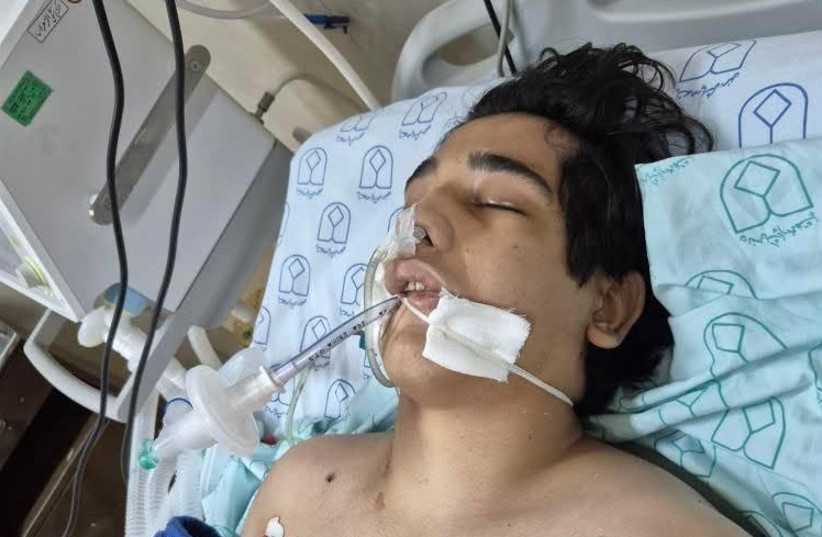
The family member said Naderi and his companion were trapped beside the wall and threw stones toward the security forces in an attempt to distract them and create an opportunity to escape. According to the testimony, Naderi’s companion was struck by shotgun pellets, while a live round hit Naderi’s left leg and severed a major artery.
The family said Naderi was taken to the nearest hospital, where doctors resuscitated him twice but were unable to stop the bleeding. He was then transferred to Amir al-Momenin Hospital for several operations and later transported to Al-Zahra Hospital in Isfahan, where doctors performed another emergency procedure.
Repeated operations and amputation
Doctors informed the family on Saturday, January 10, that Naderi’s leg would have to be amputated because blood was no longer circulating through it, according to the testimony. The family said he suffered another cardiac arrest while undergoing dialysis and was rushed back into the operating room.

“Eventually, Taha’s amputated leg was carried past my parents before their eyes,” the family member said. “My mother and father both lost consciousness, and 15 minutes later we were informed that he had not survived and had died.”
According to the family, relatives attempted on Monday, January 12, to arrange Naderi’s burial at Bagh-e Rezvan, Isfahan’s main cemetery. Officials told them that overcrowding and administrative procedures would delay the release of his body by two or three days.
“Fearing that the authorities might refuse to release his body to us, we went there every day,” the family member said.
The family said Naderi’s body was eventually released on Friday afternoon and returned to Shahreza.
Authorities altered records and restricted funeral, family says
According to the testimony, two relatives were required in Shahreza to sign a declaration stating that Naderi had not participated in the demonstrations. The family also said his medical records falsely attributed his injuries to “street fighting and a knife wound,” rather than a gunshot.
“We were also required to sign two or three more declarations stating that no more than 20 people could attend the funeral,” the relative said, adding that the family was “strictly forbidden from holding any mourning ceremonies.”
Iran’s January crackdown
Separately from the family’s account, reporting on the January unrest showed that demonstrations had spread across Iran by January 8 after protests began on December 28 amid economic hardship and broader opposition to the Islamic Republic.
Iranian authorities imposed an internet blackout during the unrest, while rights organizations accused security forces of firing on demonstrators and carrying out mass arrests.
The total number of people killed on January 8 and 9 remains disputed and has not been independently established. A hospital-based estimate reported later in January indicated that as many as 30,000 people may have been killed during the two-day crackdown, while the Iranian government acknowledged a substantially lower figure of about 3,000.
Other accounts from Iran have described a broader pattern in which authorities pressured victims’ families to falsify death records, accept state-approved explanations for killings, or remain silent about the circumstances of their relatives’ deaths. Some families were reportedly threatened with the withholding or secret burial of victims’ bodies.
Events held from July 4 through July 9 marked six months since the demonstrations and killings, with participants commemorating those killed during the crackdown. In Naderi’s case, his relatives said they were denied the opportunity to mourn him publicly and were “strictly forbidden from holding any mourning ceremonies.”