
The Iranian regime now feels confident and does not attach much importance to the threats of US President Donald Trump, Middle East expert Prof. Eyal Zisser, vice-rector of Tel Aviv University, said during an interview with Ron Kaufman and Prof. Aryeh Eldad on 103FM on Friday.
“They understand, as we do, who Trump is, that nothing he says should be taken seriously in any case and under any circumstances. There is logic in the madness; he was elected president of the United States, and he has broad support, but his conduct is inconsistent. So why should they take him seriously?”
He also addressed the severe economic crisis in Iran, expressing doubt that it alone would lead to the regime’s collapse. “We are not talking about a country like Israel or the United States. Imagine that in Israel there is suddenly no electricity for weeks or months, and suddenly there is no regular water supply and there is a severe shortage of most products,” he said.
According to him, this harsh reality is not necessarily unusual for citizens of Iran and other countries in the region. “This is the condition of these countries. People live and survive. We, accustomed to Western norms, do not understand this. At this stage, the regime is managing to maintain the primitive economy.”
Zisser also said that Arab states have lost their position as the region's main and most influential force. “Arab states do not exist. The Middle East we knew, with Nasser and Egypt at the center, nobody counts them anymore. It is Iran, it is Turkey. This has been a long process over many years. We see how weak some Gulf states are, and they cannot even defend themselves. Israel, Turkey, and Iran are setting the tone, in competition with one another,” Zisser said.
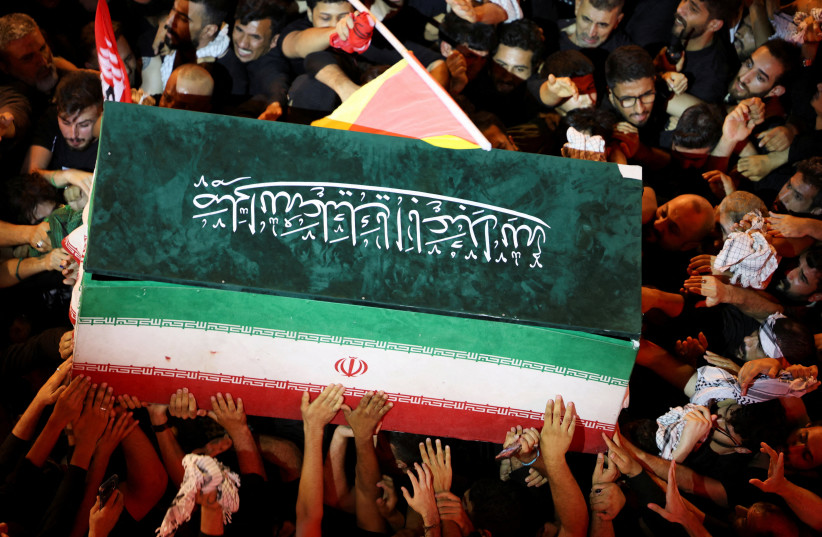
Majority of Iranians did not attend Khamenei's funeral, expert says
Prof. Zisser also referred to the mass funeral ceremonies held in the past week for the assassinated former supreme leader of the Islamic Republic, Ali Khamenei.
“We saw a mass funeral, but we need to remember that Iran is a country with more than 90 million inhabitants. Most of the public detests the regime, but there are 15-20% who support it, and we saw them in the streets.”
He added that “these are exactly the millions we see in the streets. These people are not the ordinary Iranians, but these people and the supporters of Iran, Hezbollah, and others, of course, exalt him and see him as the senior martyr.”