The Iranians are not going to give in this time, Dani Citrinowicz, an Iran researcher and expert on the Shiite axis at the Institute for National Security Studies, told Gideon Oko and Amichai Attali on 103FM.
"In the end, the campaign we set out on to weaken the Iranian regime and deny it the ability to reach nuclear weapons is currently focused on an event that was not the event before the war," Citrinowicz said. "The Strait of Hormuz was open before the war, and right now the main focus in the current confrontation is the attempt to control or decide who will have control of the Strait of Hormuz."
"On the Iranian side, I do not identify any desire to retreat. I think the Iranians will go all the way in this case; this is the price they need to pay to preserve control of the Strait of Hormuz, and even if it continues like this, they will not give in, so it presents Trump with a dilemma of whether to back down in the end. I do not see any willingness to compromise on the Iranian side."
On the current campaign, he clarified: "We are in a campaign over control of the Strait of Hormuz, and neither side is willing to give in. The Americans are issuing ultimatums to the Iranians to open the strait; in response, the Iranians close it; in response, the Americans strike, and the Iranians respond."
"The event can end either if one side backs down, or if there is an agreement between Iran and Oman, or something that regulates passage in the strait, or the events will spiral out of control. And as we discussed yesterday, right now the strikes are aggressive, but the geographic location and the nature of the targets are such that each side probably wants to preserve the option of returning to negotiations," he explained.

"As long as this continues at this intensity, it will probably be difficult to maintain the framework, since the sides do not want further escalation and are currently focused on the Strait of Hormuz. Right now the sides are under some kind of rules of engagement, but it can definitely get out of control," he added.
US attacks will not prevent Iranian strikes
According to Citrinowicz, the American strikes are intended to weaken the Iranian threat in Hormuz, while the Iranians have marked their own red line.
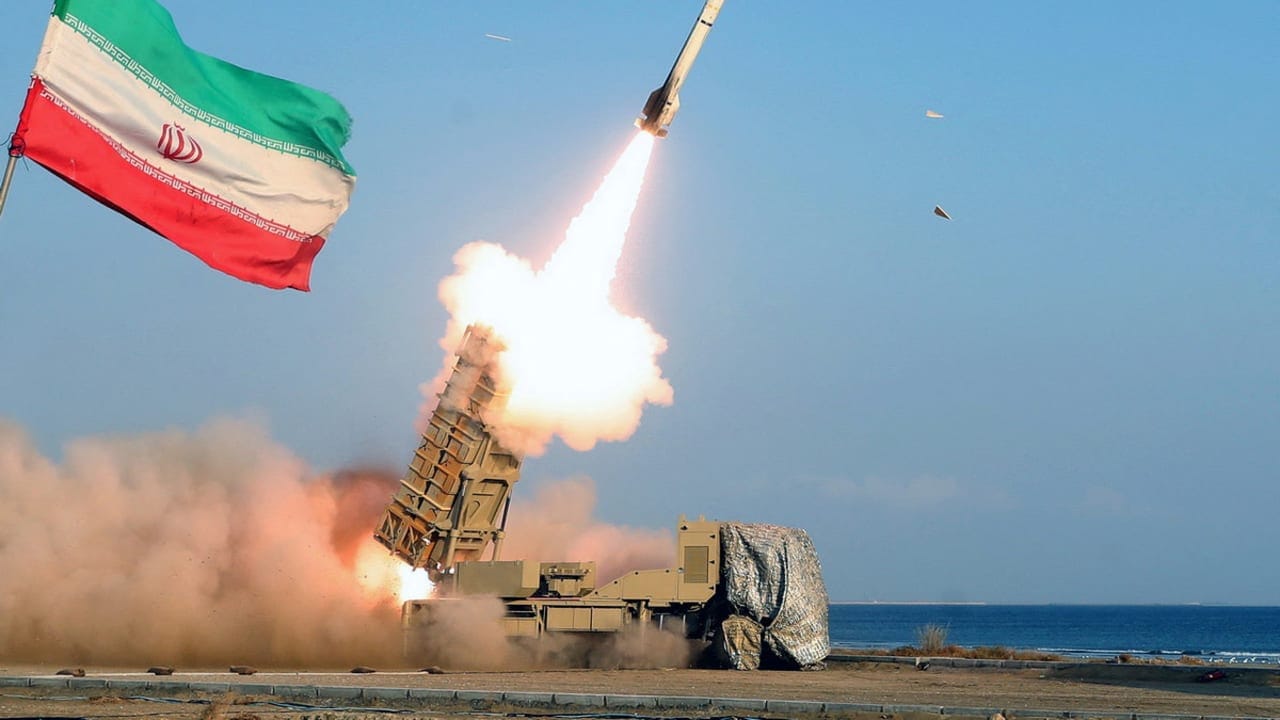
"There are conflicting reports that the Americans are continuously striking Iran's ability to harm the Strait of Hormuz, control facilities, radars, launch facilities, and in response the Iranians are broadly attacking US bases in the Gulf area; they are not attacking in the UAE and not in Saudi Arabia. It should be said that most of the strikes are located in southern Iran and in the coastal area, meaning an attempt to weaken Iran's ability to hit tankers."
"That will not prevent them from striking, because to stop a tanker from passing you need one missile, and that is the main problem. Still, regarding petrochemicals, the Iranians made clear that if there is damage to infrastructure, they will respond by striking infrastructure," Citrinowicz pointed out.
He added that from the American perspective as well, US President Donald Trump may be trying to preserve room for a deal. "Maybe from the American side too, Trump is saying, 'I can hit all the bridges, but I am not doing it,' because I want to preserve the chance of an agreement, so let us see whether these reports are true, because if they are, the Iranians will necessarily respond against infrastructure in the Gulf area," he said.
Citrinowicz later said the confrontation could last a long time: "This could accompany us for a long period, days, even weeks. Last week there were reports that the American goal is to conduct a campaign for weeks until the Iranians weaken or surrender. The problem is that we are in the Middle East; events can spiral out of control. We are in a situation where the sides are fighting, each wants to preserve sovereignty and the ability to control the straits, they do not want to cross lines and allow negotiations. Behind the scenes, the Qataris and the Omanis are working hard to prevent escalation, but if there were damage to petrochemical facilities, that would change the situation for the Iranians. Right now the sides do not want to escalate, but this could accompany us for many long days and weeks."
He also gave his view on possible Israeli involvement in the next steps. "Israeli involvement is what would widen the campaign. I do not think there is a desire in Washington for Israel to enter the event, because it would turn into a regional event that would make it very difficult for the Americans to return to negotiations. I am sure Netanyahu is not unhappy with what is happening now; everything depends on Trump."
Iran advancing nuclear enrichment program, expert asserts
In addition, Oko asked the expert whether Iran is continuing to advance its nuclear ambitions during this period. "Is Iran taking advantage of the period to move forward on nuclear matters?"
Citrinowicz replied: "In satellite images, it is absolutely clear that Iran is preparing something, certainly in enrichment-related contexts."
Oko asked: "You can really see it in the pictures?"
Citrinowicz explained: "When you look at the actions Iran is taking in that area, a new enrichment facility that Iran has reported, it may be harder to strike than Fordo. Iran is doing things there. This is a troubling event because we lack oversight. We have been without oversight for a year, in a situation where the International Atomic Energy Agency... we need to be concerned. What matters is the nuclear issue, and that is where attention needs to stay all the time."
Finally, Oko asked about uranium and the possibility that Iran is advancing toward military-grade nuclear weapons production. "There are pictures showing that Iran has gone back to enriching uranium?" Citrinowicz answered firmly: "You can see in the images that work is being done in the area. We need to focus on what is being done in Iran's nuclear program. What is happening according to the satellite images is something that should concern us very much."