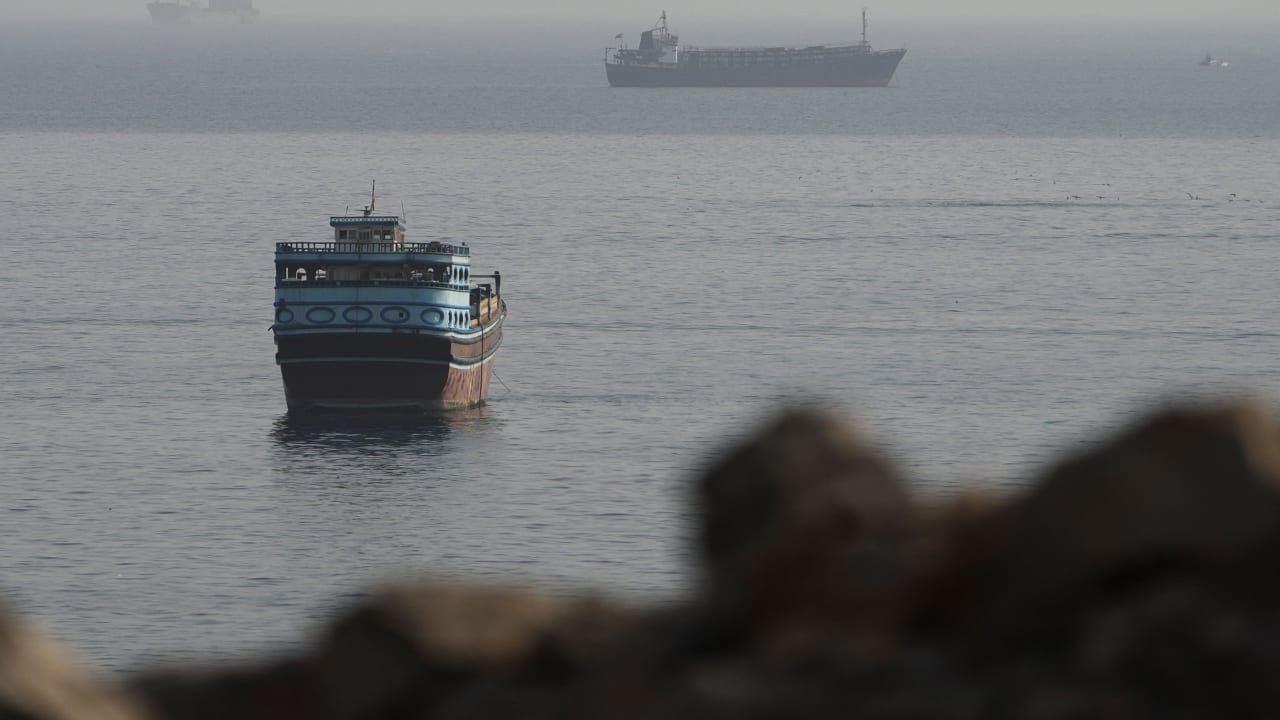
Iran’s attacks on Gulf nations and its disruption of maritime security should encourage closer cooperation between Europe and the Gulf, according to a report published on Wednesday by the Italian Institute for International Political Studies in partnership with the Gulf Research Center.
As demonstrated by fluctuating oil prices, Gulf security and stability have global consequences. Insecurity caused by the Houthis in the Red Sea, followed by disruptions caused by the Iran war in the Strait of Hormuz, has had a direct impact on Europe through rising insurance costs, higher shipping costs and delays to cargo movements.
To address these challenges, the institute said Gulf and European partners should consider establishing a permanent maritime coordination framework. It would connect naval forces, coast guards, port authorities, customs agencies and commercial shipping operators to develop common protocols for preventing risks and reducing disruption.
The framework would also improve maritime domain awareness, speed up information-sharing, strengthen counter-drone and counter-mine preparedness, and establish communication procedures during incidents. Its goal would be to preserve the movement of strategic goods even during periods of disruption.
The institute also recommended practical defensive measures to better protect critical maritime assets, including commercial tankers.

It said precautionary technologies such as jamming and drone detection systems should be explored for large commercial vessels, including LNG tankers, given the demonstrated impact drones have had on this regional conflict.
ISPI report calls for permanent EU-GCC forum
The report also called for the creation of a permanent ministerial-level forum between the European Union and the Gulf Cooperation Council (GCC). According to the institute, such a forum would build on the existing EU-GCC Regional Security Dialogue by providing strategic direction, coordinating policy and supporting joint planning on maritime security, air defense and the protection of critical infrastructure.
As part of that effort, the report also recommended expanding information-sharing by integrating maritime and air surveillance data. It also proposed regular joint exercises involving Gulf and European military and civilian personnel to improve the protection of critical infrastructure.
These measures could also allow a joint Gulf-European task force to develop new protocols and strategies for responding to disruptions to major maritime trade routes.
According to the institute, the latest war demonstrated that strategic vulnerability is no longer limited to conventional military imbalances. Critical infrastructure and the systems that sustain economic activity and everyday life are increasingly vulnerable to hybrid threats, making cooperation between governments and the private sector essential.
European digital security could help Gulf infrastructure
European expertise in cybersecurity and digital infrastructure could help strengthen Gulf critical infrastructure, which has repeatedly come under drone attacks by Iran and cyberattacks by Iranian-aligned actors. At the same time, Gulf investment capacity could help accelerate infrastructure modernization.
The report said this cooperation could be strengthened further through dedicated working groups focused on maritime and air security, critical infrastructure protection and defense industrial cooperation.
It also argued that Gulf and European partners should work together to anticipate future geopolitical, environmental, technological and economic threats. Developing mechanisms to prevent crises and manage potential escalations would improve collective resilience and adaptability.
To make their economies more resilient against hybrid attacks, the institute also recommended that Gulf states continue diversifying their economies. European companies in the maritime and defense sectors may be interested in investing in the Gulf’s growing defense industry through partnerships and joint ventures.
Finally, the report said the European Union’s Readiness 2030 initiative, which includes up to €800 billion in planned defense-related funding, could provide a suitable mechanism for expanding industrial cooperation and sharing technical expertise between Europe and Gulf partners.