
Iran and Oman have reached an agreement regarding the Strait of Hormuz, according to an IRGC spokesman.
“The US is obstructing an agreement between Iran and Oman to secure a safe transit route through the Strait of Hormuz,” the spokesman said.
Oman has not issued a corresponding statement, however. A source familiar with the matter told The Jerusalem Post that suspected disagreements between the two countries remain.
“The Omanis say they will not agree to imposing fees on ships, while the Iranians continue to insist that, from their perspective, this is a condition for passage through the strait,” the source said.
The source added that, according to Oman, there is also no agreement on clearing mines from the Strait of Hormuz, contrary to the Iranian statement.
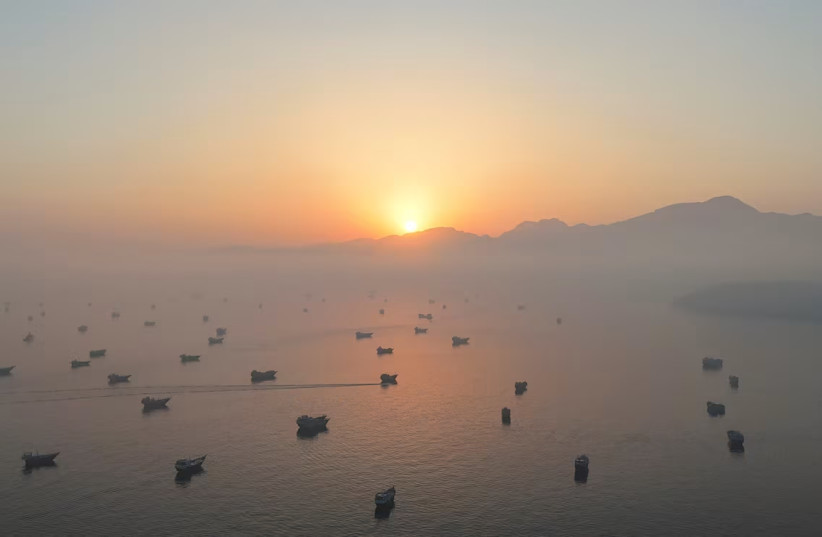
Iran and Oman have held on-and-off talks for weeks about controlling traffic through the strait, which handled one-fifth of global oil and liquefied natural gas shipments before the war began in February.
Trump says Hormuz is already open after Iran, Oman reportedly reach deal
Most shipping has since been shut down, driving global energy prices higher, as Tehran and Washington have tried to assert control over the channel, imposing separate blockades.
"The Strait of Hormuz belongs to Iran and the country of Oman... We have been in negotiations with Oman for about a month, and we have reached results that are acceptable to both sides," Islamic Revolutionary Guard Corps spokesman Hossein Mohebbi said in comments published by Iranian state media.
The IRGC accused the United States of seeking to obstruct the negotiations between Iran and Oman and said this had caused the agreement to be delayed.
Iran has denounced the US effort to isolate its economy as an act of "gross lawlessness," expressing confidence that many countries would not join the pressure campaign.
"If the United States stops obstructing and returns to the agreement, we can open the Strait of Hormuz within the framework of the agreement reached... If the United States does not accept our conditions, the Strait of Hormuz will not be opened under any circumstances," Mohebbi said.
US President Donald Trump, speaking in a radio interview later on Wednesday morning, insisted that the strait was already open.
“We take a lot of ships through the strait now. We’re taking them in,” Trump told conservative radio host Glenn Beck.
“Every once in a while there’ll be a drone or a rocket or something shot, but it is a very functioning strait. A lot of oil is pouring out,” the president said.
Omani Foreign Minister Badr bin Hamad Al Busaidi arrived in Tehran on Tuesday for talks on the Strait of Hormuz.
Iran and Oman issued a joint statement on Tuesday saying their foreign ministers had discussed a “proposed framework” to establish “a joint temporary navigational corridor through the Strait of Hormuz,” as well as an agreement to implement “a joint project to clear the Strait of mines.”
Qatari Prime Minister Mohammed bin Abdulrahman Al Thani was expected to arrive in Iran on Wednesday to discuss freedom of navigation through the Strait of Hormuz.
“The prime minister’s visit to Tehran underscores our position that diplomacy is the way to strengthen regional security,” Qatar’s Foreign Ministry said in a statement.