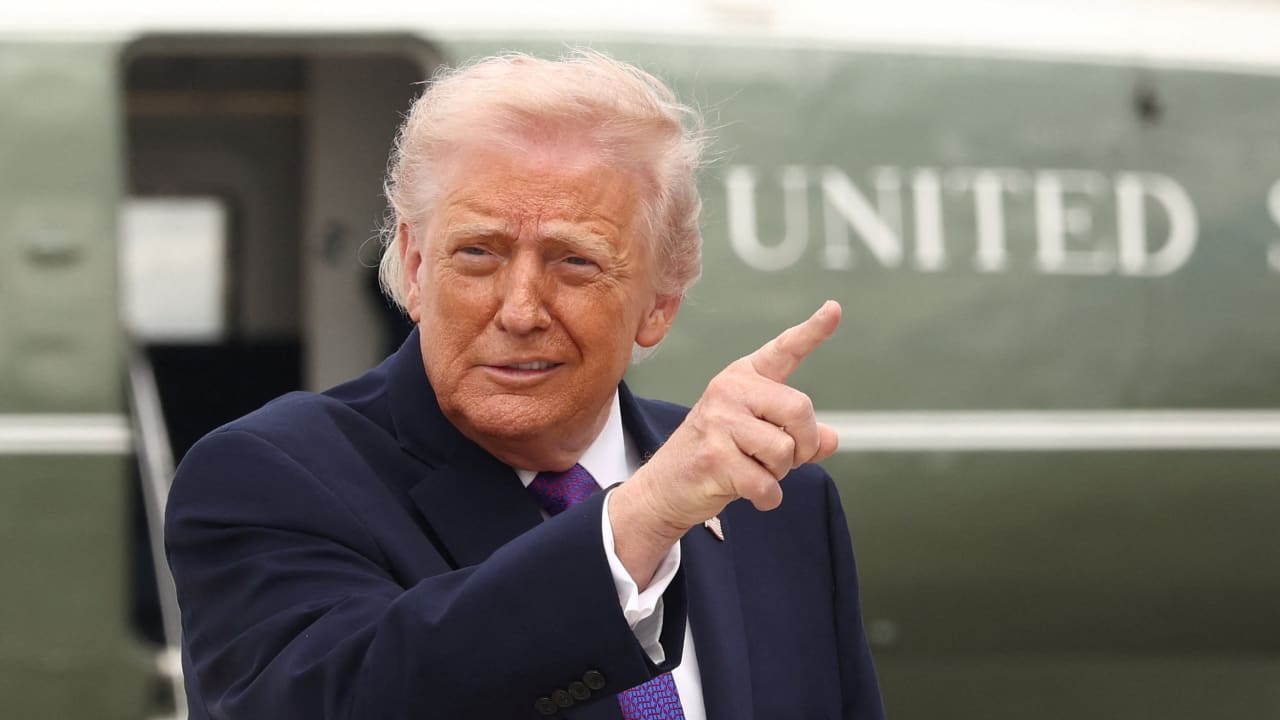
US President Donald Trump has spent recent days pressing Arab states to normalize relations with Israel as part of a broader effort to end the war with Iran.
The logic is obvious. The conflict has exposed what many governments in the region already understand privately: Israel is no longer merely a tolerated reality but an increasingly necessary strategic partner against a shared Iranian threat.
Yet full normalization remains unlikely. The political costs are still too high. Domestic opinion, religious legitimacy, and the unresolved Palestinian issue continue to impose real constraints. And even where formal ties emerge, they do not necessarily produce a meaningful partnership.
Israel’s relationship with Egypt has remained cold for decades despite a formal peace treaty, while the far warmer ties forged with the UAE were built on deep economic and societal engagement from the outset.
That leaves a question Jerusalem should be asking more directly: Must cooperation wait for embassies, or is there a way to formalize ties without calling them diplomacy?

Institutionalized diplomacy without recognition
Across the global system, states have developed a quiet but highly effective workaround: institutionalized relations without formal recognition. It is diplomacy by another name.
The most successful example is Taiwan. Locked out of formal recognition by most of the world under the One-China policy, Taiwan did not retreat. Instead, it built a parallel system.
Its representative offices – paired with counterparts such as the American Institute in Taiwan – perform nearly every function of an embassy. They facilitate trade, manage visas, negotiate agreements, and coordinate in sectors from semiconductors to security.
Other cases reinforce the point. Kosovo leveraged partial recognition into economic integration with Europe through liaison offices and functional agreements. Somaliland operated for years through informal channels before upgrading its external relationship with Israel. In each case, political ambiguity enabled practical cooperation.
Israel, by contrast, has yet to fully exploit this model. Where ties exist with non-recognizing states, they are indirect, ad hoc, and unnecessarily constrained, routed through third countries or kept deliberately opaque. That approach may minimize political risk, but it also limits scale, predictability, and economic impact.
There is a more deliberate path. Israel could work with willing partners to establish structured, quasi-official frameworks, economic and cultural offices empowered to handle trade promotion, investment coordination, and limited consular services. Agreements would take the form of memoranda rather than treaties, preserving legal ambiguity while enabling operational depth.
This would not be full normalization. But it could prove more meaningful than the kind of cold formal peace Israel has maintained with Egypt for decades. The UAE experience showed that durable ties emerge not merely from embassies, but from dense networks of trade, security cooperation, and human contact.
Saudi Arabia is the obvious place to start. Even a modestly formalized economic relationship, short of embassies or ambassadors, would unlock cooperation across sectors where the complementarities are hard to miss: energy, logistics, advanced technology, and infrastructure.
The same model could extend, more cautiously, to Indonesia, where economic logic points toward engagement even as political sensitivities remain acute. Over time, it could even provide a pathway for limited ties with Syria and Lebanon as part of a broader regional recalibration.
The strategic payoff could be substantial. Consider the India-Middle East-Europe Economic Corridor, a proposed trade and infrastructure network linking India to Europe through the Gulf and Israel. What once looked like an ambitious connectivity project now carries sharper urgency.
The Iranian blockade of the Persian Gulf has exposed the vulnerability of key maritime routes, underscoring the need for diversified corridors.
A more formalized economic relationship between Israel and Saudi Arabia – even absent full diplomatic recognition – would give IMEC real traction. It could accelerate plans for overland trade links, enable energy pipelines from the Gulf to Mediterranean export terminals, and catalyze investment in strategic sectors.
Israel’s strengths in cybersecurity, water management, and defense technology align closely with Gulf priorities. Institutionalizing cooperation would turn that alignment into scalable outcomes.
There is also a political logic to this approach. By lowering the threshold for engagement, quasi-official relations allow governments to sequence normalization rather than leap into it.
In practice, gradual institutional cooperation may generate stronger long-term ties than premature normalization. They create space to deliver economic gains, build constituencies for cooperation, and reduce the domestic shock associated with formal recognition. In time, they can make normalization less a rupture than a culmination.
None of this resolves the region’s underlying political disputes. It does, however, change the framework in which they are addressed. Instead of treating recognition as a prerequisite for cooperation, it treats cooperation as a pathway toward it.
The Middle East does not lack for shared interests. It lacks mechanisms that can translate those interests into durable structures under political constraint. The model already exists. It has proven effective in far more complex diplomatic environments.
Jerusalem should stop waiting for perfect normalization deals that may never arrive. The choice facing Israel and key states in the Muslim world is not binary. Between full normalization and continued distance lies a third option – pragmatic, incremental, and increasingly necessary.
Israel should begin systematically building that third path now: structured economic and strategic frameworks that allow cooperation to deepen even where formal recognition remains politically impossible.
Missiles may shape the headlines of the current war. But the quieter networks of trade and strategic coordination built afterward may shape the region for decades.
The writer teaches political risk at Johns Hopkins University’s School of Advanced International Studies and writes about and works on fragile states and political transitions.