
England’s greatest achievement in soccer (football) and perhaps their greatest achievement in the whole of sport was when they won the World Cup for the one and only time in 1966.
Having beaten Germany in World War II, here they were again, beating them 4-2 after extra time in another war, this time at Wembley, England’s national stadium.
Geoff Hurst scored a hat-trick, but his second ‘goal’ was far from clear-cut and many believe, me being one of them, that as the ball ricocheted from under the enemy crossbar it did not go over the line.
But undeterred, in the closing seconds of extra time, Hurst charged down the pitch with the ball, allowing the TV commentator to utter his one famous comment:
“They think it’s all over.” And as Hurst’s shot this time unequivocally crossed the line, added, “but it is now!”
It is one of many sporting expressions that stuck. After all, this is England’s national game, albeit to many cricket fans like myself, the wrong sport has been awarded that title.
How important is football? As Bill Shankly, Liverpool’s then manager, answered in this way:
“Some people believe football is a matter of life and death… I can assure you it is much more important than that.”
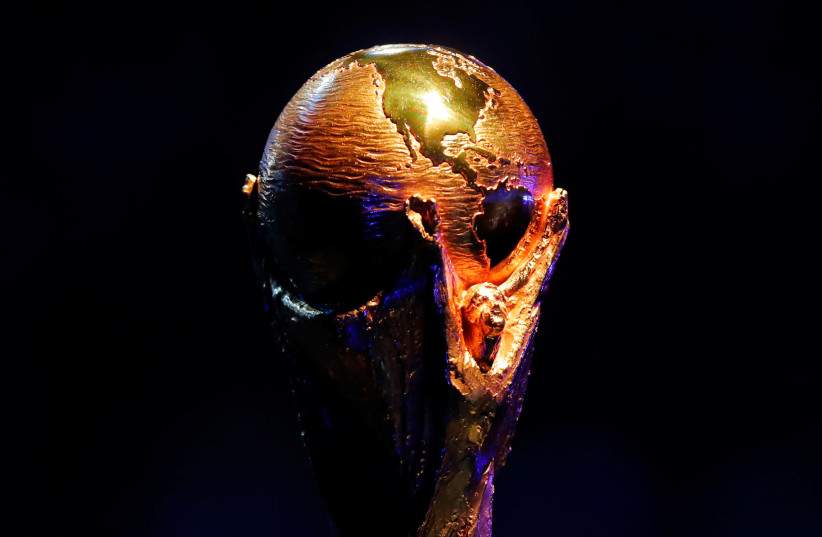
And it’s that time again. Last weekend’s Champions League final, which featured Arsenal playing and losing to Paris Saint-Germain (PSG), was the prequel to the World Cup.
But who to support in these competitions? With Israel not qualified, to whom do we turn?
Historically, in times of such choices, such as for whom do we vote, this question is answered by “How does it affect the Jews?”
And often in England that sufficed for football. For thank God not a short lifetime, I have supported a team from the lower leagues called Leyton Orient. I had gone to my regular Hebrew Class one Sunday when another six-year-old asked, “Who do you support?”
I promptly told him I didn’t know what he was talking about. He said he supported Leyton Orient, so when I went home I told my parents I supported Leyton Orient. Hence began a love affair that has lasted for 68 years.
But for very many London Jews their natural choice lay between Tottenham Hotspur and Arsenal, both premier clubs with grounds in North London. And that has also been an unusual relationship, as supporting one demands an equal commitment to loathing the other. Hence, traditionally, as Arsenal appeared on TV last weekend, the fall-back position for a Tottenham fan was to cheer on the opposition (PSG).
But is that how it played out in reality – support another English team, or cheer on the French opposition? Even the words “French team” cause nausea.
How does it affect the Jews? Arsenal is so Jewish that their tribe can rent a room in the ground to hold a Seder service annually.
Meanwhile, PSG, predictably for the French, have frequently flown Palestinian flags and, not unusually for this topsy-turvy world, despite winning the match, their fans rioted, taking every opportunity to fight with police in France, though the game was in Budapest!
The violence between the fans and police led to 900 arrests. Meanwhile, President Macron, being the expert fence-sitter that he is, managed to applaud the club and decry the fans who represent them, all in the same breath.
Then, of course, comes the political element.
Ireland once more is up to its new tricks. They are due to play Israel in the Nations League on September 27 at a neutral venue and host them at the Aviva Stadium on October 4.
But Ireland has not spared a moment’s breath or wasted a column inch to beat the drum of Israel hatred to get the games canceled. Ireland’s opposition parties prepare to use their Dáil (parliament) time to call on the coalition to support a boycott of the games. Ireland wants BDS.
The Irish president, very short in height but very long on venom, will not attend the games.
That fixture is under fresh scrutiny after fans threw tennis balls featuring the Palestinian flag onto the pitch during Thursday’s match against Qatar.
Separating sport from politics
So can we separate sport from politics? Of course it is tempting to do so. Apart from anything else, being hated is so exhausting. We just want to sit down in front of our screens to watch a skillful game.
Brazil and Argentina have brought so much fun and magic to the competition that they are a joy to watch. But what of Iran – how can we watch them? What of England, where a talk on Jewish history at the British Museum has been postponed?
For that matter, how do we watch games involving Canada, Belgium, France, Spain, or Turkey? Even before coming onto the pitch, they have already won the propaganda war supporting Palestine and reviling Israel.
Do we just ignore the reality for Jews in these countries and settle down and watch the games? After all, if we believe that a sporting interlude will end the hatred, we are kidding ourselves.
All sorts of soccer metaphors may lead us to believe life can change. It is, after all, “a game of two halves.” For the moment we may think (the politics) is “all over…” but it isn’t.
The writer is an author and a former judge and barrister in the United Kingdom.