
Last month, a billboard went up across the street from Israel’s Supreme Court. On it was a picture of a sitting justice, Noam Sohlberg, an observant, kippah-wearing Jew – beneath a demand that he take his “Reform hands” off the Chief Rabbinate. His offense: he had ruled that women may sit for the state rabbinate’s certification exams in Jewish law.
The petition had been brought by religiously observant women, steeped in Torah and Halacha. All they were asking for was to be tested in the very body of law they already live by. Nothing in that violates halacha. (Full disclosure: I was among those who brought that petition.)
The billboard was only the beginning. Days later, a group of senior rabbis from the Hardal wing of Religious Zionism – its hardline, “haredi-nationalist” edge, which fuses ultra-Orthodox stringency with religious nationalism – issued a declaration that Jews are forbidden by their religion to obey Supreme Court rulings they deem contrary to Halacha.
Hardal vs mainstream Religious Zionism
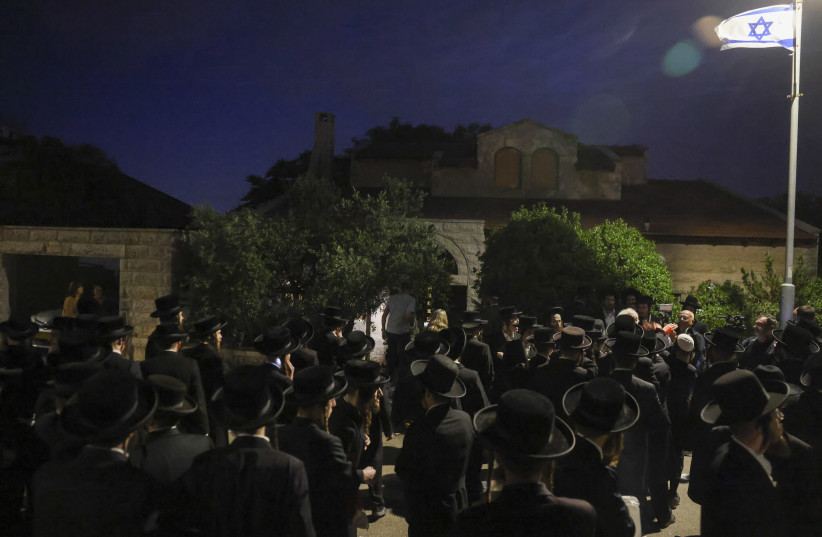
This could amount to a call for insubordination. And this week, when haredi (ultra-Orthodox) rioters – from the separate, non-Zionist ultra-Orthodox world, enraged by a different ruling on the military draft – vandalized the courtyard of Sohlberg’s home, rabbis and public figures from the Hardal camp still found it hard to condemn the attack – because Justice Sohlberg sits on the very Supreme Court they oppose.
Looking in from the outside, in Israel and in the Diaspora alike, this seems like more of the old story: religion versus the courts, Judaism versus democracy. It is a tidy narrative. It is also wrong.
Consider who Sohlberg actually is. He is a Religious Zionist: a graduate of the State-Religious school system and of Yeshivat Har Etzion, a conservative jurist from Gush Etzion, today the Deputy President of the Supreme Court and, under Israel’s seniority system, in line to become its next president.
Sohlberg is not alone. Three of the 11 justices on Israel’s highest court are Religious Zionists, roughly double their share of the population. Religious-Zionist men and women fill senior positions throughout the Justice Ministry and the courts. I teach at Bar-Ilan University’s law faculty, where many of my most outstanding students are religious – and some will become the judges of tomorrow.
What this fight reveals is that Religious Zionism is far from being of one mind. Far from it: it is in the midst of a deep-seated internal struggle. The Hardal faction works mainly within religious spaces – through the political party that usurped the very name “Religious Zionism,” the religious media, and the religious schools.
At times it can seem to be the authentic face of the movement. But the mindset of the broader Religious-Zionist community is vastly different. It works outward and is a full partner in building the country – in hi-tech and the economy, in public service, in the army, and in the courts. This is no accident. The very ethos of Religious Zionism is integration: to bridge the sacred and the worldly, and to play an integral role in building the State of Israel.
So when Hardal rabbis brand Sohlberg “Reform”, it’s not just an insult. It is an attempt to oust him from the Religious-Zionist public. But he most certainly belongs – more fully, and more admired and emulated, than they are. Those deliberately separating themselves from the building of Israel as a Jewish and democratic state, and attacking its institutions, are betraying the core principle of Religious Zionism: being a full partner in these efforts.
The radicals are not defending Religious Zionism against a hostile court. They are turning against its success — against the sons and daughters of Religious Zionism who long ago took their place inside the institutions of the state, including its courts.
The writer is the CEO of Kolenu, a Religious-Zionist organization working to support the values of Torah, moral leadership, and social responsibility.