I learned an interesting fact recently about the history of navigation: the magnetic compass was invented in China in the second century BCE, roughly 1,500 years before the first accurate mechanical clock appeared in 14th-century Europe.
The thought occurred to me – why did it take humanity so much longer to discover how to measure time than it did to navigate and measure direction?
I believe that the answer reflects a deep truth about the human condition: when you know where you are going, you will find a way to get there. The exact timing of how long it takes and how many detours there are in the road matter far less than having a fixed north.
This principle can be found in the weekly Torah portion, Shelach, which opens with the story of the 12 spies sent to the Land of Israel. Ten of the 12 spies offered a report that broke the people’s spirit.
They described impenetrable cities, giant inhabitants, and a land that would devour them. The people were dismayed and were ready to mount a revolt against God and Moses.
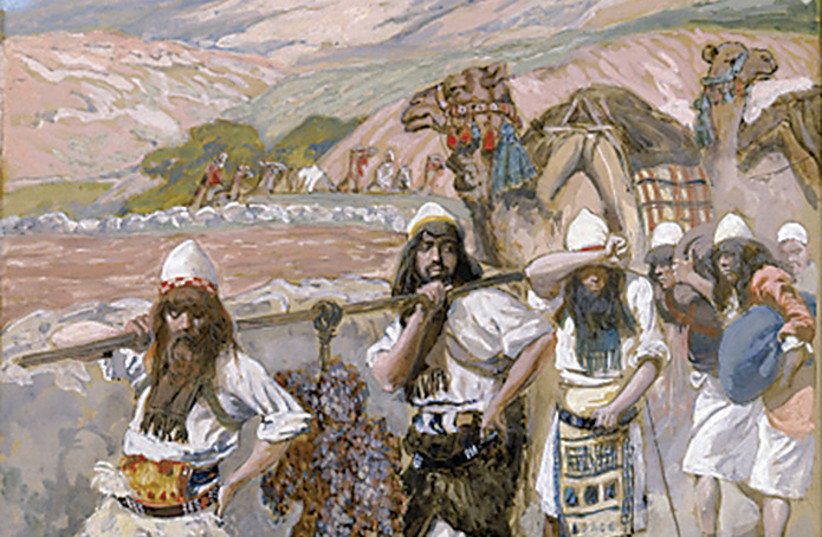
The story ends with the Jewish people wandering in the desert for 40 additional years as punishment before they could enter the promised land.
Hidden within this same portion is the mitzvah of challah, the commandment to separate a portion of dough when bread is baked.
This mitzvah may seem unrelated to the story of the spies; however, Rashi states that the mitzvah was given at this time to comfort the Jewish people in their despair, quoting a passage from the Talmud (Sanhedrin 110b).
The logic is that challah is an act of giving – you take a portion of your own dough and set it aside for someone else.
By placing this commandment here, God was showing the Jewish people what life in the land would look like: a life where even the most ordinary act – making bread – would carry the structure of generosity.
With this knowledge and direction, the Jewish people were able to withstand the grueling journey through the desert.
After October 7, Jewish communities across the world held challah bakes dedicated to the hostages. Women gathered in synagogue halls and community centers, with flour on their hands, saying prayers over balls of dough.
It was, on its face, an act with no practical value whatsoever. However, it was one of the most widely replicated communal responses to the attack.
The reason is not a mystery. People needed something to do that connected them to what they were fighting for, not just what they were fighting against.
We were fighting for the spiritual unity of the Jewish people, and nothing exemplifies that better than the communal bread we eat weekly that can turn strangers into family.
Chabad's mission and destination
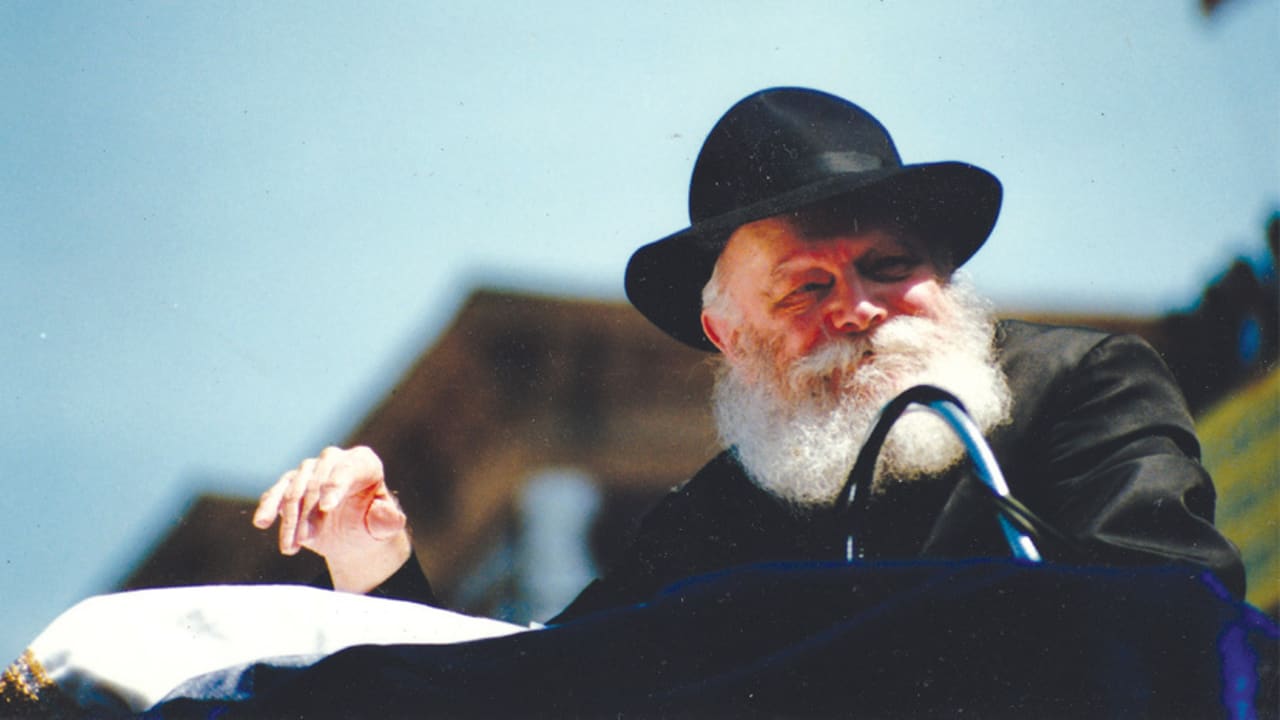
This week marks Gimmel Tamuz, the 32nd anniversary of the passing of the Lubavitcher Rebbe, Rabbi Menachem Mendel Schneerson.
Around the world, Jewish people will hold gatherings marking the Rebbe’s impact on the world. Commentators reliably note how the Chabad movement has grown extraordinarily over the past three decades.
There are now thousands of emissary families that have a presence in over 110 countries.
The growth is usually attributed to organizational discipline, to the Rebbe’s famous practice of receiving visitors until 4 a.m., to a belief in unconditional outreach, and many other factors.
All of them are true, yet the most fundamental explanation is that the Rebbe gave the Jewish people a compass at a moment when we were arguing about how long the journey would take.
The Rebbe spoke about the coming of the Messiah with specificity and urgency. While the concept of Messiah runs through every stream of traditional Jewish thought, it had settled into the background as a theological concept that was mentioned at the end of a seder or in Maimonides’s 13 Principles of Faith.
However, the Rebbe insisted that redemption was not an abstract concept, but an imminent reality; that every mitzvah was a concrete step toward it.
His phrase “Messiah Now” became a kind of shorthand for this fervor.
While many were quick to dismiss this when he first spoke about it in the 1950s, no one can deny the effect it had on a generation of rabbis who went to places no one else was going – not because the living conditions were easy, but because they had a compass that made the journey navigable.
The Chabad couples who’ve moved to the Alaskan tundra to host Purim parties for Arctic researchers and park rangers, or to rural Australia to ensure that ranchers can get matzah for Passover, or to the coastal towns of South America, all do so because they know the destination.
Thirty-two years after his passing, with war in Israel still raging and Jewish communities exhausted in ways that the world doesn’t always see, the Rebbe understood that a people who know where they are going will find a way to get there.
He also understood that after the Holocaust, after decades of survival-mode existence, the Jewish people did not need another reason to endure.
They needed a reason to move forward.
The writer leads Chabad Columbus at the Lori Schottenstein Chabad Center.