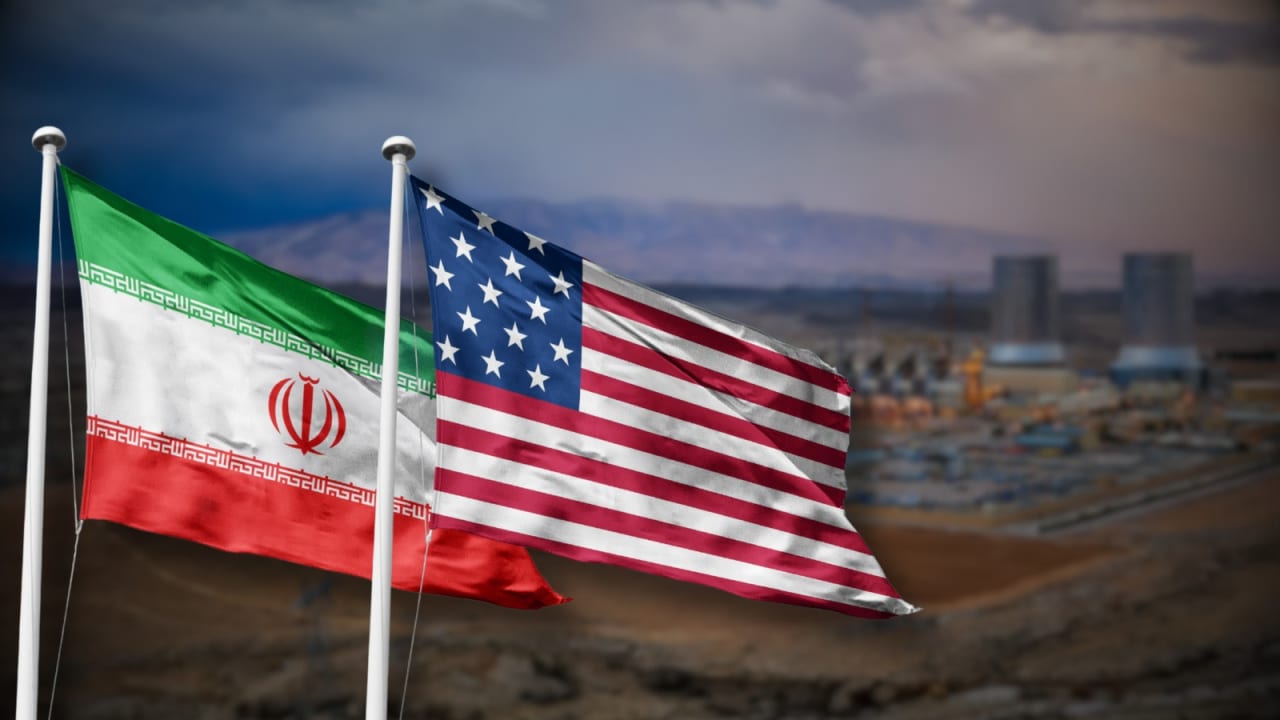
US President Donald Trump’s announcement of a new agreement with Iran has been greeted with applause across much of the world.
Markets rallied. Oil prices fell. Governments welcomed the prospect of stability. Commentators rushed to declare a diplomatic breakthrough.
Perhaps they are right.
But before we celebrate, it is worth asking a simple question: What exactly changed?
Iran’s signature on a document does not change the nature of the regime. It does not erase decades of sponsoring terrorism. It does not eliminate its nuclear ambitions. It does not end its calls for the destruction of Israel.
And it certainly does not transform the Islamic Republic into a trusted ally of the West.

As the dust settles, there are two very different ways to interpret what may be happening.
The first is the optimistic view.
Trump may not actually believe that Iran has fundamentally changed. He may not even view this agreement as a permanent solution. Instead, he may be making a calculated strategic decision to buy time.
After months of conflict, the economic consequences became increasingly difficult to ignore. Oil prices surged. Inflation pressures intensified. Consumers felt it at the gas pump. Businesses felt it throughout supply chains. Global markets became nervous.
Allies pushed for de-escalation. Domestic voices warned about the economic and political costs of a prolonged conflict.
With congressional elections approaching and economic concerns remaining front and center for American voters, reducing tensions carries obvious benefits.
Lower energy prices help households. Calmer markets help businesses. A cooling of hostilities helps restore confidence.
Viewed through that lens, the agreement may not represent the end of a strategy but rather a pause within one.
If so, Trump may simply be securing short-term stability while preserving the ability to respond forcefully if Iran violates its commitments. The objective would not be to trust Iran but to create breathing room while maintaining leverage.
Such a calculation would be understandable. In business and diplomacy alike, timing matters. Sometimes buying time is itself a strategic asset.
But there is another possibility.
And it is the one that should concern policymakers in Jerusalem, Washington, and across the region.
What if the deal itself became the goal?
What if months of conflict, international pressure, economic disruption, and political fatigue created an overwhelming desire to produce an agreement – any agreement – that could be presented as a success?
One of Trump’s most frequently repeated negotiating principles is that the party that needs a deal the most is usually the party that loses leverage. Strong negotiators are supposed to be willing to walk away.
Yet history is filled with leaders who become invested in reaching an agreement and eventually begin treating the existence of a deal as evidence of success.
That is where danger begins.
The victory cannot be that Iran signed a document.
The victory must be that Iran changed its behavior.
Those are not the same thing.
Hazy future
The Iranian regime has survived for nearly half a century by playing a long game. While democratic governments think in election cycles, revolutionary regimes often think in decades.
They understand the value of patience. They understand delay. They understand how negotiations can sometimes achieve objectives that military confrontations cannot.
That is why signatures alone are insufficient.
The fundamental questions remain:
Has Iran abandoned its pursuit of nuclear capabilities?
Has it ended support for terrorist organizations and proxy militias?
Has it stopped funding instability throughout the Middle East?
Has it abandoned its hostility toward Israel?
Has it stopped viewing America as its primary adversary?
If the answer to those questions is no, then caution is warranted regardless of how impressive the signing ceremony may appear.
None of this means diplomacy is inherently misguided. Avoiding war matters. Reducing tensions matters. Protecting the global economy matters. Lower energy prices benefit millions of families. Stability is not something to dismiss lightly.
But history teaches that successful diplomacy is measured by outcomes, not announcements.
The Middle East has seen no shortage of agreements that generated headlines while leaving the underlying realities unchanged. Some delayed conflict. Some bought valuable time. Some reduced tensions. Others simply postponed the moment when unresolved problems resurfaced.
The coming months will reveal which category this agreement belongs to.
Perhaps this is a tactical move that lowers inflation, stabilizes markets, reduces regional tensions, and strengthens America’s strategic position. If so, it may prove to be a shrewd decision.
But if the primary achievement is merely obtaining Iran’s signature while its goals, ideology, and behavior remain fundamentally intact, then the celebration will be premature.
A signature is not a transformation.
A ceremony is not a victory.
And a deal is only as meaningful as the actions that follow it.
The writer is the founder and CEO of the Orthodox Jewish Chamber of Commerce.