For nearly three years, I have lived in a state of suspended breath. My son has spent the last three months in southern Lebanon, defending our northern borders from Hezbollah. Last Shabbat, one of my students died of his wounds; a drone fragment took his life.
These are not statistics to me. They are the people I love, the people I teach, and the people whose absence leaves a void that can never be filled.
I am one mother and one educator among many who have been carrying the weight of this war on our shoulders. We – the public that serves in the military, drives the economy, and sustains our communities – know that the future of Israel rests on shared commitment.
We are a shrinking share of the public, yet we continue to give until we have nothing left to give.
When this war began, there was a brief, powerful moment of unity. We believed that the existential threat would finally force a consensus: that every capable citizen must stand up and contribute to the defense of the state.

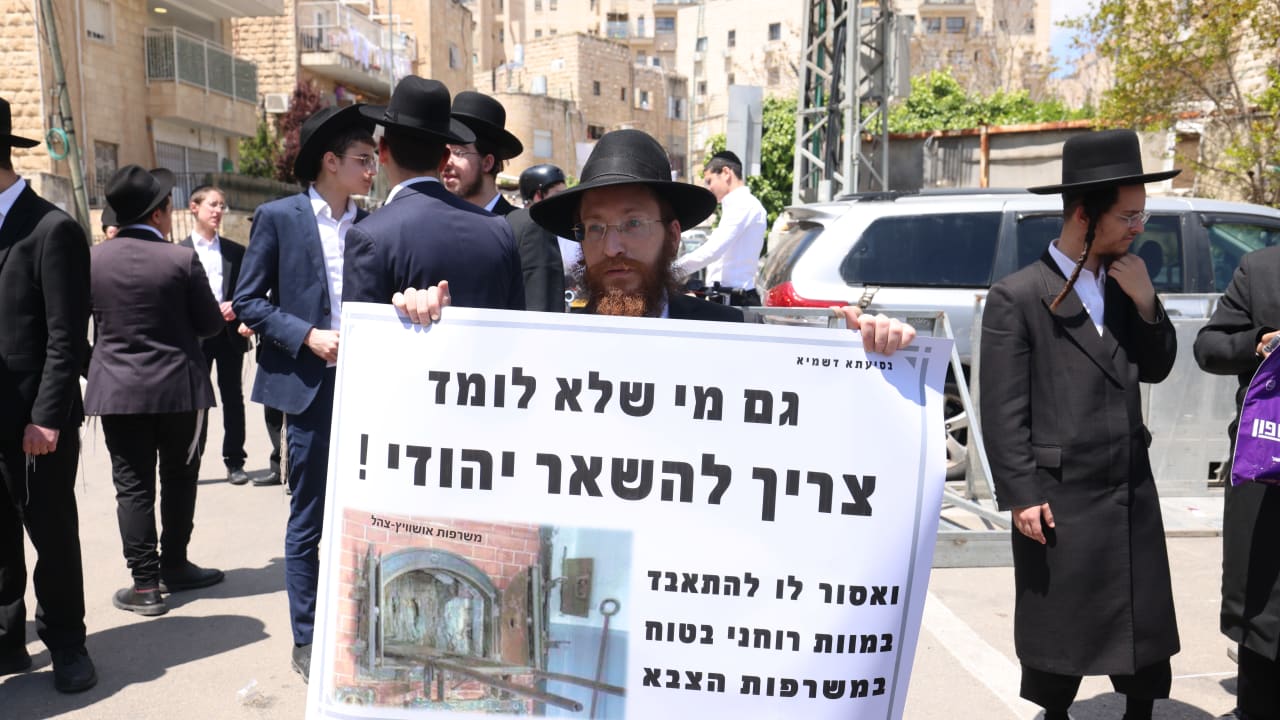
But as the war dragged on, it became agonizingly clear that too much of the haredi (ultra-Orthodox) political leadership has fought to preserve a reality separate from the one borne by the families who serve. Their political priority has not been the manpower crisis at the borders, but the preservation of an exemption system that allows one community to remain detached from the most fundamental civic and military duties, while still benefiting from public funding and state support.
Now, with the advancement of Basic Law: Torah Study, the government is attempting to give constitutional force to this detachment. The proposal would elevate Torah study as a form of national service, using lofty, sacred language to justify an exemption that feels like a slap in the face to those of us who bury our dead.
This is not an argument against Torah study, nor against the haredi public. It is an argument against a political arrangement that uses Torah to absolve one part of Israeli society from obligations borne, in blood, by another.
As someone who has dedicated my life to the study and teaching of Torah, Jewish philosophy, and Zionist thought, I reject this legislation not despite my love of Torah but because of it. I teach students, secular and religious, men and women, that Torah study is meant to be a light that informs our actions in the world, not a shield to hide behind. I have never taught that Torah and civic duty are in conflict. They are meant to be the twin pillars of a functioning Jewish society.
Our Sages taught that derech eretz (social and ethical conduct) precedes the Torah. Our Sages warn us: “If there is no Torah, there is no derech eretz; and if there is no derech eretz, there is no Torah” (Ethics of the Fathers 3:17).
These are not two separate domains that can be uncoupled at the convenience of politicians. They are a single moral ecosystem. By pushing this law, the Knesset risks severing the two. It transforms the Torah into an empty vessel, a political tool used to evade the most basic obligation of a citizen: to share the burden of survival.
How can Zionist parties, who ask our children to risk their lives on the front lines, support a law that so blatantly disregards the sacrifice of the serving public?
The advancement of this law is not a religious triumph. It is a profound moral abdication. By turning Torah learning into a legal exemption for civic evasion, our leaders are committing a violent divorce between the holiness of our tradition and the fundamental duty of derech eretz. They are signaling that, for some, the preservation of a separate civic arrangement outweighs shared responsibility for the survival of the Jewish state.
For those of us on the front lines, burying our students and waiting for our children’s return, the message is clear: While we fight to ensure the state of Israel has a future, our government is dismantling the shared covenant that makes that future worth fighting for.
We are not only losing our youth to the battlefield. We are losing our moral language to a politics that dares to call exemption “service.”
The writer is a fellow at the Jewish People Policy Institute (JPPI), an educator, a doctoral student in Jewish philosophy at Bar-Ilan University, and a member of the Open University Council.