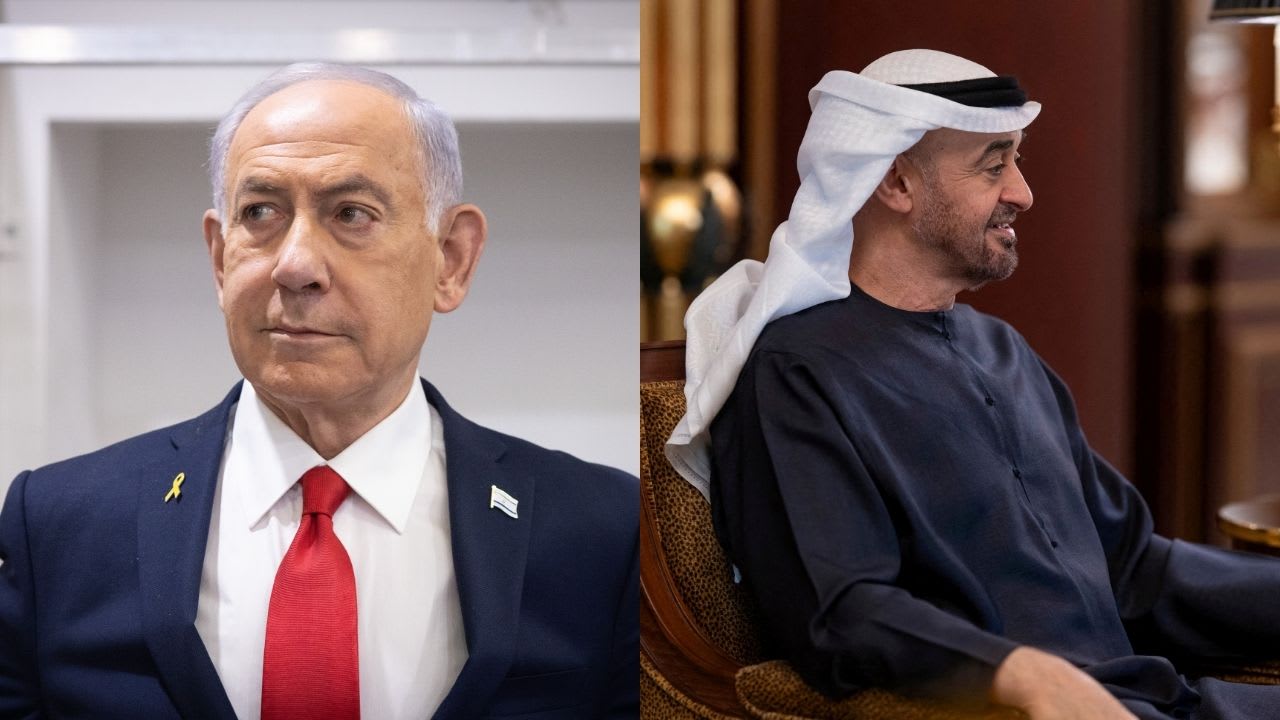
The recent confrontation with Iran underscored the strategic value of the partnership between Israel and the United Arab Emirates and highlighted the potential for expanding it well beyond its current scope.
Unlike some regional actors, Abu Dhabi has consistently demonstrated that its commitment to regional stability extends far beyond rhetoric.
This has been evident not only during the conflict with Iran but also through its sustained engagement across the Middle East and the Horn of Africa, where it has worked to counter extremist actors and secure critical trade routes.
During the war, the UAE reportedly came under more than 2,200 launches targeting its territory.
Among the Gulf states, Abu Dhabi stood out for adopting a particularly firm public stance toward Iran.
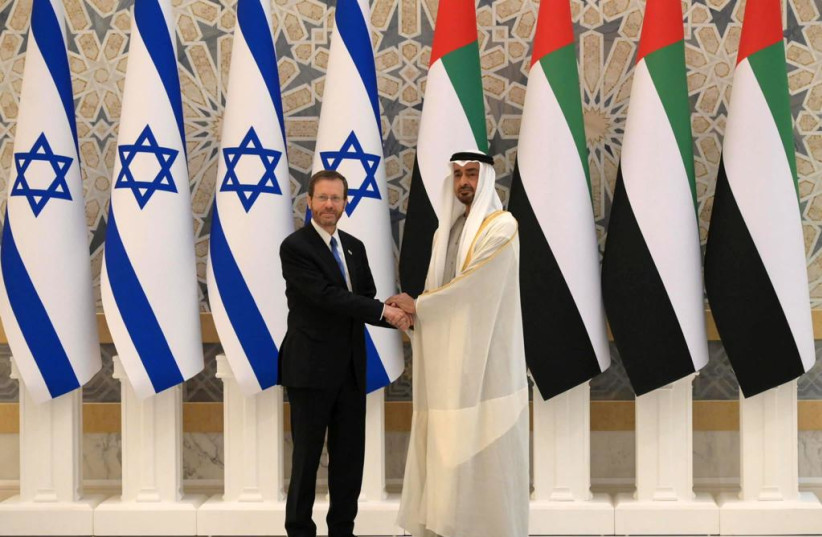
Beyond its statements, the UAE actively pursued practical measures on the international stage to help reopen the Strait of Hormuz, explored participation in a US-led military effort, and, according to investigative reports, carried out a number of strikes inside Iranian territory.
At the same time, Abu Dhabi reportedly implemented administrative measures against Iran aimed at increasing pressure on Tehran.
This involvement helps explain why the Emirati leadership is unlikely to view the end of the fighting as the end of the story. Although Abu Dhabi issued positive statements following the digital signing of the memorandum of understanding on June 17, diplomatic messaging likely masks a considerable degree of unease.
That concern stems both from the UAE’s firm position toward Iran throughout the conflict and from its geographic proximity to Tehran, which made it a primary target for Iranian attacks during the war.
From Abu Dhabi’s perspective, even if current tensions subside, the risk of renewed drone attacks, missile strikes, or indirect operations by Iran and its proxies is unlikely to disappear.
Yet alongside the risks created by the UAE’s confrontational stance toward Iran, this reality presents a significant opportunity to deepen cooperation with Israel.
The recent war has opened a window for advancing long-term initiatives that can strengthen the security and economic resilience of both countries while contributing to the development of a new regional architecture built on stability, security, and economic growth.
Importance of Israel's relation with the UAE
The importance of this partnership becomes even greater in light of the possibility of a reduced American footprint in the region.
In such a scenario, stronger ties with the UAE would allow Israel to rely on an increasingly influential regional partner that shares key strategic interests: containing Iran, countering political Islam, and responding to the growing influence of regional power centers led by Turkey and its allies, which seek to promote a regional order rooted in movements affiliated with the Muslim Brotherhood.
For Abu Dhabi, deeper cooperation with Israel aligns closely with its national vision of establishing itself as a regional hub for innovation, advanced industries, and strategic infrastructure.
Building on these shared interests, Israel, the UAE, and the United States should work together to elevate the existing partnership across several key areas.
The first is expanding security and technological cooperation, particularly in air defense, counter-drone capabilities, advanced early-warning systems, and artificial intelligence-based solutions.
Combining Israeli technological expertise with Emirati resources and industrial ambitions could generate a significant strategic advantage for both countries.
A second area is advanced technology. Israel and the UAE are already participating in American-led initiatives designed to strengthen cooperation in artificial intelligence, semiconductors, cloud computing, and data centers.
By combining Israel’s strengths in innovation and research with the UAE’s capital, infrastructure, and global connectivity, the two countries can position themselves as leading players within the Western technology ecosystem.
A third priority is advancing the India-Middle East-Europe Economic Corridor (IMEC). The recent war exposed the vulnerability of global trade routes and the risks associated with dependence on maritime chokepoints such as the Strait of Hormuz and the Suez Canal.
Developing IMEC as an integrated corridor for trade, energy, data, and innovation would provide both countries with substantial strategic and economic benefits while enhancing the resilience of regional and global supply chains.
Finally, the partnership must not rest solely on governments and security establishments. Business ties, private investment, and collaboration among entrepreneurs and companies have become some of the most important drivers of the Abraham Accords’ success.
Expanding the role of frameworks such as the UAE-Israel Business Council and encouraging greater two-way investment would strengthen the civilian foundations of the relationship and help ensure the long-term durability of a partnership that has been years in the making.
The Iran conflict demonstrated that the Israel-UAE relationship is far greater than a diplomatic achievement. It is a partnership forged under fire – one grounded in shared sacrifice, common security challenges, and a mutual commitment to regional stability. The challenge now is to translate that reality into a deeper, more institutionalized partnership capable of shaping the future of the region.
Ronen Levy (Maoz) is a senior fellow at the Misgav Institute for National Security & Former senior defense and diplomatic official.
Noa Lazimi is a fellow at the Misgav Institute for National Security.