
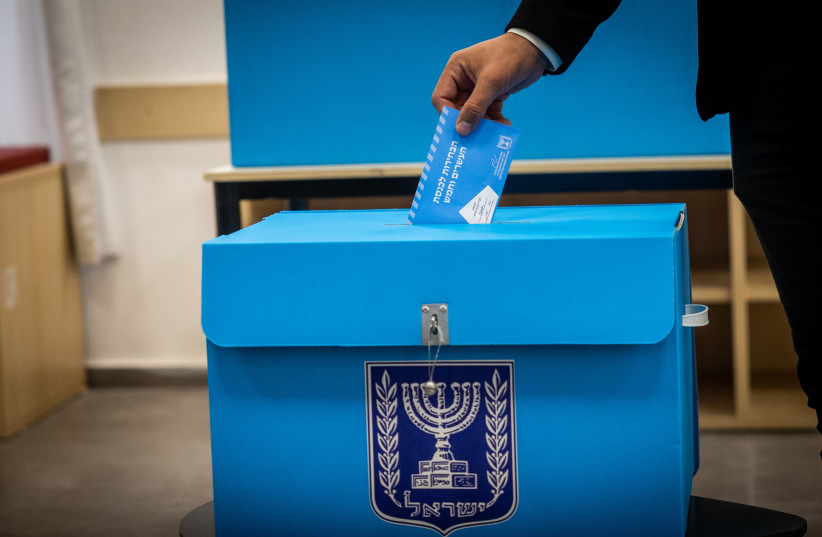
At the end of October, Israelis will vote for a new government. At the beginning of November, Palestinians are expected to do the same. It is rare that both peoples will go to elections, almost at the same time, to choose their leadership and national direction.
This creates a huge opportunity and responsibility, mainly for Israelis and Palestinians, and they can be assisted by the United States, the Arab states, Europe, and the wider international community.
No foreign leader or outside power should choose the leaders of Israel or Palestine. That is the task of Israeli and Palestinian voters. But the international community can make clear what kind of future it is prepared to support. It can tell both peoples that peace is not an empty slogan, that a diplomatic horizon exists, and that leaders who provide hope by choosing courage over fear will not stand alone.
In the interest of peace in the Middle East, US President Donald Trump should embrace this opportunity and make a simple, direct, historic statement:
- The United States supports Israel’s security and full integration into the Middle East.
- The United States supports Palestinian freedom, statehood, democracy, and dignity.
- The United States will work with regional and international partners to advance and implement a two-state solution.
- The United States expects both Israelis and Palestinians to elect leaders capable of making peace.
Such a statement would not be interference. It would be strategic clarity. Delivered now, months before the elections, it could influence the outcome not by telling people whom to vote for but by showing them what kind of future their vote can make possible.
It would tell voters that there is an alternative to war, occupation, siege, terrorism, repression, revenge, and despair. It would make clear that their next leaders will be judged by their ability to secure freedom, security, dignity, and peace.
But Trump’s message alone would not be enough. Its real importance would depend on how Israeli and Palestinian candidates respond.
How Israeli and Palestinian candidates should respond to a call for peace
Israeli candidates seeking to replace the current government should say clearly: Israel’s security is essential, but it cannot be achieved by permanent occupation. Israel must defeat terrorism and insist on strong security arrangements, but it must also offer Palestinians a political horizon and recognize their right to freedom, sovereignty, and dignity. Israel’s future is not as a fortress surrounded by enemies. Its future is as a legitimate, secure, integrated state in the Middle East.
They should say to Israeli voters: The path of recent years has failed. It brought catastrophe, war, isolation, economic damage, internal division, and far too much death and destruction. We cannot manage this conflict forever. We cannot believe that the Palestinian issue can be bypassed through force or normalization with some Arab states. Israel can be accepted into the region but not while millions of Palestinians remain under occupation, without freedom and without a political future.
Israeli candidates should also speak indirectly, but unmistakably, to Palestinian voters: You are not our enemy as a people. We recognize the historic and religious connection of the Palestinian people to this land. You also want to live, raise your children, build your economy, and control your future.
We are ready to negotiate with Palestinian leaders that you elect: leaders who reject violence, accept mutual recognition, support democracy, and are prepared to build a state alongside Israel, not instead of Israel. Our security and your freedom must be built together.
Palestinian candidates and parties must be equally clear. They should say: The last years have shown the terrible futility of violence. Armed struggle has not liberated Palestine, ended occupation, or brought sovereignty. It has brought suffering, destruction, isolation, and loss.
The Palestinian people need a new path: democracy, nonviolence, institution-building, international legitimacy, and a political strategy that can gain regional and global support. The Palestinian people also recognize the historic and religious connection of the Jewish people to this land – this is even recognized in the Holy Quran.
Palestinian candidates should say: Our goal is freedom and statehood, not revenge. Our goal is ending occupation, not destroying Israel. Our goal is to build Palestine – in Gaza, the West Bank, and east Jerusalem – as a democratic, accountable, sovereign state living in peace next to Israel. We will demand our rights firmly, but through diplomacy, persuasion, law, popular nonviolent action, international alliances, and negotiations.
Palestinian candidates should also speak indirectly to Israeli voters: We understand that Israelis need security. We understand the trauma and fear Israelis carry. We do not ask Israelis to trust words alone. We are prepared to build institutions, security arrangements, education systems, and political commitments that prove that a Palestinian state will be a partner for peace, not a platform for war. We want our children to live next to your children in dignity and safety.
This indirect dialogue could change the election atmosphere. For years, the central argument against peace has been the same in both societies: “There is no partner on the other side.” Israelis say there is no Palestinian partner. Palestinians say there is no Israeli partner. Each side uses the extremism of the other as proof that peace is impossible. That circle must be broken.
The main challenge is to rebuild confidence that there are partners for peace. That will not happen through secret diplomacy alone. It must happen in public, during the election campaigns themselves.
Israeli parties that support peace should say that Palestinian freedom is part of Israeli security. Palestinian parties that support peace should say that Israeli security is part of Palestinian freedom. These are not concessions. They are the foundation of any realistic future.
Political agreements are not enough. Candidates on both sides must also address other fundamental issues – such as what we teach our children. Education curricula is in the hands of the state and therefore is the truest reflection on the values of the society.
The next generation of Israelis and Palestinians must not inherit only graves, walls, checkpoints, rockets, sirens, hatred, and fear. They must inherit the tools of coexistence: language (Hebrew and Arabic), knowledge, empathy, critical thinking, historical honesty, and the belief that the other people is not destined to be an eternal enemy.
Elections are not only about who holds office. They are about what societies tell themselves is possible. If Israeli candidates run only on fear, they will produce more fear. If Palestinian candidates run only on grievance, they will produce more despair. But if candidates on both sides speak about peace, partnership, democracy, security, freedom, hope, and regional integration, the political environment will begin to change.
There are moments in history when timing matters. The time for action is now – before the end of October and the beginning of November. Israelis and Palestinians will soon be voting almost at the very same time. They should not vote in darkness. They should understand that their vote will affect not only their own future but also the choices made by the other side.
The door to peace will not open by itself; it will open only if leaders on both sides tell their people the truth and voters choose the future over the fear.
The writer is the Middle East director of the International Communities Organization and the co-head of the Alliance for Two States.