
As America celebrates Independence Day and the 250th year of our Republic, it is worth recalling one of the founding promises that has distinguished our nation from the beginning.
In 1790, president George Washington wrote to the Hebrew Congregation of Newport, assuring a small community of Sephardi Jews that the Government of the United States “gives to bigotry no sanction, to persecution no assistance.”
Those words were no mere courtesy. They were revolutionary.
The Jews who received Washington’s letter were descendants of families expelled from Spain and Portugal, driven from one refuge to another across Europe, the Caribbean, and the New World. They knew what it meant to live only on sufferance, forever dependent upon the whims of princes and magistrates.
Washington offered something radically different: not toleration bestowed by a sovereign, but equal citizenship secured by law.
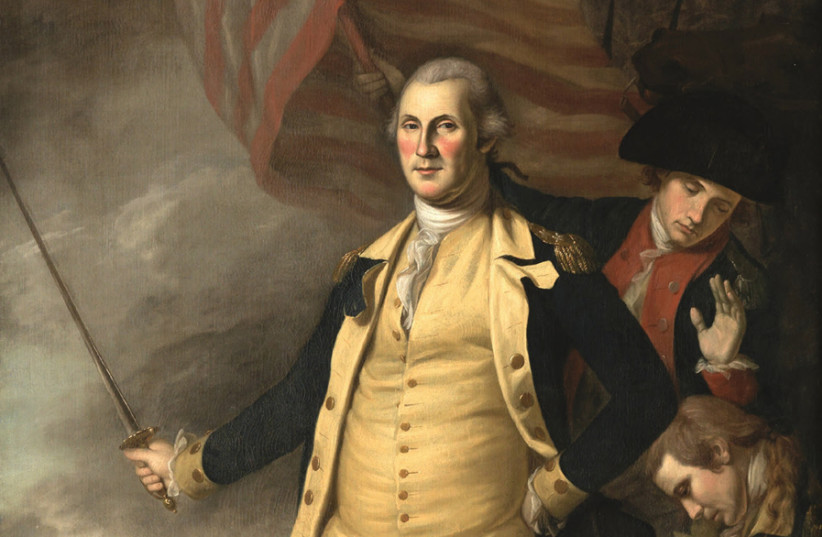
Americans of every faith, he declared, would stand not as guests but as equal members of one republic. Each would “sit in safety under his own vine and fig tree, and there shall be none to make him afraid.”
American Jews honoring Washington's promise
For more than two centuries, American Jews have honored that promise.
Jewish patriots served in the Revolution. Jewish soldiers fought to preserve the Union during the Civil War.
In every conflict since, from the trenches of World War I to the beaches of Normandy, from Korea and Vietnam to Iraq and Afghanistan, American Jews have answered their country’s call.
Thousands have worn our nation’s uniform. Many never came home. Their sacrifice forms part of the unbroken story of American liberty.
America has not always lived up to its ideals. Antisemitism has never been absent from our history. The National Origins immigration system closed America’s doors to many seeking refuge. Elite universities imposed Jewish quotas.
Father Charles Coughlin spread venom over the airwaves. Even General Ulysses S Grant committed a grave injustice when he issued General Orders No. 11 expelling Jews from his military department during the Civil War.
But that is not where the story ended. President Abraham Lincoln promptly revoked Grant’s order. Years later, Grant acknowledged his mistake, sought reconciliation with the Jewish community, appointed Jewish Americans to high office, and became the first sitting president to attend the dedication of a synagogue.
That is one of the things that makes America exceptional. We have stumbled, sometimes badly, but our constitutional principles have repeatedly pulled us back toward justice.
Again and again, this nation has been drawn toward its better angels, striving to fulfill Washington’s promise that bigotry should have no sanction.
Opposing antisemitism is therefore not simply about protecting Jews; it is about defending the American idea itself. A nation that safeguards the rights of one minority ultimately safeguards the liberty of all.
For generations, Americans have understood their nation as a “city upon a hill.” That vision has fostered a natural kinship with the Jewish people, whose own history has long been shaped by covenant, liberty, and hope.
It has also helped sustain the extraordinary partnership between the United States and the State of Israel.
One of the enduring symbols of that American promise is the Liberty Bell. Cast in Philadelphia and later embraced as a symbol of both American independence and the abolition of slavery, it bears an inscription from the Book of Leviticus: “Proclaim liberty throughout all the land unto all the inhabitants thereof.”
That the Republic’s most revered symbol should proclaim the universal blessings of liberty in ancient Hebrew scripture is no accident.
From the beginning, America understood freedom not merely as a political arrangement, but as a moral calling. The same biblical tradition that inspired the Liberty Bell also animated George Washington’s assurance.
As America marks its 250th year, American Jews remain deeply invested in the success of this extraordinary experiment.
We serve in uniform, build businesses, heal the sick, teach our children, strengthen our communities, and contribute every day to the life of this nation. We do so not because America has always been perfect, but because it has always been worth believing in.
George Washington promised that this Republic would “give to bigotry no sanction, to persecution no assistance.”
Two hundred and fifty years later, that remains both America’s greatest achievement and its unfinished work.
May we prove worthy of that promise for the next 250 years.
The writer is CEO of the Conference of Presidents of Major American Jewish Organizations.