
For decades, Britain was seen as one of the world’s most stable democracies, a model of the rule of law, tolerance, and multiculturalism. In recent years, however, there has been a growing sense that the country is facing a deep internal crisis.
Instead of devoting most of their attention to domestic challenges, including ideological extremism, crime, social tensions, illegal immigration, and rising antisemitism, some British politicians repeatedly choose to focus on condemning Israel.
This conduct is puzzling, to say the least.
While Israel is confronting terrorist organizations that threaten its very existence, harsh voices are heard in London against Jerusalem, often while ignoring the security reality in which Israel is operating.
Criticism of government policy is a legitimate part of democratic discourse.
But when it comes alongside silence or a weak response to signs of extremism and a loss of control in entire areas of Britain itself, it raises serious questions about the authorities’ priorities.
Grooming gangs operated in several British cities for years, sexually exploiting girls, often vulnerable minors.
The term “grooming” refers to a process in which offenders build a relationship with a victim and gain their trust through gifts, attention, money, alcohol, or drugs before sexually exploiting them and, in some cases, trafficking them for exploitation by others.
One of the most prominent cases was in Rotherham, where an independent inquiry found that thousands of children and young people were sexually exploited in the town between 1997 and 2013.
The report sharply criticized the police and local authorities, saying they failed to act properly to protect the victims. Additional cases were exposed in other cities, and estimates point to tens of thousands of cases of sexual abuse and exploitation.
Institutional failures and public accountability
Another issue that stirred public controversy was the background of some of the offenders. In several of the best-known cases, many of those convicted were British Pakistani and Muslim.
The reports raised claims that some officials feared that emphasizing their background would lead to accusations of racism.
These scandals led to a series of reforms in Britain, tougher enforcement, additional public inquiries, and the creation of new mechanisms to protect children.
They are still considered among the gravest failures of law enforcement and welfare authorities in British history.
Britain is undergoing significant demographic change. In some cities and many neighborhoods, the share of communities of Muslim origin has grown substantially, and in several local authorities, they already make up a majority of the population.
In cities such as Bradford and Luton, as well as parts of Birmingham, there are areas where Muslims are the local majority. Significant demographic changes are also evident in the London borough of Tower Hamlets and in parts of Leicester.
For some members of the public, this is a natural expression of a multicultural society. Others believe it poses challenges of integration, cohesion, and governance that the state is struggling to manage.
The debate is not about the very existence of Muslim communities in Britain. Millions of Muslims are law-abiding citizens who contribute to British society in every area of life.
At the same time, however, extremist elements seek to exploit freedom of speech and religion in order to spread radical ideology.
Over the years, the authorities have acted against certain preachers accused of incitement, support for terrorist organizations, and promotion of Sharia (Islamic law).
Some were removed from the country or prosecuted. A number of religious institutions also came under supervision over suspicions that they were spreading extremist messages.
Britain has also paid a heavy price in the field of terrorism.
The July 7, 2005, bombings in London; the Manchester attack in 2017; the Westminster attack; the attacks on London Bridge; and other incidents showed that Islamist extremism is not a theoretical threat but a deadly reality.
Official investigations in various cases also pointed to intelligence and enforcement failures that made it harder to prevent the attacks.
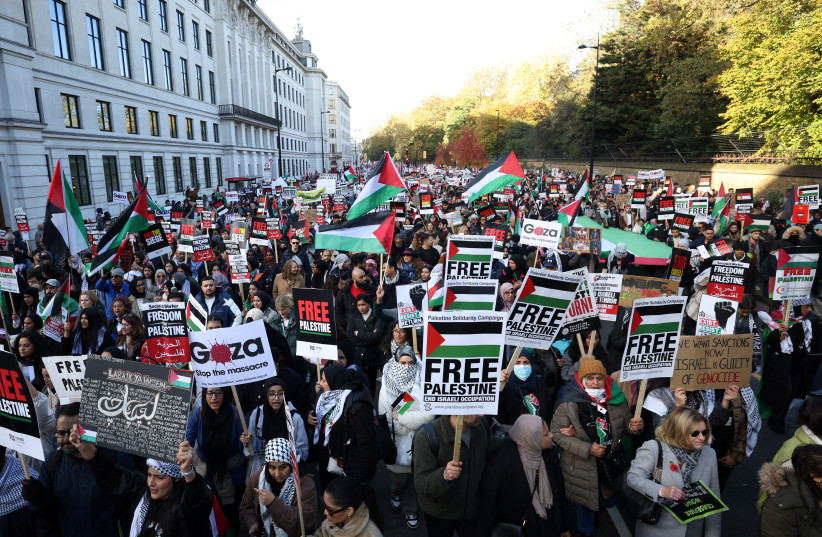
Since the October 7 massacre, Britain has also become a stage for mass demonstrations against Israel.
Many of them took place as part of freedom of expression, but in some cases extremist slogans were heard, antisemitic incidents were documented, and symbols associated with terrorist organizations were displayed.
Britain’s Jewish community has reported a sharp rise in antisemitic incidents and a growing sense of insecurity.
Against this background, the statements of British politicians who rush to lecture Israel are especially grating, while their own country is dealing with complex internal crises.
A country that wants to lead the free world must first and foremost demonstrate its ability to confront its own problems: to protect its citizens, enforce the law equally, fight incitement and extremism of every kind, and preserve social cohesion.
Those who seek to present themselves as a moral authority must apply the same standards at home. It is difficult to persuade others how to fight extremism when your own society is grappling with deep challenges of governance, polarization, and security threats.
Britain has made a major contribution to the world in law, science, and democracy.
Precisely for that reason, many hope it will rediscover the balance between openness and enforcement, freedom of religion and a determined fight against incitement and extremism, and criticism of other countries and the responsibility to first address the challenges at its own doorstep.
Only then will it be able to preserve its status as one of the world’s leading democracies.
The author is the CEO of Radio 100FM, an honorary consul and deputy dean of the consular diplomatic corps, and president of the Israel Association of Radio Communication. He previously served as a monitor for Army Radio and as a television correspondent for NBC News.