
This year, the Hebrew date of the 29th of Tamuz falls on Tuesday, July 14, and at Mount Herzl in Jerusalem, the State Memorial Ceremony for Ze’ev Jabotinsky will be conducted to mark 86 years since his death.
He was buried there, however, only in 1964, the result of grudge-bearing David Ben-Gurion being replaced as prime minister by Levi Eshkol. Ben-Gurion refused to have the body of his rival, who headed Revisionist Zionism, and that of Jabotinsky’s wife, reinterred in Israel.
Jabotinsky represented the core Right wing of the pre-state political battles and campaigns ever since the turn of the 20th century. He stood in opposition to Chaim Weizmann and Ben-Gurion as leader of the Zionist Revisionist Party. He was castigated and portrayed even as a fascist, and Ben-Gurion insulted him as a “Hitler.”
Yet, unlike today’s perceptions of what is “right-wing,” Jabotinsky was firmly in the liberal-democratic camp. In 1993, Raphaella Bilski Ben-Hur’s in-depth volume, Every Individual, a King: The Social and Political Thought of Ze’ev Vladimir Jabotinsky, brought a new recognition of Jabotinsky’s writings of over four decades in the fields of social and economic endeavors.
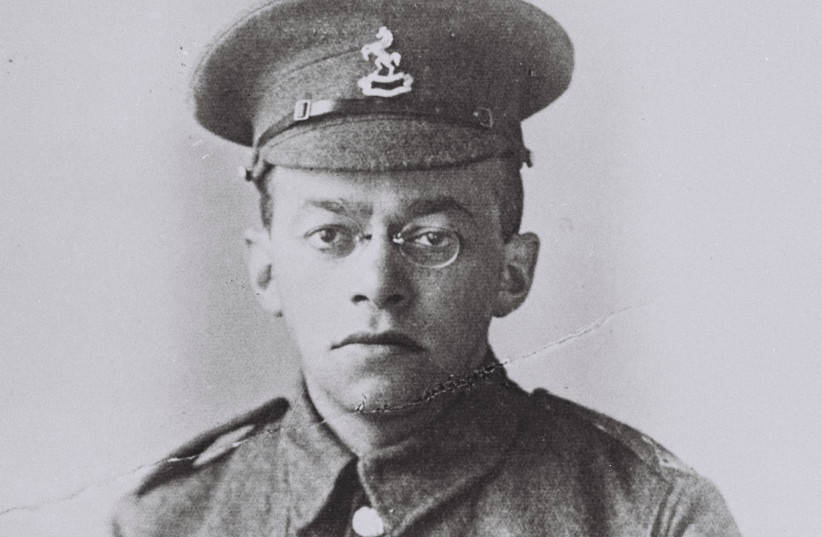
While Menachem Begin’s six-year premiership displayed how Revisionist Zionist policies were not the fascist corporatism as portrayed in the 1930s by the Labour wing of Zionism, Ben-Hur presented Jabotinsky in his own words and argumentation. She highlighted his humanism, public ethics, and relationship with organized religion.
In addition, on a very current relevant issue, Ben-Hur described his thoughts regarding the role of Arabs in the Jewish state as sensitive to the civic and cultural rights of national minorities.
One example of, perhaps, his surprising stances is his 1929 letter to Jerusalem’s Va’ad Ha’Ir (the city’s Community Council) during the British Mandate. The Old Yishuv’s Orthodox leadership opposed granting women the right to vote and hold office in communal institutions. The matter became a major constitutional dispute.
His March 15, 1929, letter to the Va’ad Ha’Ir explained why he was withholding his participation in its communal tax. Preserved in the Jabotinsky Institute Archives, it reads:
“With all my heart, I would like to contribute to the expenses of the Community Council, but until women have a place and a share in the administration of the affairs of the community, my name will not appear on the list of taxpayers of your institution.”
For Jabotinsky, it mattered that women should be able to vote, that they be eligible to be elected to public office, and that public institutions denying those rights lacked moral legitimacy. Yet he also expressed admiration and respect for religious values and traditions.
In 2013, the Israel Democracy Institute published “Ze’ev Jabotinsky on Democracy, Equality, and Individual Rights,” a short booklet that presented excerpts from Jabotinsky’s writings.
They noted that whereas Jabotinsky was a Jewish nationalist committed to the integrity of the Land of Israel, he was also an avowed liberal democrat and a staunch devotee of equality. The editors selected the following as one of their quotations from his writings:
“The constitution will be essentially liberal and democratic... it will create a ‘minimalistic’ state... It will especially safeguard freedom of expression in every sense of the term.”
'It's no longer convenient'
There was hardly a field of human activity to which Jabotinsky had not devoted thought, as well as how to improve civilizational progress. These included social and economic policy, leadership, the army, and the phenomenon of militarism, discipline and ceremony, the principle of majority rule, the individual, race, nation, and humanity.
Jabotinsky’s thoughts concerned the nation and the Jewish people, the land of Israel as the historic Jewish homeland, the Jews and their Diaspora existence, the Jewish religion, and combating antisemitism. He emphasized the need for humanism in public affairs, contributed frameworks of how to create a state and maintain it, what the relationship should be to the Arabs residing in the country, and what the relationship should be to British Mandatory rule.
In addition, he was an outstanding literary figure. He published novels, composed poems and short stories, translated, spoke, and wrote in almost a dozen languages. A recent academic article by Itamar Francez, associate professor of the Department of Linguistics at the University of Chicago, suggests that Jabotinsky engaged in the “radical transformation of Jewish speech.”
He writes that his prose and his prescriptive and pedagogical interventions contributed to the “regeneration” of Hebrew and its sounds. Jabotinsky fashioned a “program of aesthetic education through [Sephardi] Hebrew pronunciation for the Jewish masses.” He even trained theater actors who had been in Habima and the Teatron Eretz-Israeli in Berlin in 1923-24 to better enunciate their Hebrew.
Jabotinsky was right in the sense that on the spectrum of practical politics and ideological identity, he was not of the Left. He rejected Marxist socialism and Bundism. He opposed the structural dictatorship of the Histadrut in the life of the Yishuv society.
More importantly, as we look back to the controversies and inter-party rivalries of the time, Jabotinsky was mostly right in the sense that his forecasts and prognostications ultimately were the best choice that could have been taken.
Indeed, his proposed policies to defend against Arab opposition, diplomatic and terror-wise, and secure Jewish rights as well as to counter the increasing betrayal of the British Mandatory regime and that of the cabinet in London, as well as the growing antisemitism abroad and the oncoming Holocaust, were the most appropriate that could have been taken, as the historical experience has proven.
It was a correct attitude and frame of mind that motivated him despite the antagonism directed against him and his followers. As he said in a 1926 speech in Jerusalem, “If they tell you that you’re right, but we don’t want to put your right into action because it’s convenient for us anyway, then we can create an atmosphere ‘so that it’s no longer convenient.’”
He was right then, and his words hold true today still.
The writer is a researcher, analyst, and commentator on political, cultural, and media issues.